ERBIL, Kurdistan Region - The director of Rmeilan oil fields in Hasaka province Wednesday, said that a recent visit by a Syrian government delegation was focused on a potential merger with the state-owned Syrian Petroleum Company, not on management or staffing, as talks remain at an early stage.
A specialized team from the Syrian Petroleum Company (SPC) visited the Rmeilan and Suwaidiyah fields in northeast Syria (Rojava) on Monday, according to state-run SANA.
Ahmed Ibrahim, director of the Rmeilan oil fields, told Rudaw that Syrian officials have given “verbal” approval to keep existing staff in place. “They told us that all employees will remain, and they will not interfere with our management style,” he said, adding that employment status would only change once a final agreement is signed.
He described the visit as the first step in discussions. “They did not set a harsh condition, and this visit was only as a beginning for implementing the agreement,” he said, noting that another visit is expected, but that no date has been set.
Ibrahim said the delegation did not discuss operational control or impose conditions on how the oil fields in Rojava’s Jazira region would be managed. He added that the process “is not easy and requires a lot of time,” given that the Rmeilan administration has operated independently for 14 years.
Waleed al-Yousef, the SPC’s executive deputy head of exploration and production, on Monday said employee living standards, including salaries, would improve.
Ibrahim detailed that more than 4,000 employees currently work across Rmeilan and its affiliated sectors, he said, compared to more than 6,000 during the pre-war government era.
This comes under a recent agreement between the Kurdish-led Syrian Democratic Forces (SDF) and Damascus to hand over oil fields, Qamishli airport, the Semalka border crossing, and several security sites to the central government, following weeks of deadly clashes and the loss of most SDF-held oil fields, including those in Deir ez-Zor.
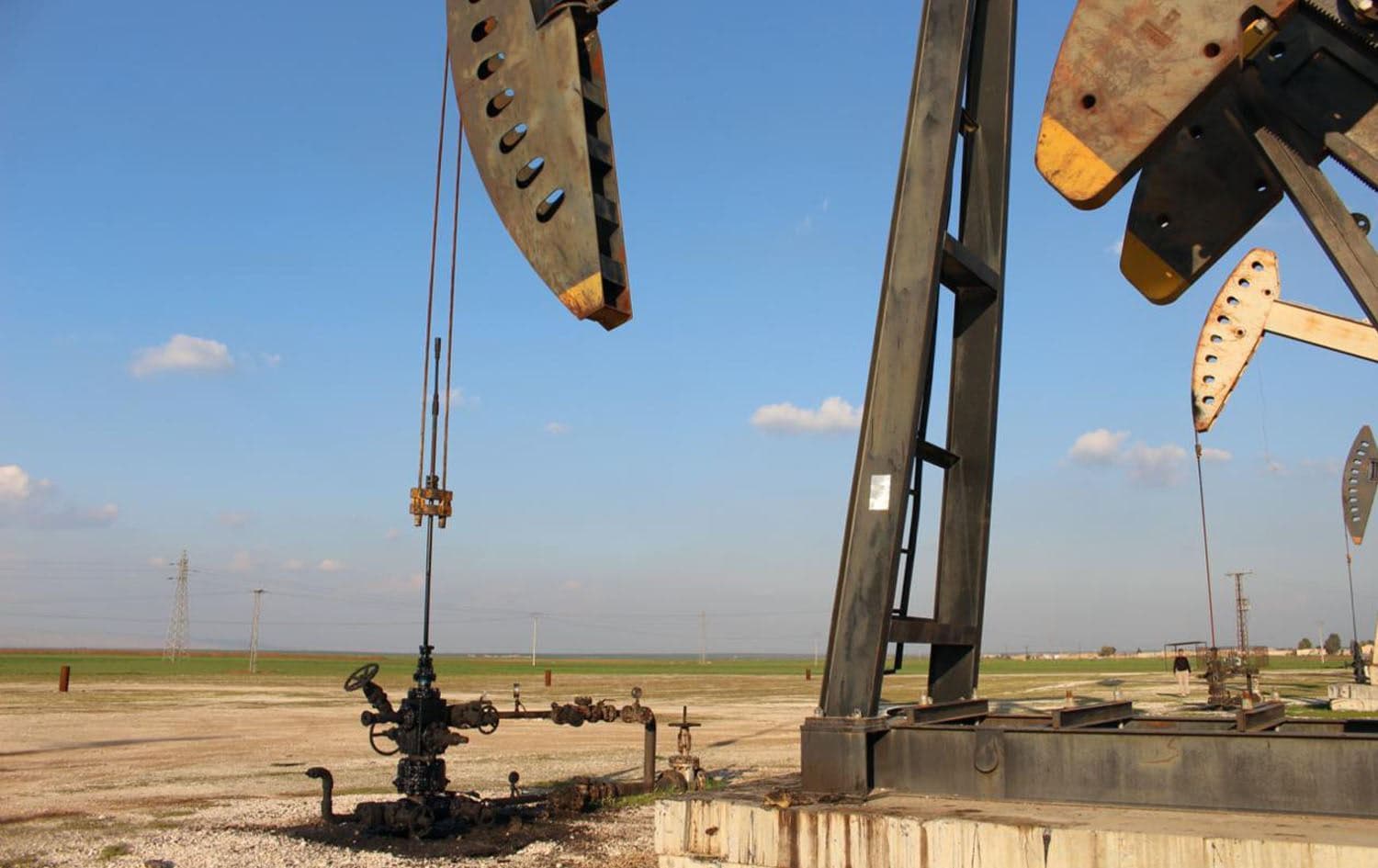
The Rmeilan sector, known as “Sector One,” includes the “Rmeilan, Suwaidiyah, Qarachok, Hamza, Alyan, Sazabeh, Ode and Tigris fields”, all of which remain under local control. Ibrahim said production capacity stands at 110,000 barrels per day, but output has fallen over the past 10 to 12 days to between 70,000 and 80,000 barrels per day due to access constraints.
“All of it is sent to our own refineries, and no quantity goes outside,” he said, adding that production is used to supply diesel and fuel and is not currently being sold.
Nalin Hassan contributed to this report from Erbil.
The following is the full transcript for the interview with Ahmed Ibrahim:
Rudaw: Starting from the February 9 meeting, what was proposed in that meeting? What was the outcome of the visit by the Syrian Ministry of Energy and Security delegation?
Ahmed Ibrahim: Their coming here was only for an introduction. A press conference was held before the Rmeilan administration, and they also visited the Ode field in Tirba Spi [al-Qahtaniyah]. The words spoken were general; they want relations to be established. This was the first visit for discussion about the file of merging our company with the Syrian Petroleum Company, according to the agreement that has been made.
What did the Syrian Petroleum Company want in that meeting? How do they want the management of the oil fields in the Jazira region of Rojava to be?
Nothing like that was discussed. What was discussed was ‘merger.’ This process is not easy and requires a lot of time, because we have established our company and have been working for 14 years, and have our own management. They did not set a harsh condition, and this visit was only as a beginning for implementing the agreement.
Will they visit again? Have you set any date for another meeting?
We expect them to come back, but so far we have not set any specific time.
You said you have established your company and have an oil management within the autonomous administration in Rojava. Will your employees remain in the Rmeilan administration?
They have verbally approved our employees. They told us that all employees will remain, and they will not interfere with our management style.
Will your employees become employees of the Syrian energy ministry?
A final agreement has not yet been reached. Whenever the agreement is signed, at that time they will become their employees. If agreement is not reached, that is another matter, and it is still too early to talk about it.
How many employees do you have in the Rmeilan oil administration?
They asked us for that figure, and we provided it. In Rmeilan and all the sectors affiliated with it, including those we have recently put into operation, together with those old state employees who remained with us, the number is more than 4,000 employees.
Is this number sufficient, or do you need new employees?
For now, it is sufficient. Let us see what changes occur in the future, but generally this number is less compared to the government era, because at that time there were more than 6,000 employees.
How many oil fields currently remain under your control?
The Rmeilan sectors are completely under our control, known as ‘Sector One’; it consists of the fields of Rmeilan, Suwaidiyah, Qarachok, Hamza, Alyan, Sazabeh, Ode and Tigris. All of these are under our control, we manage them and invest in them.
How much is the daily production of these oil wells?
We have the capacity to produce 110,000 barrels of oil per day, but unfortunately now due to this abnormal situation, production has decreased. There are some wells we cannot use or access. Currently, we produce between 70,000 to 75,000 to 80,000 barrels per day.
Since when has your production dropped to 70,000 barrels?
It has been approximately 10 to 12 days.
Is this 70,000 barrels per day only for internal needs, or are you sending it elsewhere?
No, all of it is sent to our own refineries, and no quantity goes outside.
Why is it only sent to the refineries? Is it only for electricity or for other purposes?
To provide diesel and fuel in general.
Meaning you are not selling the oil in any way?
No, in the current situation, we are not selling.
Has any external company contacted you wanting to invest in Rmeilan?
No, no one has contacted us, but the Damascus delegation told them several companies have contacted them for investment in other areas, but for our region's oil, nothing is clear yet.