


Turkey

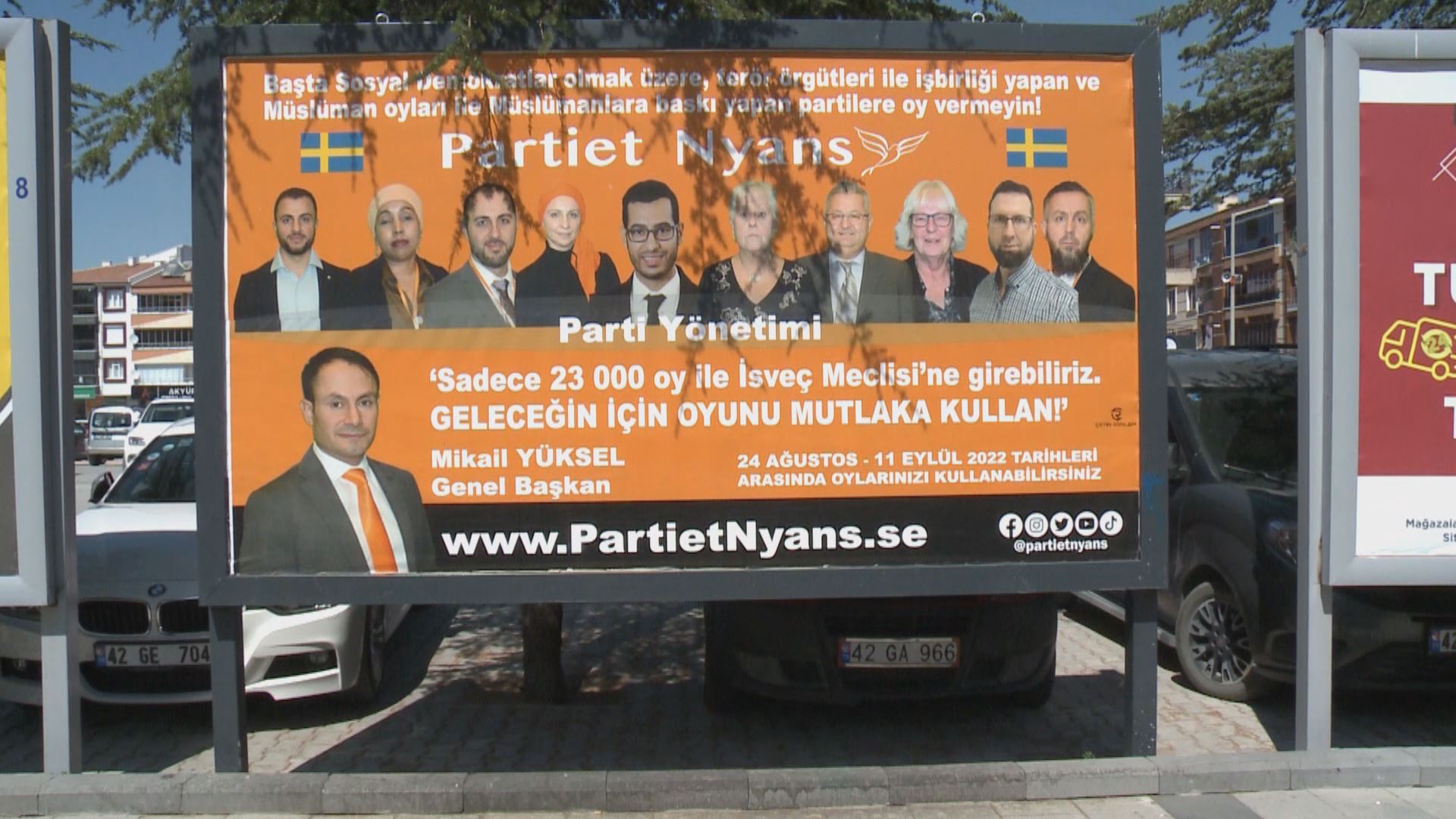
Billboard shows candidates for Swedish general elections for September 11 elections. Date: September 6, 2022. Photo: Rudaw
ERBIL, Kurdistan Region - A Kurdish village in Turkey has become one of the centres of campaign for Swedish elections for decades as tens of thousands of villagers have the Scandinavian country's citizenship.
General elections will be held in Sweden on Sunday. The left-wing Social Democrats are struggling to keep their dominance as their rival right-wing parties seem to be stronger.
In the sixties, a wave of migrants from Kulu district in Turkey’s Konya province migrated to Sweden due to the financial crisis at home. Around 50,000 residents of the district have migrated to the Scandinavian country so far. Those who left Turkey after the nineties were mostly fleeing political oppression at home, especially Kurds. Kulu has been populated by Kurds and Turks.
Kulu has been one of the key electoral constituencies for the Swedish elections for decades. Sweden's Former Prime Minister Fredrik Reinfeldt visited the district in 2009 before visiting the capital city of Ankara. The town’s biggest park has been named after Olof Palme - former Swedish prime minister who was assassinated in 1986.
Zincirlikuyu (Ome) is a Kurdish village in Kulu. Residents told Rudaw on Tuesday that they have participated warmly in Swedish elections.
Resit Karakuyu lives in Sweden but is on a trip to his village, Zincirlikuyu. He said he has mostly supported the Social Democrats.
“Most of the Swedish Kurds, especially those who are there due to political reasons, are educated, intellectual, writers and politicians,” he told Rudaw. “Kurds are very prominent in Sweden. They vote for Kurdish candidates in elections.”
“I went there between 1975-6. We did not migrate due to political reasons but the economic ones. We could not find work here. People were living in dire condition. We were young, so left,” he added.
According to data obtained by Rudaw, seven thousand residents of Ome live in Sweden and only two thousand remain in the village now.
The population of Kulu is about 50,000, according to official figures from the town’s municipality in 2019.
General elections will be held in Sweden on Sunday. The left-wing Social Democrats are struggling to keep their dominance as their rival right-wing parties seem to be stronger.
In the sixties, a wave of migrants from Kulu district in Turkey’s Konya province migrated to Sweden due to the financial crisis at home. Around 50,000 residents of the district have migrated to the Scandinavian country so far. Those who left Turkey after the nineties were mostly fleeing political oppression at home, especially Kurds. Kulu has been populated by Kurds and Turks.
Kulu has been one of the key electoral constituencies for the Swedish elections for decades. Sweden's Former Prime Minister Fredrik Reinfeldt visited the district in 2009 before visiting the capital city of Ankara. The town’s biggest park has been named after Olof Palme - former Swedish prime minister who was assassinated in 1986.
Zincirlikuyu (Ome) is a Kurdish village in Kulu. Residents told Rudaw on Tuesday that they have participated warmly in Swedish elections.
Resit Karakuyu lives in Sweden but is on a trip to his village, Zincirlikuyu. He said he has mostly supported the Social Democrats.
“Most of the Swedish Kurds, especially those who are there due to political reasons, are educated, intellectual, writers and politicians,” he told Rudaw. “Kurds are very prominent in Sweden. They vote for Kurdish candidates in elections.”
“I went there between 1975-6. We did not migrate due to political reasons but the economic ones. We could not find work here. People were living in dire condition. We were young, so left,” he added.
According to data obtained by Rudaw, seven thousand residents of Ome live in Sweden and only two thousand remain in the village now.
The population of Kulu is about 50,000, according to official figures from the town’s municipality in 2019.


Comments
Rudaw moderates all comments submitted on our website. We welcome comments which are relevant to the article and encourage further discussion about the issues that matter to you. We also welcome constructive criticism about Rudaw.
To be approved for publication, however, your comments must meet our community guidelines.
We will not tolerate the following: profanity, threats, personal attacks, vulgarity, abuse (such as sexism, racism, homophobia or xenophobia), or commercial or personal promotion.
Comments that do not meet our guidelines will be rejected. Comments are not edited – they are either approved or rejected.
Post a comment