


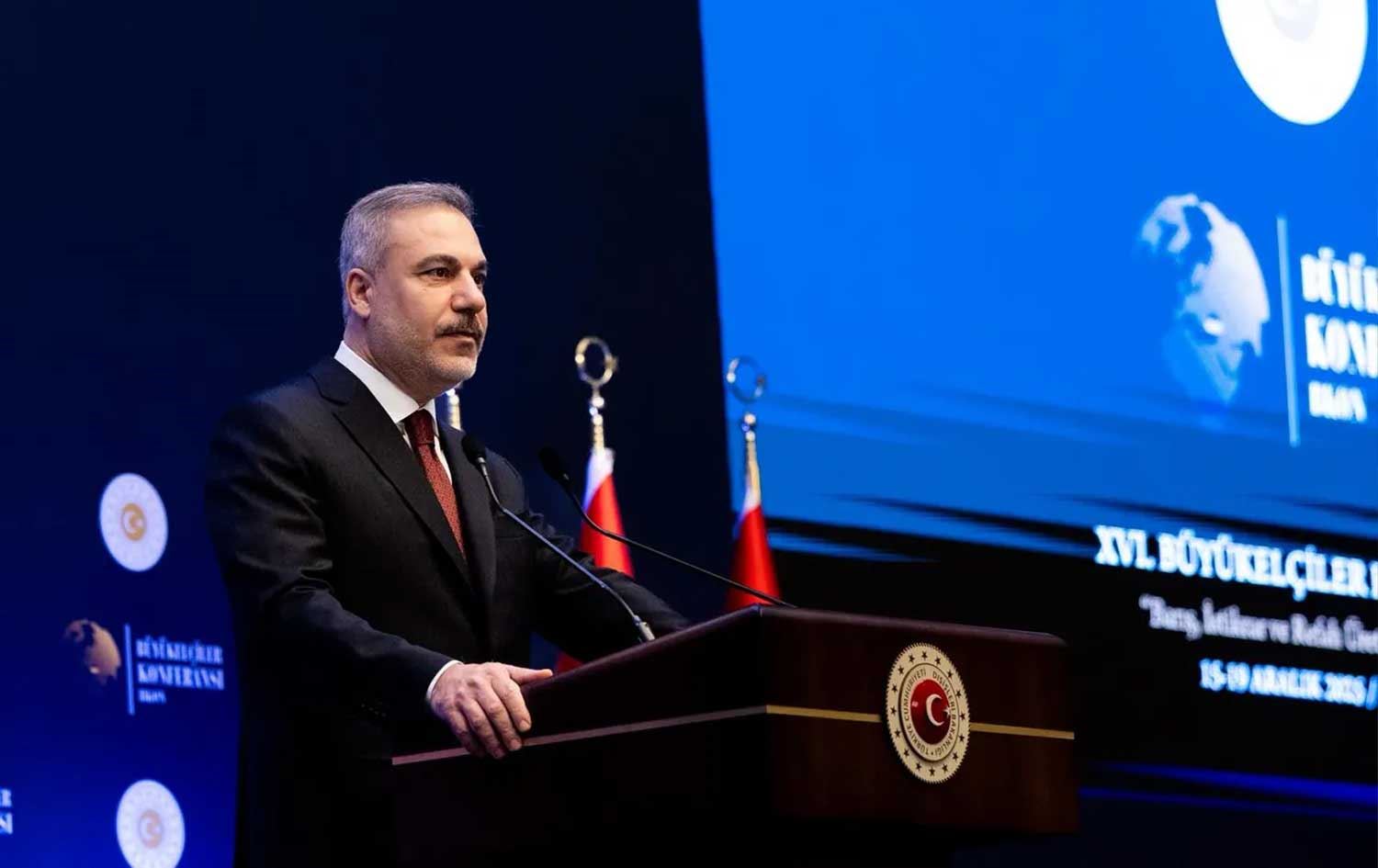
ERBIL, Kurdistan Region - Turkish Foreign Minister Hakan Fidan said on Thursday that Turkey does not want to launch a new military operation against Syrian Democratic Forces (SDF), but warned that delays in implementing an agreement to integrate the Kurdish-led force into the Syrian army are testing Ankara’s patience.
"We hope that issues are resolved through dialogue, negotiation, and peaceful means. We do not want to be forced to resort to military options again,” Fidan told Turkey’s TRT World.
The SDF serves as the de facto military of northeast Syria, also known as Rojava, and is the main ground partner of the US-led global coalition against the Islamic State (ISIS).
On March 10, SDF commander-in-chief Mazloum Abdi signed a landmark agreement with Syria’s interim president, Ahmed al-Sharaa, to bring Rojava’s civil and military institutions under central state authority and establish a nationwide ceasefire.
Turkey has repeatedly stated that full implementation of this agreement is essential to de-escalating tensions in northeastern Syria and avoiding further military action.
Although negotiations to implement the agreement have continued since March, disagreements remain over the future of the SDF. Kurdish representatives seek integration as a unified force, while Damascus favors incorporating fighters individually into the regular army.
Fidan stressed that progress has been slow, particularly regarding what Turkey sees as the core of the agreement. Referring to the SDF as a wing of the People’s Protection Units (YPG), he said "the SDF must understand that the patience of the relevant parties is running out."
Turkey says the YPG include members of the Kurdistan Workers’ Party (PKK) and has designated both as “terrorist organizations,” accusing them of threatening its national security. The YPG, however, has repeatedly denied posing any threat to Turkey and says it remains open to dialogue with its neighbor.
In October, Fidan claimed that the YPG, which controls Rojava, has failed to remove elements that pose a threat to Ankara’s national security.
“The YPG has not yet made any declaration or taken any action indicating that it has abandoned elements that are threats to Turkey's national security. There's nothing about how this will happen,” Fidan said.
The Turkish foreign minister on Thursday called on the SDF to meet its commitments under the March 10 agreement, warning against any delay or deviation from its terms.
"Everyone expects them to adhere to that agreement without delay or distortion, because we do not want to see any deviation from it," Fidan said.
Of note, a media affiliate of the Rojava administration reported Thursday that the SDF will retain three divisions within the Syrian army’s structure under “a preliminary agreement,” noting that negotiations with Damascus are still ongoing.
In a statement posted on X, the North and East Syria Communication (Nescomm) - affiliated with the Democratic Autonomous Administration of North and East Syria (DAANES) - said that “a preliminary agreement has been reached to keep three divisions affiliated with the Syrian Democratic Forces (SDF) within the military structure of the Syrian army.”
Nescomm added that “technical discussions are ongoing through specialized committees from both sides to address details related to roles and organizational structure, in a process expected to see practical steps in the coming period.”
Turkey’s conflict with the PKK, which has lasted for more than four decades, has seen renewed peace efforts this year aimed at ending the violence through dialogue and disarmament.
Recent steps include disarmament measures of the PKK and the formation of a parliamentary committee in Turkey to support the process, with Kurdish leaders calling for legal reforms and confidence-building measures to ensure lasting peace in the region.


Comments
Rudaw moderates all comments submitted on our website. We welcome comments which are relevant to the article and encourage further discussion about the issues that matter to you. We also welcome constructive criticism about Rudaw.
To be approved for publication, however, your comments must meet our community guidelines.
We will not tolerate the following: profanity, threats, personal attacks, vulgarity, abuse (such as sexism, racism, homophobia or xenophobia), or commercial or personal promotion.
Comments that do not meet our guidelines will be rejected. Comments are not edited – they are either approved or rejected.
Post a comment