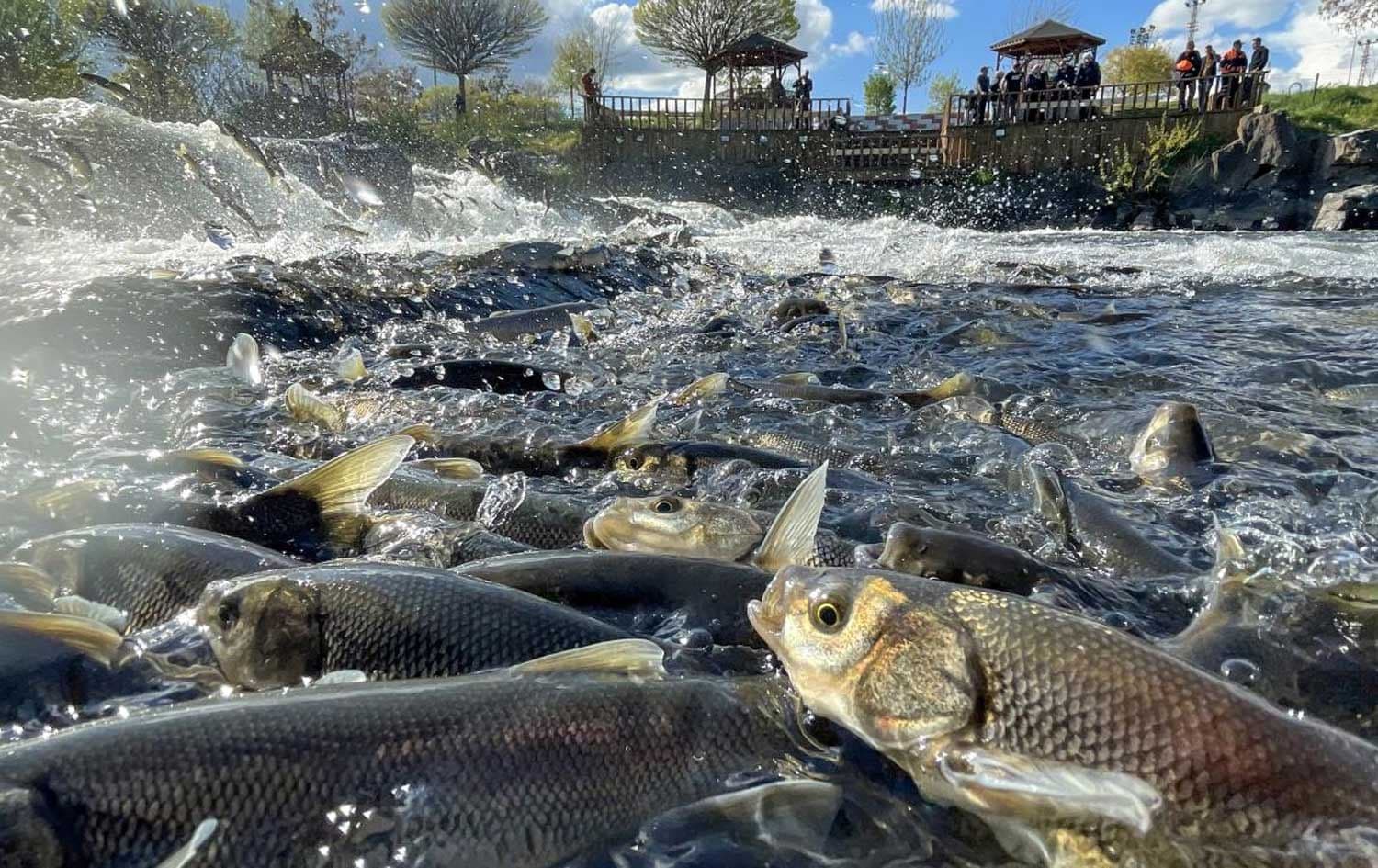
ERBIL, Kurdistan Region - The pearl mullet, an endemic fish found only in Turkey’s southeastern Kurdish province of Van, continues to draw attention from scientists and environmentalists as the only fish species in the world capable of surviving in the highly alkaline waters of a local lake.
The fish is scientifically known as "alburnus tarichi" and is also commonly known as the Van fish or "Inci Kefali" in Turkish.
The species lives exclusively in Lake Van, where the water’s pH level reaches 9.2, making it inhospitable for most aquatic life. Researchers say the fish has adapted over hundreds of thousands of years to survive in the lake’s soda-rich environment.
Mustafa Akkus, a professor at the Faculty of Fisheries at Dicle University, told Rudaw that the fish became isolated in Lake Van nearly 800,000 years ago after volcanic activity cut the lake off from surrounding waterways.
“If we want to understand how the Inci Kefali differs from other fish in the world, we must go back nearly a million years,” Akkus said. “About 800,000 years ago, due to the eruption of the Nemrut volcanic mountain located south of the lake, the lake’s connection to the outside was severed, creating the Lake Van we see today.”
He explained that minerals and chemicals gradually accumulated in the lake because it has no outlet, transforming it into a highly saline and alkaline body of water.
“At that point, the Inci Kefali became trapped in Lake Van with no chance of leaving,” he said.
Akkus described the pearl mullet as an ancient native species of Van, predating many civilizations that later inhabited the region.
“If the Urartians and Assyrians were here 3,000 to 4,000 years ago, the fish has been here for 800,000 years,” he said.
According to Akkus, the fish now plays a major economic role in the region. “Today, this fish provides a livelihood for approximately 30,000 people,” he said. “Every year, 30,000 tons of fish are caught in Turkey's inland waters, 10,000 tons of which are pearl mullet alone.”
He added that the species accounts for one-third of Turkey’s inland fish production and generates more than $12 million annually.
The annual migration of the fish during the spawning season has also boosted eco-tourism in Van province, attracting photographers and visitors from across the region.
“Special festivals are organized annually, and thousands of photographers flock to the region to witness the migration of the fish,” Akkus said.
Fishing the species is prohibited between April 15 and July 15 to protect spawning populations, with security forces guarding rivers and waterways during the migration period.
“Protecting this resource is everyone’s duty, so that it does not remain only as a story or a legend for future generations,” Akkus said. “Every fish that is poached takes 10,000 eggs with it.”
Meanwhile, prominent fisherman Kenan Balci described the pearl mullet as one of Van’s greatest natural treasures.
“This fish has adapted itself to the water of Van, which has a very high soda content. This has given the fish a powerful immune system,” Balci said.
“This fish is like a field for us - we harvest and eat the crop without ever having to plant it,” he added.
The fish is scientifically known as "alburnus tarichi" and is also commonly known as the Van fish or "Inci Kefali" in Turkish.
The species lives exclusively in Lake Van, where the water’s pH level reaches 9.2, making it inhospitable for most aquatic life. Researchers say the fish has adapted over hundreds of thousands of years to survive in the lake’s soda-rich environment.
Mustafa Akkus, a professor at the Faculty of Fisheries at Dicle University, told Rudaw that the fish became isolated in Lake Van nearly 800,000 years ago after volcanic activity cut the lake off from surrounding waterways.
“If we want to understand how the Inci Kefali differs from other fish in the world, we must go back nearly a million years,” Akkus said. “About 800,000 years ago, due to the eruption of the Nemrut volcanic mountain located south of the lake, the lake’s connection to the outside was severed, creating the Lake Van we see today.”
He explained that minerals and chemicals gradually accumulated in the lake because it has no outlet, transforming it into a highly saline and alkaline body of water.
“At that point, the Inci Kefali became trapped in Lake Van with no chance of leaving,” he said.
Akkus described the pearl mullet as an ancient native species of Van, predating many civilizations that later inhabited the region.
“If the Urartians and Assyrians were here 3,000 to 4,000 years ago, the fish has been here for 800,000 years,” he said.
According to Akkus, the fish now plays a major economic role in the region. “Today, this fish provides a livelihood for approximately 30,000 people,” he said. “Every year, 30,000 tons of fish are caught in Turkey's inland waters, 10,000 tons of which are pearl mullet alone.”
He added that the species accounts for one-third of Turkey’s inland fish production and generates more than $12 million annually.
The annual migration of the fish during the spawning season has also boosted eco-tourism in Van province, attracting photographers and visitors from across the region.
“Special festivals are organized annually, and thousands of photographers flock to the region to witness the migration of the fish,” Akkus said.
Fishing the species is prohibited between April 15 and July 15 to protect spawning populations, with security forces guarding rivers and waterways during the migration period.
“Protecting this resource is everyone’s duty, so that it does not remain only as a story or a legend for future generations,” Akkus said. “Every fish that is poached takes 10,000 eggs with it.”
Meanwhile, prominent fisherman Kenan Balci described the pearl mullet as one of Van’s greatest natural treasures.
“This fish has adapted itself to the water of Van, which has a very high soda content. This has given the fish a powerful immune system,” Balci said.
“This fish is like a field for us - we harvest and eat the crop without ever having to plant it,” he added.
Comments
Rudaw moderates all comments submitted on our website. We welcome comments which are relevant to the article and encourage further discussion about the issues that matter to you. We also welcome constructive criticism about Rudaw.
To be approved for publication, however, your comments must meet our community guidelines.
We will not tolerate the following: profanity, threats, personal attacks, vulgarity, abuse (such as sexism, racism, homophobia or xenophobia), or commercial or personal promotion.
Comments that do not meet our guidelines will be rejected. Comments are not edited – they are either approved or rejected.
Post a comment