For over 70 days, the global community has been held hostage by the escalating conflict between the United States, Israel, and Iran. As the world waits to see if a diplomatic breakthrough or a fresh cycle of violence is on the horizon, a startling economic disparity has emerged. Despite being the primary target of international pressure, Iran’s oil industry has proven remarkably resilient, while the production and export capacity of Iraq and the Kurdistan Region have faced a near-total meltdown.
During the conflict, exports from Iraq and the Kurdistan Region have plummeted by 86 percent, and production has decreased by 68 percent. In contrast, Iran’s exports have only dropped by 31 percent, and its production by 48 percent. From this perspective, one can argue that the economic damage of the war to Iraq’s revenue sources has been far greater, as if the war were being waged against Iraq itself rather than Iran.
Production levels: A comparative look
According to Kpler data, Iran’s crude oil production last month was over two million barrels per day (bpd), down from four million in January 2026, before the beginning of the war. However, oil production in Iraq and the Kurdistan Region dropped to 1.35 million bpd in April, down from 4.52 million bpd in January of the same year.
Before the war, Iran’s average daily exports stood at 2.2 million barrels. By April 2026, this dropped to 1.52 million bpd (a 31 percent decrease). Meanwhile, Iraq and the Kurdistan Region saw an unexpected and drastic drop of 86 percent. In February, their average exports were 3.56 million bpd, but by April 2026, they hit a record low of only 300,000 to 400,000 barrels.
The disruption experienced by the Iraqi and Kurdish oil industries during the 40 days of war and 30 days of ceasefire has been much costlier than for Iran. While the conflict was centered on Iran, Iraq’s exports have bottomed out, while Iran continues to export significantly, primarily to China.
Kpler data shows that Iran’s exports have gone through various stages over the last decade, but the volume exported in February 2026 (2.2 million barrels) was unprecedented in the post-COVID era. Although Iran’s buyers previously included China, Syria, Venezuela, and India, during this war, nearly all of its exports have gone to China. For instance, in March 2026, out of 1.87 million barrels exported, 1.8 million went to China, with only 64,000 barrels going to other countries.

Earlier this year, Iran reached production levels similar to those during the JCPOA nuclear deal era. In January 2026, production was over four million bpd, though war conditions have since pulled it down to roughly two million.
Between 2015 and 2026, Iran’s lowest production levels were recorded during the COVID-19 pandemic and the current conflict. The combined production of crude and condensate was 3.1 million bpd in March 2026 but fell to two million last month. This clearly illustrates the impact of Trump-era sanctions and the consequences of the closure of the Strait of Hormuz on Iran's energy sector.

Iraq and Kurdistan's production and exports during the war
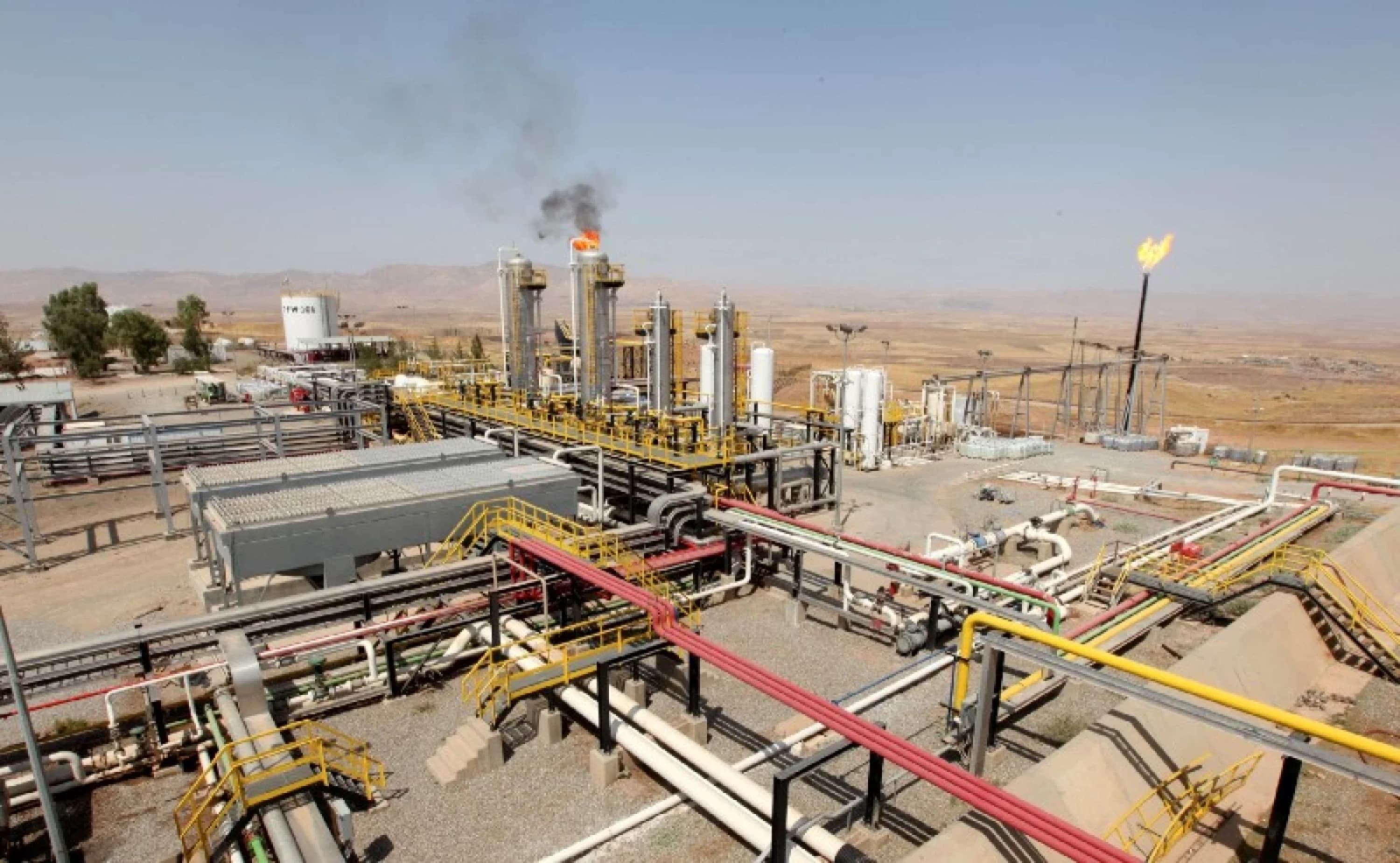
Since the beginning of the US-Israel war with Iran in late February, the energy infrastructure in southern Iraq and the Kurdistan Region has suffered massive damage. This has driven total production down to approximately 1.3 million bpd. In the Kurdistan Region, production has fallen to levels only sufficient for domestic use - roughly 50,000 barrels.
In April 2026, Iraq and the Kurdistan Region's total production fell to 1.3 million bpd (including 28,000 barrels of condensate). This level is even lower than the first month of the war. The primary reason is transportation issues; the number of tankers passing through the Strait of Hormuz in March 2026 was five times higher than in April, when only three to four tankers passed through.

According to Kpler, total exports from Turkey’s Ceyhan port and Basra reached approximately 400,000 bpd in April. However, Iraq Oil Report suggests the figure was even lower, at 310,000 bpd. While Iraq's State Organization for Marketing of Oil (SOMO) and the Iraqi Ministry of Oil have not released official stats, exports have clearly dropped to one-seventh of pre-war levels.

Basra’s oil buyers are generally similar to Iran’s, but during the war, Iraqi exports to China have decreased significantly, whereas Iran maintained its China supply. Before the war, one of Basra's three million bpd went to China. By April 2026, Basra's exports fell to 132,000 bpd - an 8-fold decrease compared to March.
In a desperate move, Iraq recently offered a $30 discount per barrel below market price to any buyer capable of transporting oil from Basra ports. Iraq cannot afford to keep fields closed, as oil accounts for over 90 percent of state revenue; a shutdown of this magnitude effectively means financial insolvency.

Following the Baghdad-Erbil agreement to resume Kurdistan oil exports via pipeline on September 27, 2025, daily exports averaged between 200,000 and 250,000 barrels through February 2026. This fell to 134,000 in March. Last month, a new agreement between the federal government and the Kurdistan Regional Government (KRG) to export Kirkuk oil via the Kurdistan pipeline to Ceyhan port pushed levels back up to 268,000 bpd. The primary buyers of Kurdish and Kirkuk oil are Italy, taking nearly half, followed by Greece and Croatia.

Despite sanctions, Iran has managed to sustain its production and export capabilities. Iran relies more on domestic production and can diversify buyers if given the chance. In contrast, Iraq and the Kurdistan Region - which rely on oil and oil products for 99 percent of their export and near 90 percent of thier budget - are in a precarious position. Iraq imports over a thousand types of goods and products; it sells oil simply to buy food and basic necessities. Any drop in oil revenue leads directly to a loss of purchasing power and a deepening of Dutch Disease.
Ultimately, the consequences and losses of the war for Iraq are far heavier and more long-term than for Iran - both in terms of infrastructure damage and revenue loss. In just one month, Iraq’s oil revenue plummeted from nearly $7 billion to just over $1 billion.
Mahmood Baban is a research fellow at the Rudaw Research Center.
The views expressed in this article are those of the authors and do not necessarily reflect the position of Rudaw.