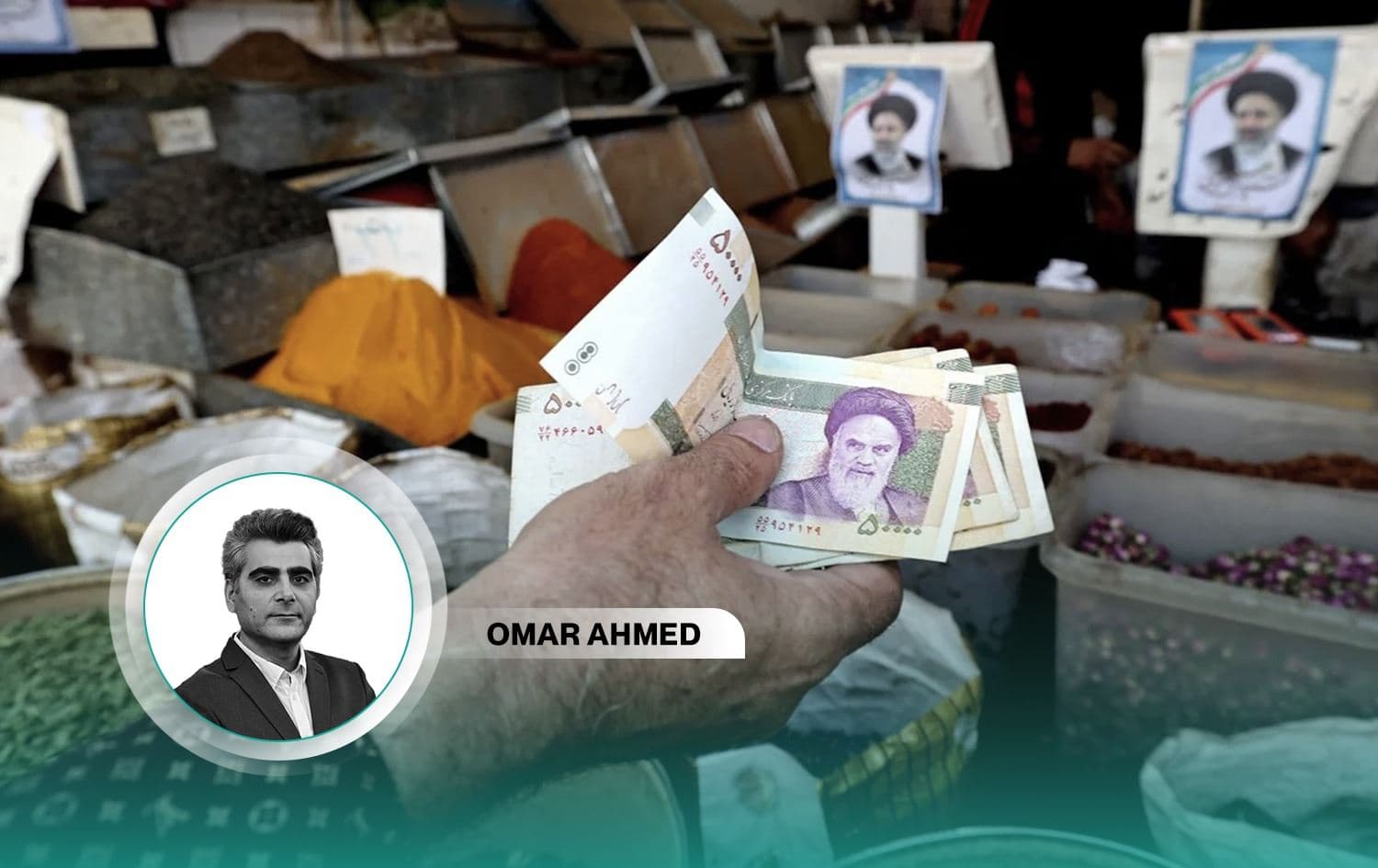
The Iranian economy is currently facing serious structural issues, marked by a growing gap between household earnings and the actual cost of living.
Former senior labor officials estimate that an average family’s food costs have surged to 250 million rial ($195) with total monthly expenses reaching 650 million (over $500).
Given Iran’s minimum wage is around 140 million rial ($110), the average worker can afford a mere 21 percent of basic needs. Put another way, a full month of work covers just one week of expenses.
Geopolitical risk, market sentiment
The roots of the crisis date back to 2018, following the US withdrawal from the Joint Comprehensive Plan of Action (JCPOA) under then-President Donald Trump. The Trump administration’s decision last August to reimpose nuclear-related sanctions has further fueled Iran’s market volatility.
Against this backdrop, the high-stakes negotiations over Iran’s nuclear program - led by US negotiators Steve Witkoff and Jared Kushner and Iranian Foreign Minister Abbas Araghchi - represent a critical inflection point.
The talks, which are set to resume Thursday, are critical to Iranian markets. A diplomatic de-escalation is expected to reduce the "risk premium" currently priced into the Iranian economy, potentially offering vital fiscal breathing room for recovery.
The inflationary landscape, price indices
Iran is battling dual challenges: high inflation and a major budget deficit. Both consumer price and wholesale price hint deep pressure on normal and middle-class citizens:
* Consumer Price Index (CPI): Annual retail prices are up nearly 60 percent.
* Producer Price Index (PPI): Reflecting rising costs for businesses, the PPI has climbed by 54 percent, signaling increased pressure on future retail prices.
* Food Inflation: A staggering 90 percent increase.
Iran’s currency remains extremely vulnerable to speculative trading. After hitting a low of 1.65 million rial against the US dollar last week, the currency clawed back to 1.62 million after Tehran signaled optimism that it could reach a nuclear deal with the US.
Meanwhile, capital markets remain cautious: the Tehran Stock Exchange has dropped by 20 percent over the past month - signalling a bear market and deep economic uncertainty - as investors await the outcome of nuclear talks.
Fiscal projections for the upcoming Iranian year
Iran's fiscal year draft budget beginning March 21 projects oil prices at $70 to $75 per barrel. However, Iran faces a revenue deficit due to a “sanctions discount” slashing the price of Iranian crude by $12 to $15 per barrel. Tehran is aiming for export volumes at 1.5 million to 1.7 million barrels per day.
Economic modeling suggests two primary trajectories for the new year:

If the nuclear talks fail, the Iranian government may be forced to use monetary financing, expanding the money supply to cover deficit gaps. This would likely lead to another currency devaluation, pushing the rial down to 2 million against the dollar - a further 20 percent decline. Alternatively, successful negotiations could stabilize the economy and the currency, allowing for a more predictable fiscal policy in the new Iranian year.
Omar Ahmed is editor-in-chief of Rudaw’s Economy Desk.
The views expressed in this article are those of the author and do not necessarily reflect the position of Rudaw.