World
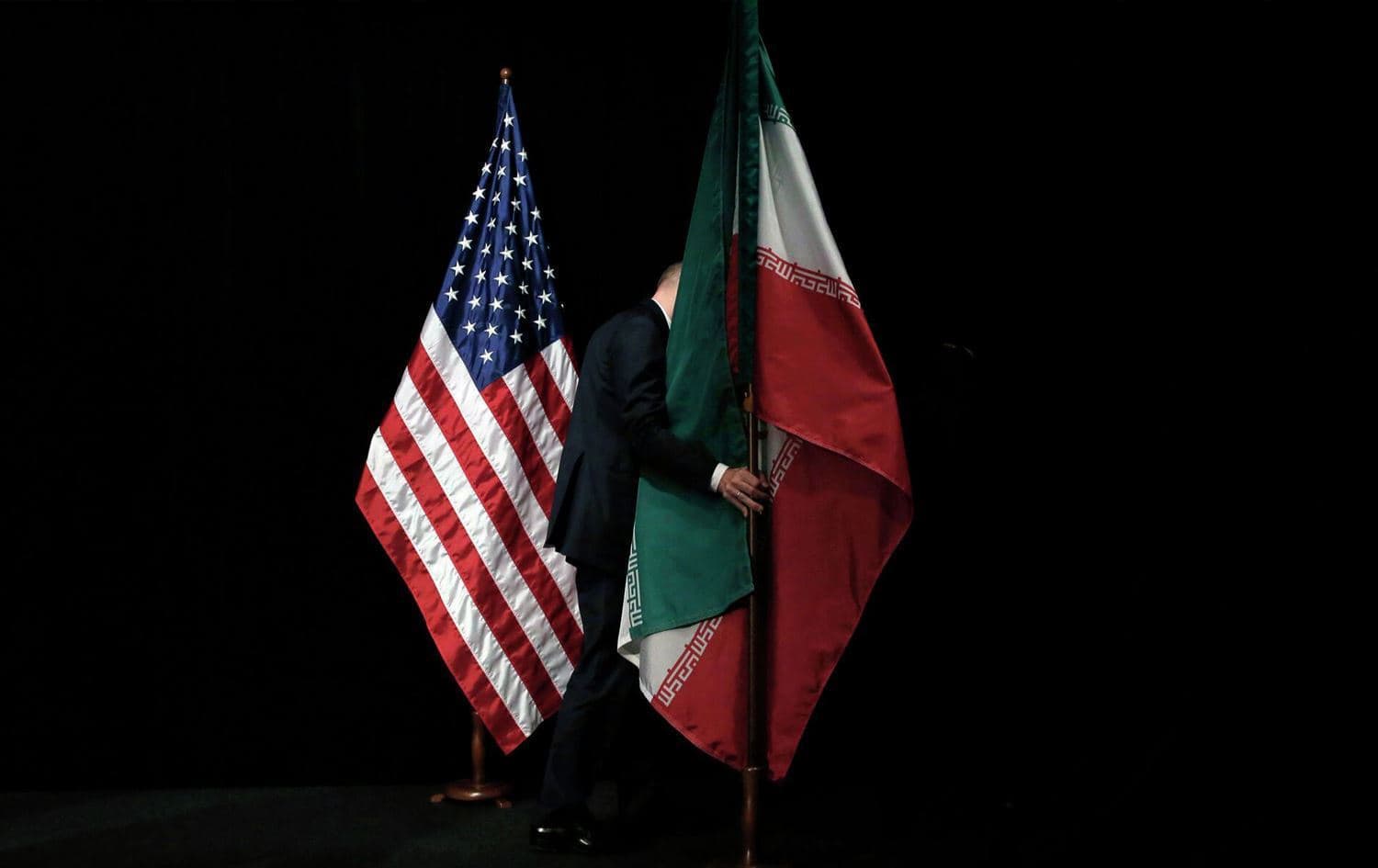
A staff member removes the Iranian flag from the stage after a group picture of foreign ministers and representatives of Unites States, Iran, China, Russia, Britain, Germany, France and the European Union during the nuclear talks at Austria International Centre in Vienna, Austria, on July 14, 2015. Photo: AFP
ERBIL, Kurdistan Region - The latest round of indirect nuclear talks between the United States and Iran mediated by Muscat, scheduled for Saturday, has been postponed for “logistical reasons,” Oman’s foreign minister announced.
“For logistical reasons we are rescheduling the US Iran meeting provisionally planned for Saturday May 3rd. New dates will be announced when mutually agreed,” Badr Albusaidi said on X.
Iran’s foreign ministry confirmed the postponement of the talks, which were set to be held in Rome, saying it came at the request of Oman.
“The next possible date will be announced later,” ministry spokesperson Esmail Baghaei told reporters.
Indirect talks between Iranian Foreign Minister Abbas Araghchi and US special envoy Steve Witkoff about Iran’s nuclear program and sanctions relief began on April 12 in Oman, mediated by Albusaidi.
Last week, US President Donald Trump said the talks were “doing very well.”
“We could have a very, very good decision and a lot of lives will be saved,” he added.
After the latest indirect talks, Araghchi said that progress was achieved and they “reached a better understanding on several principles and objectives.”
Under a 2015 nuclear deal with world powers, also known as the Joint Comprehensive Plan of Action (JCPOA), Tehran agreed to curb its nuclear enrichment program for much-needed relief from crippling sanctions.
But the deal began unraveling in 2018 when Trump, during his first term, unilaterally withdrew and imposed biting sanctions on the Islamic republic, which in turn began rolling back on its nuclear commitments.
Upon returning to office, Trump in early February restored his “maximum pressure” policy against Tehran, arguing that it is “too close” to a nuclear weapon and seeking a new deal with Tehran.
Tehran has always asserted that its nuclear program is peaceful and that nuclear weapons go against the Islamic republic’s doctrine.
“For logistical reasons we are rescheduling the US Iran meeting provisionally planned for Saturday May 3rd. New dates will be announced when mutually agreed,” Badr Albusaidi said on X.
Iran’s foreign ministry confirmed the postponement of the talks, which were set to be held in Rome, saying it came at the request of Oman.
“The next possible date will be announced later,” ministry spokesperson Esmail Baghaei told reporters.
Indirect talks between Iranian Foreign Minister Abbas Araghchi and US special envoy Steve Witkoff about Iran’s nuclear program and sanctions relief began on April 12 in Oman, mediated by Albusaidi.
Last week, US President Donald Trump said the talks were “doing very well.”
“We could have a very, very good decision and a lot of lives will be saved,” he added.
After the latest indirect talks, Araghchi said that progress was achieved and they “reached a better understanding on several principles and objectives.”
Under a 2015 nuclear deal with world powers, also known as the Joint Comprehensive Plan of Action (JCPOA), Tehran agreed to curb its nuclear enrichment program for much-needed relief from crippling sanctions.
But the deal began unraveling in 2018 when Trump, during his first term, unilaterally withdrew and imposed biting sanctions on the Islamic republic, which in turn began rolling back on its nuclear commitments.
Upon returning to office, Trump in early February restored his “maximum pressure” policy against Tehran, arguing that it is “too close” to a nuclear weapon and seeking a new deal with Tehran.
Tehran has always asserted that its nuclear program is peaceful and that nuclear weapons go against the Islamic republic’s doctrine.
Comments
Rudaw moderates all comments submitted on our website. We welcome comments which are relevant to the article and encourage further discussion about the issues that matter to you. We also welcome constructive criticism about Rudaw.
To be approved for publication, however, your comments must meet our community guidelines.
We will not tolerate the following: profanity, threats, personal attacks, vulgarity, abuse (such as sexism, racism, homophobia or xenophobia), or commercial or personal promotion.
Comments that do not meet our guidelines will be rejected. Comments are not edited – they are either approved or rejected.
Post a comment