


World

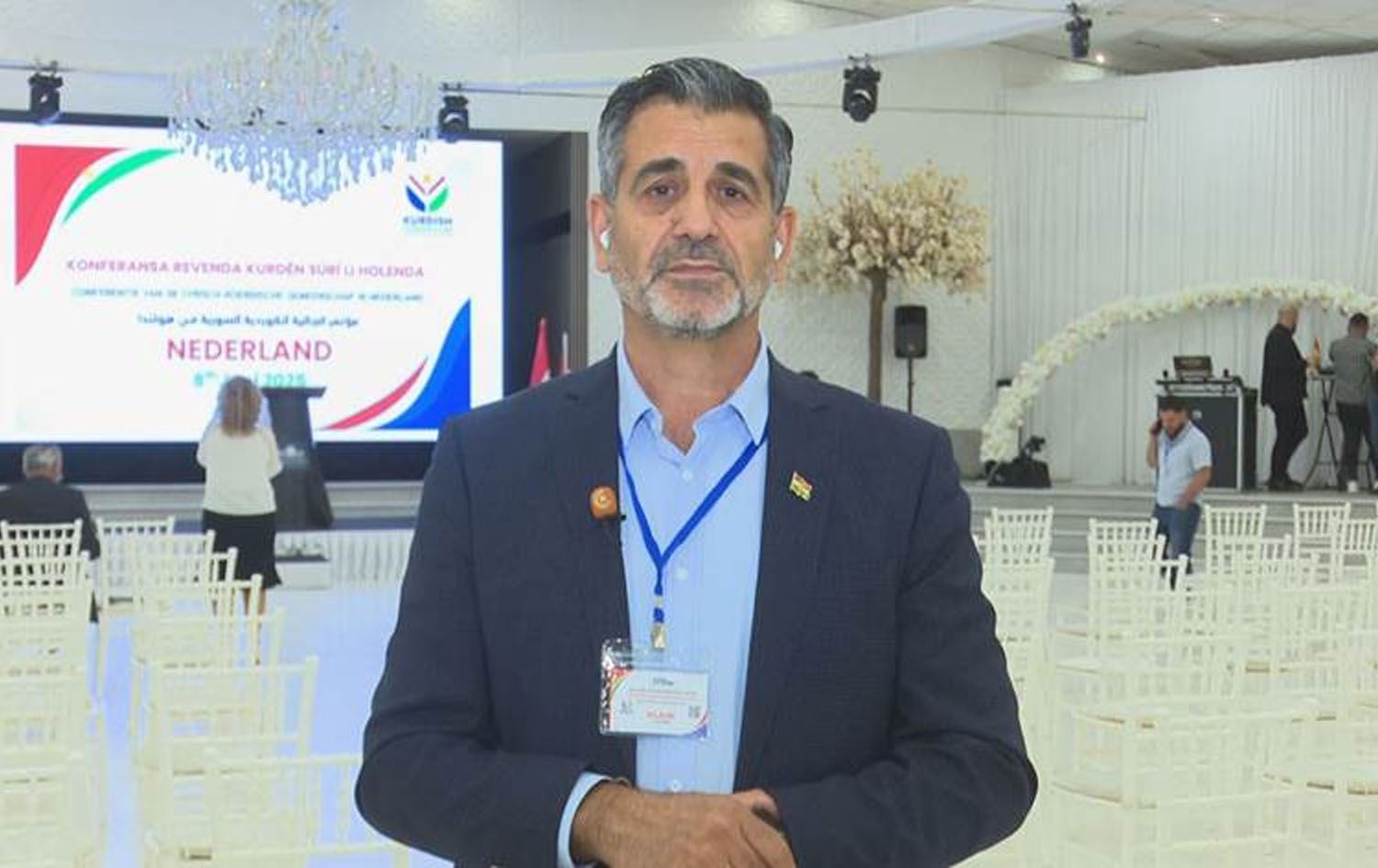
Ster Ahmad, a member of the preparatory committee speaks to Rudaw in Arnhem, Netherlands on June 8, 2025. Photo: Screengrab/Rudaw
ERBIL, Kurdistan Region - A group of Kurds from northeast Syria (Rojava) have established an organization in the Dutch city of Arnhem to “unite and represent” the estimated 50,000 Rojava Kurds living in the Netherlands, a member of the preparatory committee said on Sunday.
Speaking to Rudaw during the launch event, Ster Ahmad, a committee member, explained that “over the past 14 years, a significant number of Rojava Kurds have arrived in the Netherlands, but unfortunately, until now, there hasn’t been a comprehensive organization to bring them together and protect their rights.”
Asked about the total number of Rojava Kurds in the Netherlands, Ahmad noted that official statistics are unavailable, as Rojava Kurds are typically categorized as Syrians.
“There are more than 150,000 Syrians in the Netherlands,” he said. “Before 2011, there were over 8,000 Rojava Kurds here. Now, we estimate the number exceeds 50,000.”
The newly-formed organization, called the Western Kurdistan Kurds Association, aims to focus on artistic, diplomatic, and social initiatives. It will also advocate for the rights and political causes of Kurds in Rojava.
This initiative adds to a growing trend of Kurdish organizations emerging across Europe in recent months.
In early May, a new Kurdish institute officially opened in the southwestern Swiss city of Lausanne. Modeled in part after the Kurdish Institute in Paris - established in February 1983 - the Lausanne institute is expected to work towards preserving and promoting Kurdish culture, heritage and language.
The Kurdish Institute in Paris is a non-political, secular organization devoted to the preservation and promotion of Kurdish language, culture, and heritage. It remains a vital hub for Kurdish intellectuals, artists, scholars, and members of the general public interested in Kurdish studies.


Comments
Rudaw moderates all comments submitted on our website. We welcome comments which are relevant to the article and encourage further discussion about the issues that matter to you. We also welcome constructive criticism about Rudaw.
To be approved for publication, however, your comments must meet our community guidelines.
We will not tolerate the following: profanity, threats, personal attacks, vulgarity, abuse (such as sexism, racism, homophobia or xenophobia), or commercial or personal promotion.
Comments that do not meet our guidelines will be rejected. Comments are not edited – they are either approved or rejected.
Post a comment