


World

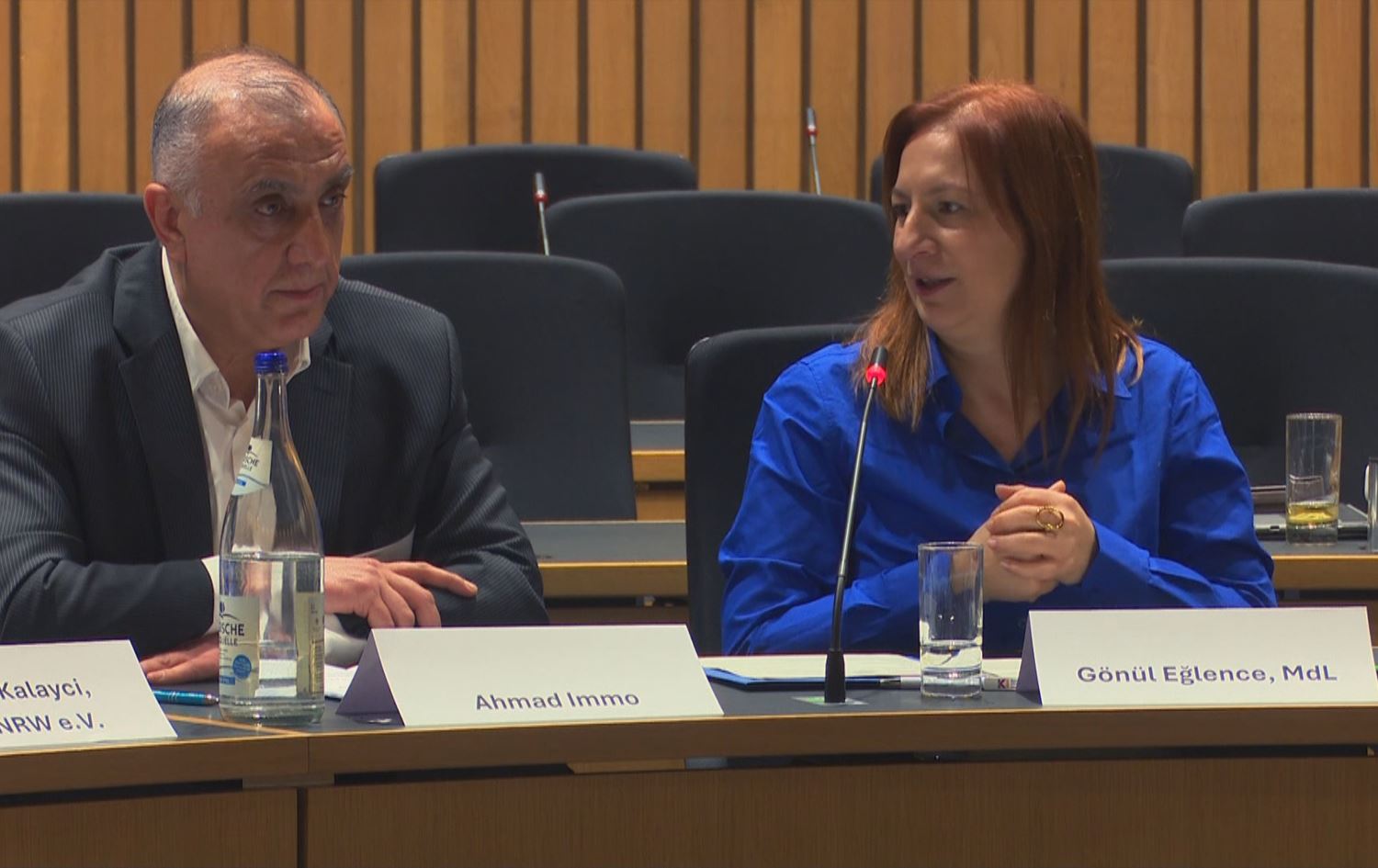
Green Party parliamentarian Gonul Eglence in North Rhine-Westphalia state parliament in Dusseldorf, Germany on December 13, 2025. Photo: screengrab/Rudaw
ERBIL, Kurdistan Region - A German lawmaker hosted an event at the North Rhine-Westphalia state parliament in Dusseldorf, bringing together Kurds from northeast Syria (Rojava), as well as Alawite, Druze, and Christian Syrians, to discuss the future of their country in the post-Bashar al-Assad era.
“In my opinion, it's very important to bring together different ethnic groups from the diaspora and support them, because they all have a common interest, which is protecting minorities,” Green Party parliamentarian Gonul Eglence told Rudaw at the panel on Saturday. “I want to protect that interest, it doesn't matter if they're in Germany or Syria. We always want to think globally and act locally.”
Eglence, who is of Turkish origin, said her aim in organizing the meeting was to listen to representatives of Syria’s diverse civil society groups.
Some participants voiced concern about the governing approach of Syria’s new authorities.
“We are facing the repetition of the same behavior of the Assad regime before, also, the insistence of the Assad regime upon centralism for example. Today, the new authority in Damascus is insisting upon centralism,” Samer Fahd, a Druze community activist based in Germany, told Rudaw. “Previously we had a kind of autonomous management and administration, but now the new authorities are demanding centralization.”
Medya Dhir, a human rights activist from Rojava, said during the panel that Berlin should provide “conditional” assistance to Syria’s new government, stressing the need to prioritize human rights and minority protections.
In March, the European Union pledged nearly €2.5 billion (about $2.7 billion) in aid for Syria, while Germany allocated around €300 million (approximately $327 million) to UN agencies and selected organizations assisting the country.
The German government has said it “played a key role” in the European Union’s May decision to lift all economic sanctions on Syria.
Despite the move, Germany and its European partners continue to take a cautious approach toward Damascus, repeatedly stressing that formal recognition or reconstruction funding will depend on the formation of an inclusive transitional government and tangible progress on human rights and democratic reforms.
Germany’s foreign ministry told Rudaw in August that Berlin’s assistance to Syria is being channeled exclusively through the United Nations and non-governmental organizations, adding that “no [direct] payments are being made” to the interim authorities in Damascus.
Zinar Shino contributed to this report from Dusseldorf, Germany.
“In my opinion, it's very important to bring together different ethnic groups from the diaspora and support them, because they all have a common interest, which is protecting minorities,” Green Party parliamentarian Gonul Eglence told Rudaw at the panel on Saturday. “I want to protect that interest, it doesn't matter if they're in Germany or Syria. We always want to think globally and act locally.”
Eglence, who is of Turkish origin, said her aim in organizing the meeting was to listen to representatives of Syria’s diverse civil society groups.
Some participants voiced concern about the governing approach of Syria’s new authorities.
“We are facing the repetition of the same behavior of the Assad regime before, also, the insistence of the Assad regime upon centralism for example. Today, the new authority in Damascus is insisting upon centralism,” Samer Fahd, a Druze community activist based in Germany, told Rudaw. “Previously we had a kind of autonomous management and administration, but now the new authorities are demanding centralization.”
Medya Dhir, a human rights activist from Rojava, said during the panel that Berlin should provide “conditional” assistance to Syria’s new government, stressing the need to prioritize human rights and minority protections.
In March, the European Union pledged nearly €2.5 billion (about $2.7 billion) in aid for Syria, while Germany allocated around €300 million (approximately $327 million) to UN agencies and selected organizations assisting the country.
The German government has said it “played a key role” in the European Union’s May decision to lift all economic sanctions on Syria.
Despite the move, Germany and its European partners continue to take a cautious approach toward Damascus, repeatedly stressing that formal recognition or reconstruction funding will depend on the formation of an inclusive transitional government and tangible progress on human rights and democratic reforms.
Germany’s foreign ministry told Rudaw in August that Berlin’s assistance to Syria is being channeled exclusively through the United Nations and non-governmental organizations, adding that “no [direct] payments are being made” to the interim authorities in Damascus.
Zinar Shino contributed to this report from Dusseldorf, Germany.


Comments
Rudaw moderates all comments submitted on our website. We welcome comments which are relevant to the article and encourage further discussion about the issues that matter to you. We also welcome constructive criticism about Rudaw.
To be approved for publication, however, your comments must meet our community guidelines.
We will not tolerate the following: profanity, threats, personal attacks, vulgarity, abuse (such as sexism, racism, homophobia or xenophobia), or commercial or personal promotion.
Comments that do not meet our guidelines will be rejected. Comments are not edited – they are either approved or rejected.
Post a comment