


Error occured during this request! Please try again later.
World

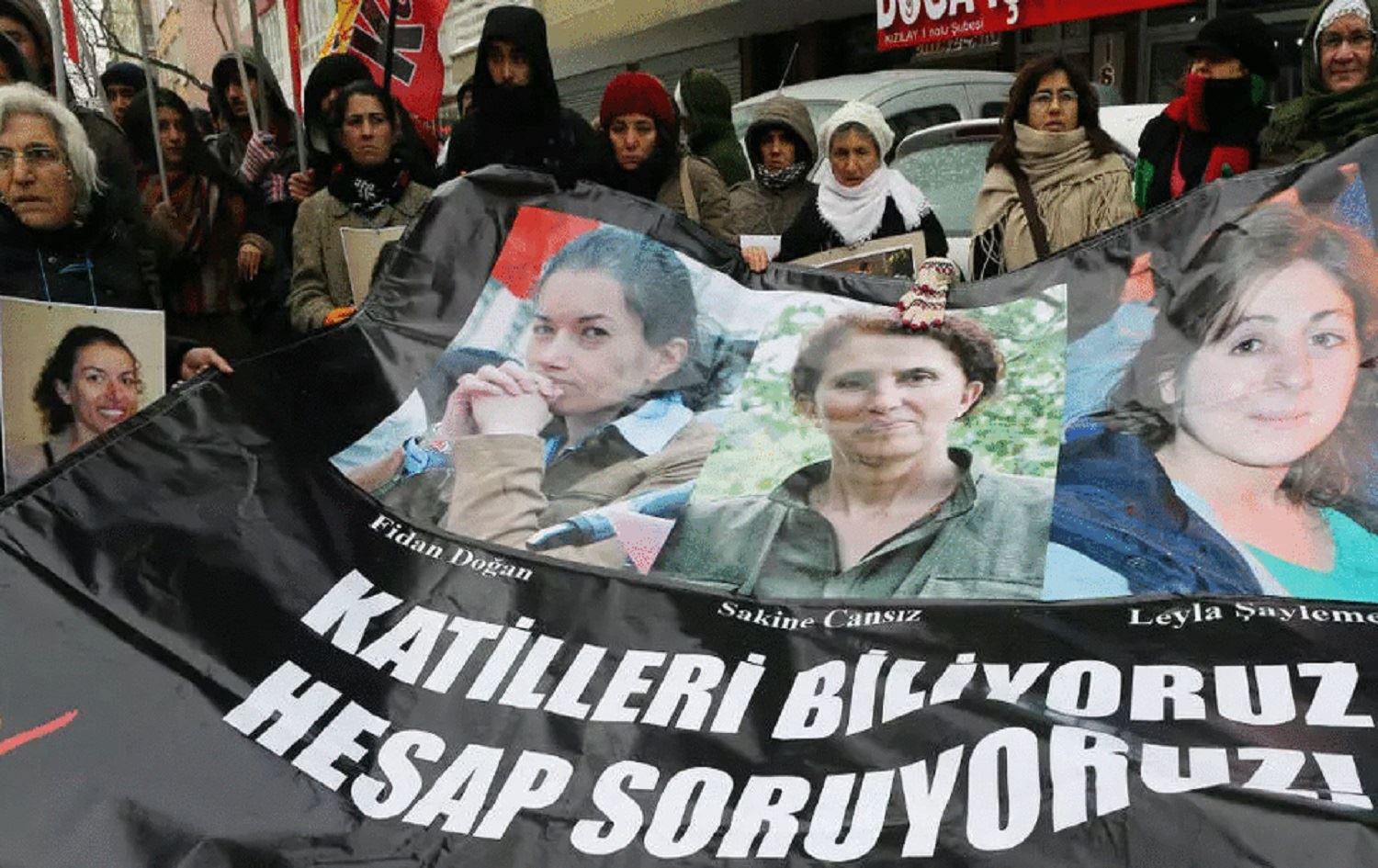
Protesters in Ankara on January 10, 2015, demand justice for the killings of three Kurdish activists in Paris. Photo: Adem Altan/ AFP
ERBIL, Kurdistan Region — No legal progress has been made in French courts over the assassinations of three female Kurdish activists in Paris eight years ago, says a lawyer involved in the case, who expects new developments in spring.
Jean-Louis Malterre, lawyer for the families of the victims, said on Saturday - the eighth anniversary of the assassinations - that there has been no developments regarding the case, slamming the French government for designating the case as “secret”.
“We call on the French government to disclose [facts about] the crime, and not sacrifice it for the sake of its political interests [with Turkey],” the lawyer told Mezopotamya Agency (MA), a pro-Kurdish news outlet in Turkey.
Three Kurdish activists, including co-founder of the Kurdistan Workers’ Party (PKK) Sakine Cansiz, were assassinated at a Kurdish cultural center in Paris on January 9, 2013. The PKK is an armed group fighting for the increased cultural and political rights of Kurds in Turkey.
Omer Gunay, a Turkish nationalist, was initially the only person suspected of perpetrating the attack, and was charged with "assassinations in connection with a terrorist enterprise". He died in December 2016 at the Pitié-Salpétrière hospital due to a fatal brain injury, and his case was closed.
However, a probe was launched into the alleged involvement of Turkish intelligence in 2017 following Gunay’s death. Ankara officially denied any involvement in the incident in January 2014, and the probe garnered no further evidence.
An anti-terror French court was mandated in May 2019 to reopen the case, after the families of those assassinated filed a complaint in March 2018.
Malterre told MA that the families were supposed to give testimonies to the court in spring 2020, “but this did not happen due to the spread of coronavirus.”
“However, the probe has resumed recently, and we expect new things to happen in spring although this is not confirmed news.”
At the time of the assassinations, the Turkish government was in peace talks with the PKK. This development and a number of others harmed the process, but the two sides reached a deal months later, which lasted for two and half years.
Protests are expected in Paris on Saturday to commemorate the slain activists.
Jean-Louis Malterre, lawyer for the families of the victims, said on Saturday - the eighth anniversary of the assassinations - that there has been no developments regarding the case, slamming the French government for designating the case as “secret”.
“We call on the French government to disclose [facts about] the crime, and not sacrifice it for the sake of its political interests [with Turkey],” the lawyer told Mezopotamya Agency (MA), a pro-Kurdish news outlet in Turkey.
Three Kurdish activists, including co-founder of the Kurdistan Workers’ Party (PKK) Sakine Cansiz, were assassinated at a Kurdish cultural center in Paris on January 9, 2013. The PKK is an armed group fighting for the increased cultural and political rights of Kurds in Turkey.
Omer Gunay, a Turkish nationalist, was initially the only person suspected of perpetrating the attack, and was charged with "assassinations in connection with a terrorist enterprise". He died in December 2016 at the Pitié-Salpétrière hospital due to a fatal brain injury, and his case was closed.
However, a probe was launched into the alleged involvement of Turkish intelligence in 2017 following Gunay’s death. Ankara officially denied any involvement in the incident in January 2014, and the probe garnered no further evidence.
An anti-terror French court was mandated in May 2019 to reopen the case, after the families of those assassinated filed a complaint in March 2018.
Malterre told MA that the families were supposed to give testimonies to the court in spring 2020, “but this did not happen due to the spread of coronavirus.”
“However, the probe has resumed recently, and we expect new things to happen in spring although this is not confirmed news.”
At the time of the assassinations, the Turkish government was in peace talks with the PKK. This development and a number of others harmed the process, but the two sides reached a deal months later, which lasted for two and half years.
Protests are expected in Paris on Saturday to commemorate the slain activists.


Comments
Rudaw moderates all comments submitted on our website. We welcome comments which are relevant to the article and encourage further discussion about the issues that matter to you. We also welcome constructive criticism about Rudaw.
To be approved for publication, however, your comments must meet our community guidelines.
We will not tolerate the following: profanity, threats, personal attacks, vulgarity, abuse (such as sexism, racism, homophobia or xenophobia), or commercial or personal promotion.
Comments that do not meet our guidelines will be rejected. Comments are not edited – they are either approved or rejected.
Post a comment