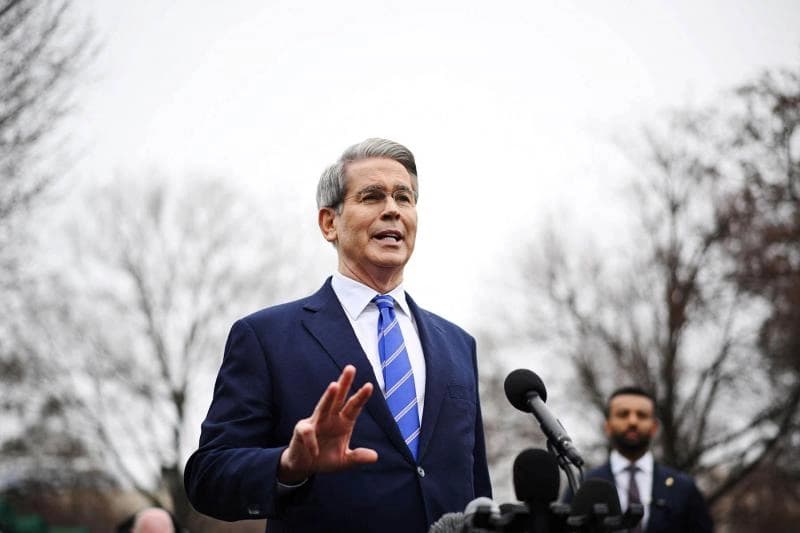
ERBIL, Kurdistan Region - Sweden’s foreign minister said on Monday that there is a window of opportunity in Syria regarding minority rights, adding that it is important for the interim government in Damascus to move in the right direction.
“When I meet with the high-level representatives of the Syrian government, I always raise the issue of the protection of the minorities and it is very important that we now have an inclusive way forward in Syria, and we really have a window of opportunity but it is important that they move in the right direction,” she told Rudaw.
Her remarks came on the sidelines of a European Union meeting on Monday during which the bloc lifted sanctions on Syrian defense minister Murhaf Abu Qasra and interior minister Anas Khattab. The move follows a May 2025 decision by the EU to ease broader economic sanctions, including restrictions on banking, energy, trade, and transport, in support of post-regime stability.
The EU has lifted most of the sanctions imposed on Syria during Bashar al-Assad’s rule. However, it has maintained an arms embargo as well as restrictions on certain technological tools that could potentially be used for internal repression and surveillance.
European officials have repeatedly said that lifting sanctions is conditional on verifiable evidence that Syrian authorities are committed to adopting a tolerant and inclusive approach toward the country’s ethnic and religious communities and improving the overall human rights situation.
Italian Foreign Minister Antonio Tajani told Rudaw on Monday that he had spoken with Syria’s interim President Ahmed Sharaa about minorities in the country, noting that Sharaa assured him regarding their rights.
“He told me every Syrian is a citizen of Syria,” the Italian official said.
“I believe in this. This is a good solution,” he added. Tajani also said that protecting minorities and guaranteeing freedom of religion and the right to study in one’s native language are “principle[s] good for everywhere - every country.”
“We need to respect their rules and we are ready to withdraw the sanctions,” the Italian foreign minister said.
Authorities in Damascus have repeatedly pushed for a centralized model of governance, a stance that has raised concerns among the country’s minorities, particularly the Kurds.
Having lost more than 11,000 fighters in the fight against the Islamic State (ISIS), the Kurdish-led Syrian Democratic Forces (SDF) have called for a decentralized system of governance.
With both sides holding irreconcilable demands, fierce clashes erupted in late December before an agreement was announced in January, paving the way for advancing stalled integration talks.
Under the agreement, four brigades within the Syrian defense ministry have been allocated to the SDF. A Kurdish governor has also been appointed for the Kurdish-majority province of Hasaka in northeast Syria.
Damascus has also promised cultural and linguistic rights, as well as citizenship rights, from which much of the Kurdish population has been deprived since 1962.