


World

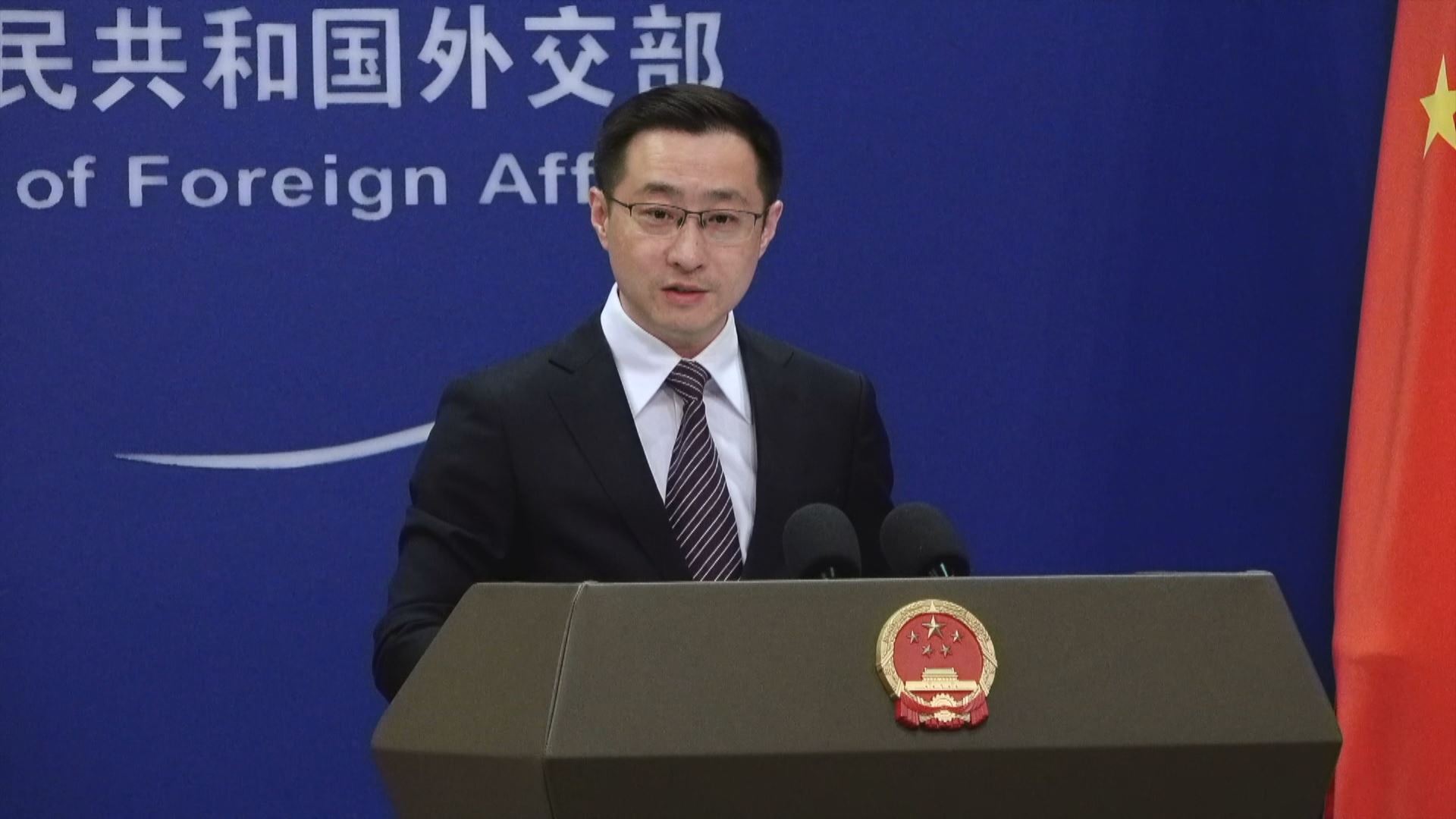
Chinese Foreign Ministry Spokesperson Lin Jian speaks to reporters on June 12, 2025. Photo: Screengrab/Rudaw
BEIJING - China on Thursday reiterated its commitment to a diplomatic resolution of the Iranian nuclear issue, expressing readiness to play a “constructive role” in ongoing efforts.
Chinese Foreign Ministry Spokesperson Lin Jian told Rudaw during a press briefing that Beijing “has always advocated resolving the Iranian nuclear issue through political and diplomatic means.
“We also support Iran in maintaining dialogue and negotiations with all parties to reach a solution that addresses the legitimate concerns of all sides through consultation,” he said.
The Chinese official’s remarks come as Iran and the United States have since April 12 been engaging in indirect, Oman-mediated talks over Tehran’s nuclear program. The fifth round took place on May 23.
On Thursday, Omani Foreign Minister Badr Albusaidi confirmed the sixth round will be held in Muscat on Sunday.
The upcoming talks are seen as pivotal, coinciding with a two-month deadline reportedly set by US President Donald Trump to wrap up negotiations.
They also follow a key development on Thursday, when the Board of Governors of the United Nations nuclear watchdog - the International Atomic Energy Agency (IAEA) - passed a resolution accusing Iran of violating its non-proliferation obligations.
The resolution, proposed by the E3 - France, Germany, and the United Kingdom - and backed by the US, cites Iran’s non-compliance with the IAEA safeguards and lack of cooperation with inspectors.
It notes the IAEA’s inability to verify Iran’s nuclear program as peaceful, raising concerns under the UN Security Council’s jurisdiction - suggesting this resolution could trigger the “snapback mechanism,” which would reimpose UN Security Council sanctions lifted under the 2015 nuclear deal between Iran and world powers.
Per the 2015 deal - formally known as the Joint Comprehensive Plan of Action (JCPOA) - the “snapback mechanism” is a critical provision allowing for the rapid re-imposition of UN sanctions on Iran if it significantly breaches its nuclear commitments. The mechanism expires on October 18 this year.
Iran swiftly condemned the resolution as politically motivated, accusing the US and the E3 of relying on outdated allegations closed by a 2015 IAEA ruling.
Tehran added that it “has no choice but to respond to this political resolution,” declaring that its nuclear chief Mohammad Eslami had ordered the launch of “a new enrichment center in a secure location and the replacement of first-generation centrifuges at the Fordow enrichment site with advanced sixth-generation machines.”
Iran added that “other measures are also being planned and will be announced,” hinting at the possible expulsion of foreign IAEA inspectors.
For his part, the Chinese foreign ministry spokesperson, who responded to Rudaw’s questions only hours before the IAEA Board’s decision, had asserted Beijing’s willingness to “continue maintaining communication and coordination with all relevant parties.”
China is open to “playing a constructive role in advancing the political and diplomatic resolution of the Iranian nuclear issue, upholding the effectiveness of the international non-proliferation regime, and promoting peace and stability in the Middle East,” the spokesperson asserted.
Importantly, of the IAEA’s 35-member Board of Governors, 19 voted in favor of the resolution, while China, Russia, and Burkina Faso opposed it. Eleven abstained, and two did not vote.
Jian also commented on regional security concerns, saying China is aware of the increased alert in the Middle East.
The US on Wednesday ordered a reduction of non-essential personnel at its embassy in Baghdad, consulate in Erbil, and the voluntary relocation of family members of personnel stationed at military bases in several Gulf Arab states.
Trump remarked on the matter on Wednesday stating that American personnel were being moved away “because it could be a dangerous place, and we'll see what happens.
“We've given notice to move out. We'll see what happens," Trump said.
China has long prioritized the direct neighbor policy - also known as "peripheral diplomacy" - that focuses on fostering stability, economic interdependence, and cooperative relations with neighboring countries to create a favorable regional environment for its own development.
In recent years, however, China has taken on a more active role as a mediator in the Middle East, including between Iran and Saudi Arabia. In March 2023, Tehran and Riyadh agreed to restore diplomatic ties under a landmark deal brokered by Beijing, ending a seven-year rift that began in 2016.


Comments
Rudaw moderates all comments submitted on our website. We welcome comments which are relevant to the article and encourage further discussion about the issues that matter to you. We also welcome constructive criticism about Rudaw.
To be approved for publication, however, your comments must meet our community guidelines.
We will not tolerate the following: profanity, threats, personal attacks, vulgarity, abuse (such as sexism, racism, homophobia or xenophobia), or commercial or personal promotion.
Comments that do not meet our guidelines will be rejected. Comments are not edited – they are either approved or rejected.
Post a comment