
ERBIL, Kurdistan Region – The United Nations nuclear watchdog’s Board of Governors on Thursday passed a resolution declaring Iran in violation of its non-proliferation obligations. Tehran denounced the decision as politically motivated and ordered the launch of a new enrichment center - a step that raises the risk of triggering the reimposition of all UN sanctions lifted under the 2015 nuclear deal.
The resolution, drafted by the E3 - France, Germany and the United Kingdom - and supported by the United States, accuses Iran of non-compliance with its safeguards obligations and a lack of cooperation with the International Atomic Energy Agency (IAEA) inspectors. Nineteen countries on the IAEA’s 35-member Board voted for the resolution, while Russia, China, and Burkina Faso opposed it; eleven abstained, and two did not vote.
The provisions
The resolution noted that “Iran has failed to provide the cooperation required under its Safeguards Agreement” with the nuclear watchdog, thus “impeding Agency verification” and “repeatedly failing to offer technically credible explanations for uranium particles found at undeclared locations or the whereabouts of nuclear material and contaminated equipment.”
The resolution further notes that Tehran “did not declare nuclear material and nuclear-related activities” at three undeclared sites - Lavisan-Shian, Varamin, and Turquzabad - adding that “due to the lack of technically credible answers by Iran, the Agency cannot determine whether the nuclear material at these locations has been consumed, mixed with declared material, or remains outside of Safeguards.”
According to the IAEA, these actions represent “a significant impediment to the Agency's ability to clarify and verify Iran's declarations and the exclusively peaceful nature of Iran's nuclear programme,” constituting “non-compliance with its obligations under its Safeguards Agreement.”
The agency also said it was “not able to verify that there has been no diversion of nuclear material” to “nuclear weapons or other nuclear explosive devices,” adding that its inability “to provide assurance that Iran's nuclear programme is exclusively peaceful gives rise to questions that are within the competence of the United Nations Security Council (UNSC)” as the body responsible for international peace and security.
The resolution finally urged Tehran to “remedy its non-compliance with its Safeguards Agreement by taking all steps deemed necessary by the Agency and the Board.”
Iran’s response
Tehran swiftly condemned the IAEA Board of Governors’ resolution - backed by the US, the UK, France, and Germany - as politically-motivated.
In a joint statement, the Iranian Foreign Ministry and the Atomic Energy Organization of Iran (AEOI) stressed that “Iran has always adhered to its safeguard obligations,” adding that “none of the Agency's reports have mentioned Iran's failure to adhere to its obligations or any deviation in Iran's nuclear materials and activities.”
However, Tehran argued that the “policy of engagement and cooperation is counterproductive” in light of what it called the Board's “political approach.” Without explicitly naming them, Iran accused the US, UK, France, and Germany of pushing a resolution based on long-settled issues, claiming the allegations “date back more than 25 years” and were “closed” by a 2015 IAEA resolution.
“This action by the four countries has completely called into question the credibility and prestige of the International Atomic Energy Agency and has further exposed the political nature of this international institution,” the statement said.
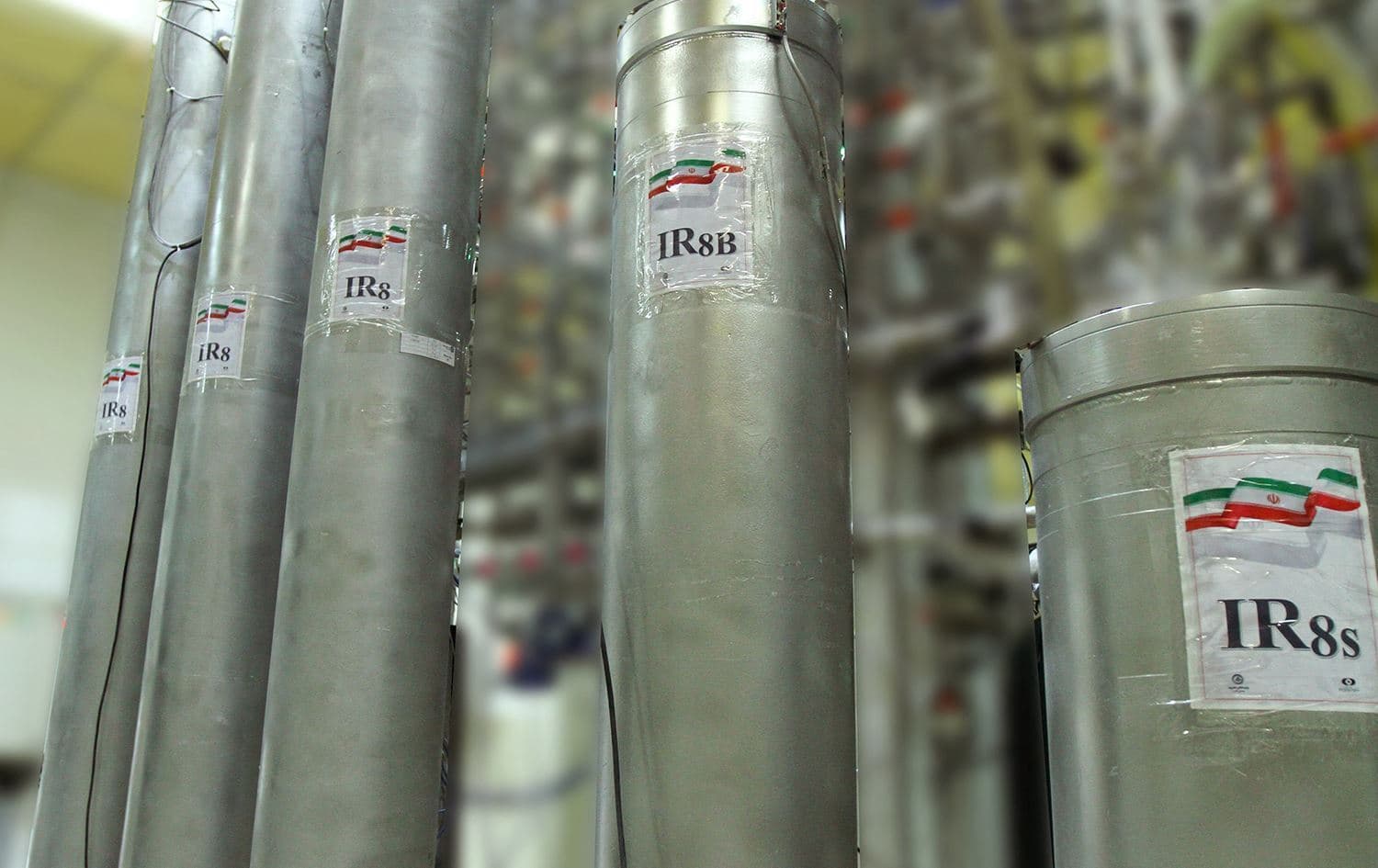
In response, AEOI chief Mohammad Eslami ordered the establishment of “a new enrichment center in a secure location and the replacement of first-generation centrifuges at the Fordow enrichment site with advanced sixth-generation machines.”
Iran “has no choice but to respond to this political resolution,” the statement added, warning that “other measures are also being planned and will be announced,” hinting at the possible expulsion of foreign IAEA inspectors.
Looking ahead
The IAEA’s decision Thursday marks the first such censure in 20 years, a move Iranian officials have strongly condemned as a major strategic mistake designed to provoke a crisis.
Iranian Foreign Minister Abbas Araghchi on Friday accused the E3 of “opting for malign action against Iran at the IAEA Board of Governors,” adding that similar “foul conduct back in 2005” had “in many ways” led to the “true birth of uranium enrichment in Iran.”
“Mark my words as Europe ponders another major strategic mistake: Iran will react strongly against any violation of its rights,” Araghchi said.
Importantly, the adoption of Thursday’s resolution could pave the way for triggering the “snapback mechanism,” which would reimpose UN Security Council sanctions on Iran that were lifted under the 2015 nuclear accord - formally known as the Joint Comprehensive Plan of Action (JCPOA). The mechanism is set to expire on October 18, 2025.
Iran had previously warned that it may leave the Treaty on the Non-Proliferation of Nuclear Weapons (NPT) if these sanctions are reinstated - a move which could have grave implications for international non-proliferation efforts.
The IAEA’s resolution notably follows a recent report by the agency showing a near 48.6 percent increase since February in Iran’s production of 60 percent enriched uranium - a level just short of weapons-grade.
It further comes as Iran and the US have been engaging in indirect talks, mediated by Oman, since April 12, with the fifth round held on May 23.
On Thursday, Omani Foreign Minister Badr Albusaidi confirmed in a statement on X that “the 6th round of Iran-US talks will be held in Muscat this Sunday [on June] the 15th.” The session is expected to be crucial, as it coincides with the two-month deadline set by US President Donald Trump to conclude the talks.
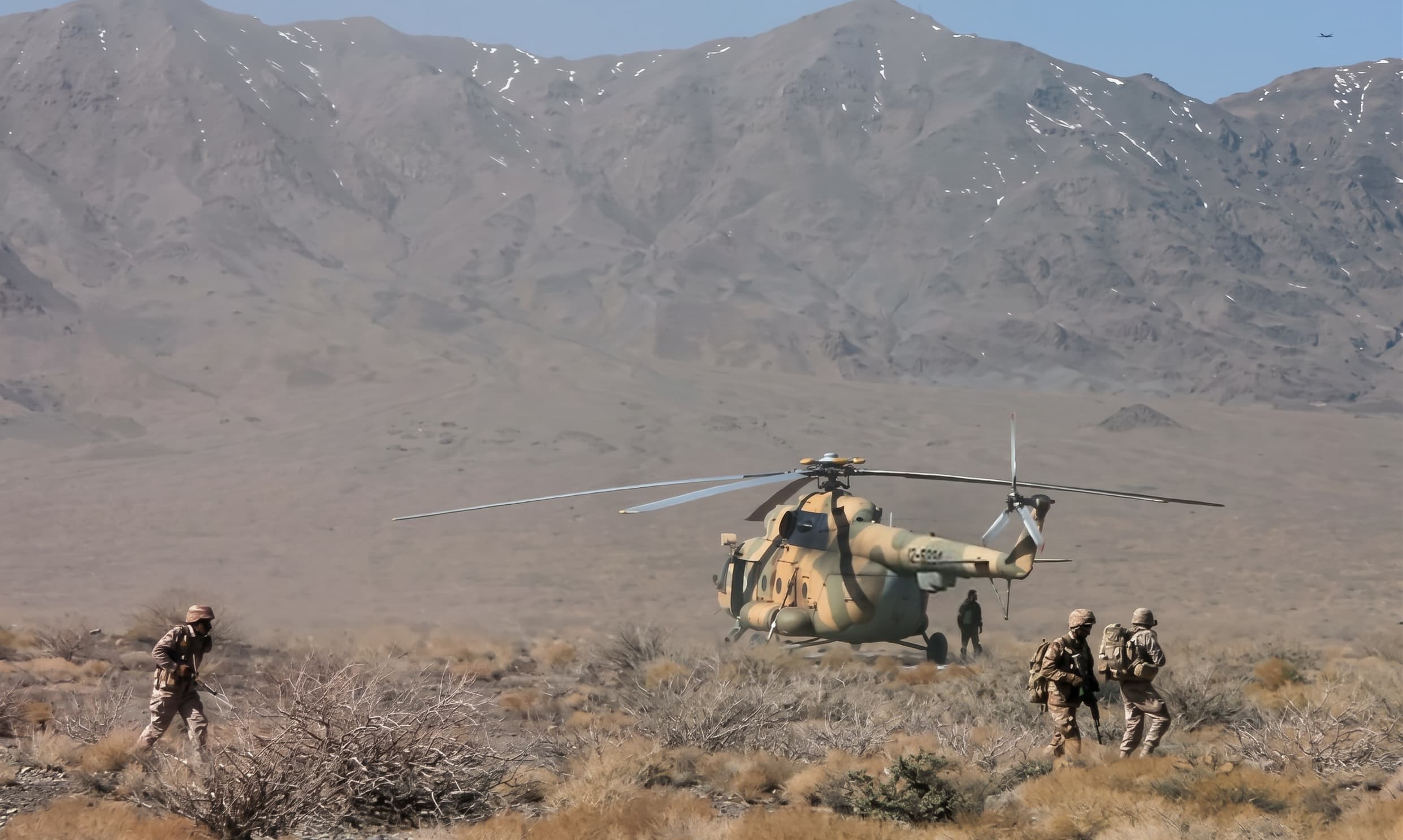
The backdrop to this resolution is also fraught with heightened alert in the region, as Iranian officials have issued sharp warnings against any military attack on their country, while Washington has taken precautionary steps, including reducing its regional footprint.
Hossein Salami, commander-in-chief of Iran’s Islamic Revolutionary Guard Corps (IRGC), stated on Thursday, “The enemy is threatening us with military war,” adding, “We are ready for every scenario and have a military strategy.”
“We can see the depth of the enemy’s targets and are confident in the support of the Iranian people,” Salami said, emphasizing, “If our hands are untied, we will achieve victories that will force the enemy to regret their actions.”
Meanwhile, Iran’s state-run English language broadcaster, Press TV, on Thursday quoted a senior security official warning that Iran would “surprise the United States and Israel in case of aggression.”
A day earlier, Iranian Defense Minister Aziz Nasirzadeh made similar threats, warning that “if conflict is imposed on us, the opponent’s casualties will certainly be higher, and in that case, America must leave the region, because all its bases are within our reach.”
The escalatory remarks came amid reports that Israel is prepared to strike Iranian facilities if nuclear talks with the US break down. CBS News quoted multiple sources on Thursday as saying that US officials had been informed Israel is “fully ready” to launch military action against Iran.
On Wednesday, the US ordered a reduction of non-essential personnel at its embassy in Baghdad, consulate in Erbil, and the voluntary relocation of family members of personnel stationed at military bases in several Gulf Arab states.
Asked about the matter on Wednesday, US President Donald Trump told reporters that American personnel were being moved away “because it could be a dangerous place, and we'll see what happens.”
“We've given notice to move out. We'll see what happens," Trump said.
The current talks between the US and Iran represent the most substantial engagement between the two countries since 2018, when Trump - during his first term in office - unilaterally withdrew the US from the 2015 nuclear agreement (JCPOA).
Under the JCPOA, Tehran had agreed to limit its nuclear activities in return for sanctions relief. Following the US withdrawal and the reimposition of sweeping sanctions, Iran gradually scaled back its compliance.
A key sticking point in the ongoing negotiations remains uranium enrichment. US negotiators are pushing for “zero enrichment” to prevent potential weaponization, but Tehran insists that condition is a nonstarter.
Answering a question on what could bring the tensions down, the US President on Wednesday said, "Iran cannot have a nuclear weapon. We won't allow it."