


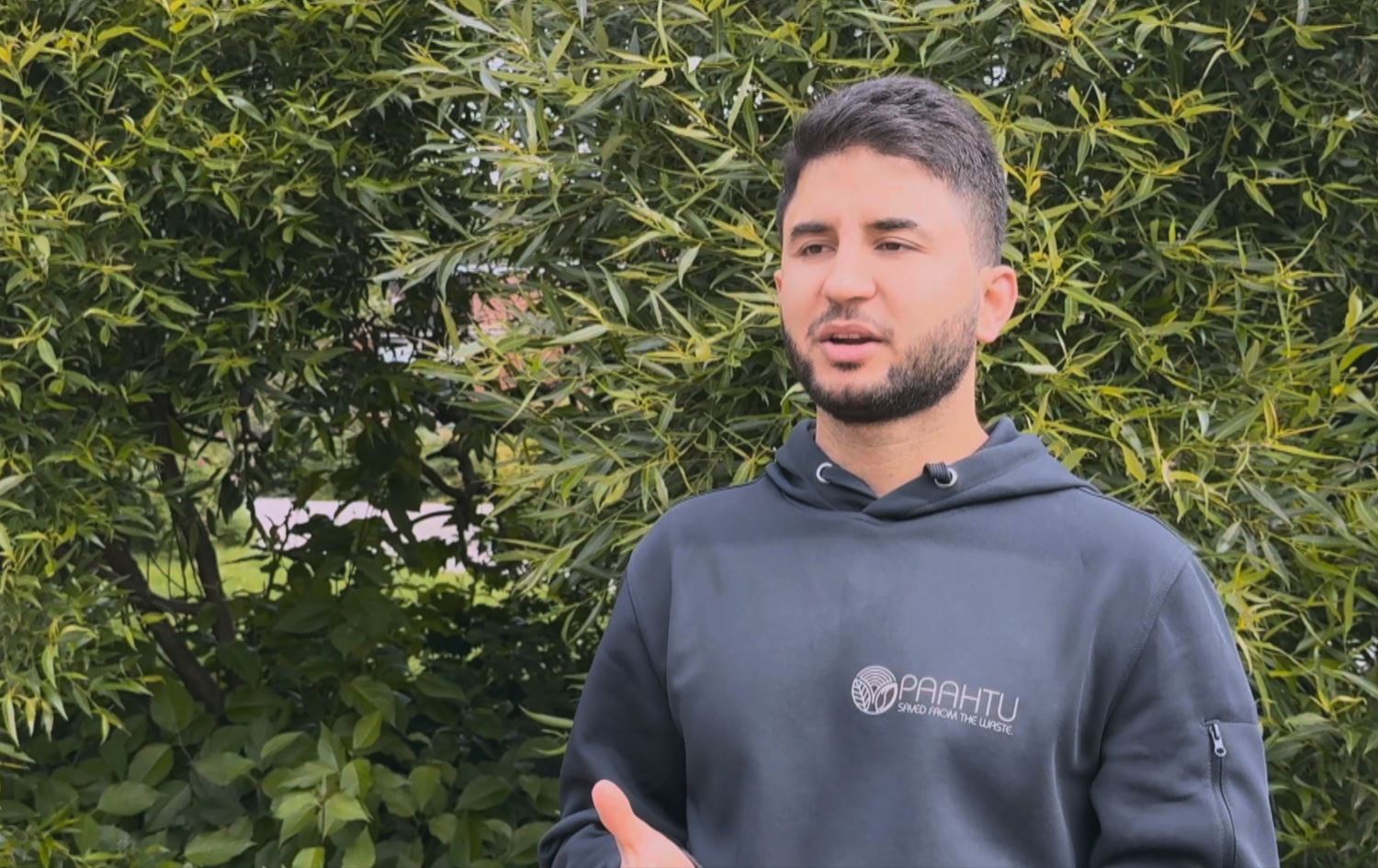
ERBIL, Kurdistan Region - A Kurdish environmental engineering student is working to turn used coffee grounds into clean energy as part of a university project promoting zero-waste solutions.
“We want to collect that coffee and give it another life,” Bahez Kareem, a Finland resident originally from Sulaimani, said during Rudaw’s Diaspora program that aired on Friday. “Instead of it becoming a burden on the environment, we turn it into a clean energy source that is a good alternative to traditional fuels.”
According to scientific research, the coffee industry generates over eight million tonnes of waste coffee grounds annually. This waste emits methane, a potent greenhouse gas, and produces toxic leachates that can harm aquatic ecosystems, said a study published in Global Challenges.
“At university, we were asked to prepare a project for creating a 'model city' - a city where no type of garbage or waste is thrown away and all materials are reused,” said Kareem.
“During our research, we discovered that in Finland, which has only 5.5 million inhabitants, an enormous amount of coffee is consumed and most of its waste goes to waste,” he added.
His project is named "T Seven Percent Coffee Waste and Biodegradable Ingredients."
Hoping their project will attract attention and be successful, Kareem said, “This is just the beginning, and in the future you will hear more news about us.”
Turning waste into clean energy helps reduce the volume of trash thrown into landfills, cuts methane emissions, and supports climate goals by promoting resource efficiency and advancing the circular economy.
Kareem, originally from the Sharbazher area and born in Sulaimani, said he moved abroad to pursue his education.
“Initially, I was in Germany for a year, then I was accepted at a university in Finland. And now I have been settled here for nearly six years,” he said.
“We want to collect that coffee and give it another life,” Bahez Kareem, a Finland resident originally from Sulaimani, said during Rudaw’s Diaspora program that aired on Friday. “Instead of it becoming a burden on the environment, we turn it into a clean energy source that is a good alternative to traditional fuels.”
According to scientific research, the coffee industry generates over eight million tonnes of waste coffee grounds annually. This waste emits methane, a potent greenhouse gas, and produces toxic leachates that can harm aquatic ecosystems, said a study published in Global Challenges.
“At university, we were asked to prepare a project for creating a 'model city' - a city where no type of garbage or waste is thrown away and all materials are reused,” said Kareem.
“During our research, we discovered that in Finland, which has only 5.5 million inhabitants, an enormous amount of coffee is consumed and most of its waste goes to waste,” he added.
His project is named "T Seven Percent Coffee Waste and Biodegradable Ingredients."
Hoping their project will attract attention and be successful, Kareem said, “This is just the beginning, and in the future you will hear more news about us.”
Turning waste into clean energy helps reduce the volume of trash thrown into landfills, cuts methane emissions, and supports climate goals by promoting resource efficiency and advancing the circular economy.
Kareem, originally from the Sharbazher area and born in Sulaimani, said he moved abroad to pursue his education.
“Initially, I was in Germany for a year, then I was accepted at a university in Finland. And now I have been settled here for nearly six years,” he said.


Comments
Rudaw moderates all comments submitted on our website. We welcome comments which are relevant to the article and encourage further discussion about the issues that matter to you. We also welcome constructive criticism about Rudaw.
To be approved for publication, however, your comments must meet our community guidelines.
We will not tolerate the following: profanity, threats, personal attacks, vulgarity, abuse (such as sexism, racism, homophobia or xenophobia), or commercial or personal promotion.
Comments that do not meet our guidelines will be rejected. Comments are not edited – they are either approved or rejected.
Post a comment