


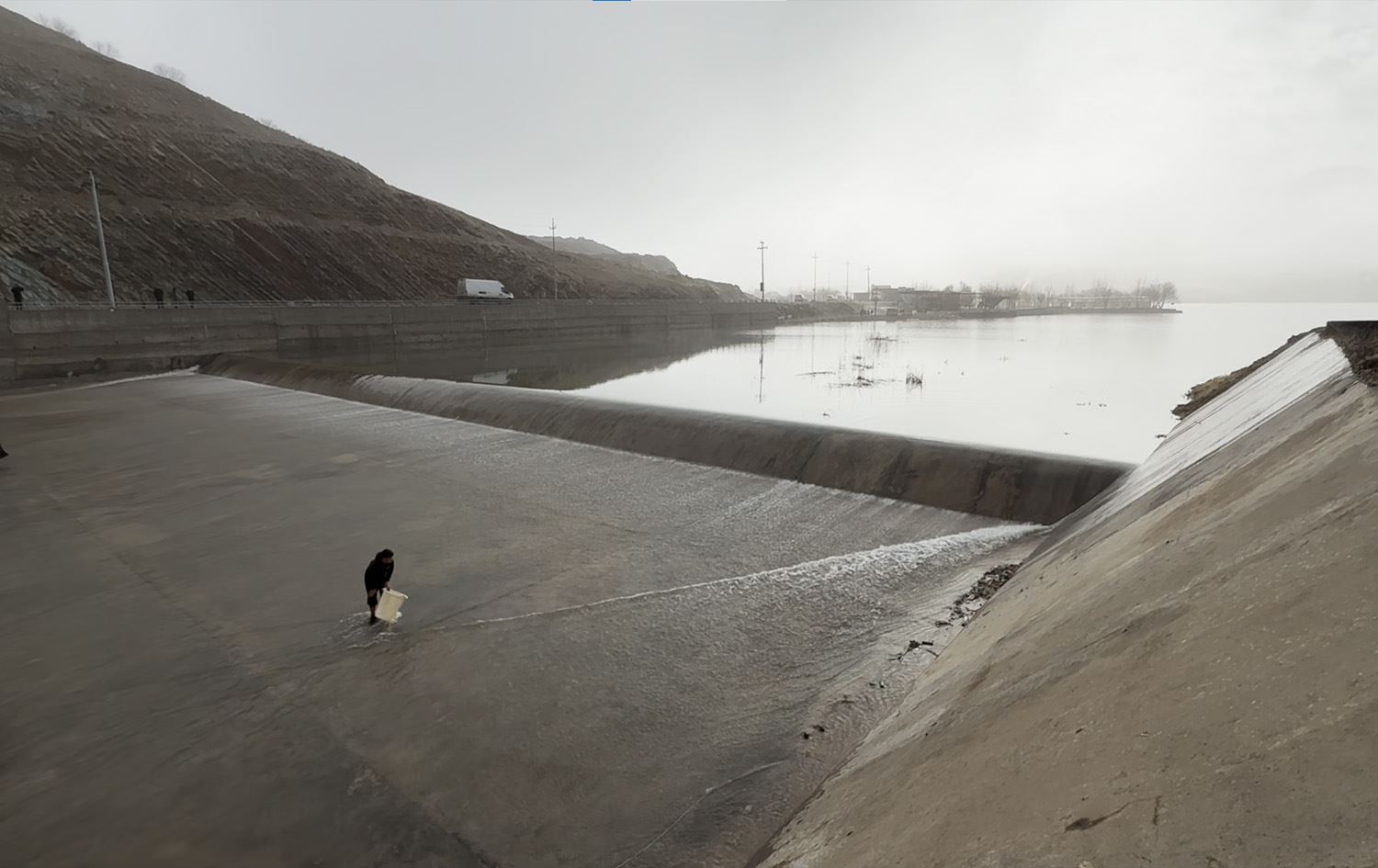
ERBIL, Kurdistan Region - Several dams in the eastern district of Koya in Erbil province have overflowed following days of heavy rainfall and snowfall, a local official said on Saturday.
Nawa Mohammed, head of the water and irrigation department in Koya district, told Rudaw that the Smaqully valley dam has received the largest share of the recent precipitation.
“The dam has a storage capacity of eight million cubic meters and serves as a lifeline for more than 1,000 dunams of agricultural land in the valley,” Mohammed said.
Koya district is home to four dams: Smaqully, Shawger, Degala, and Hamamok.
According to Mohammed, two of the dams have already overflowed.
“Hamamok Dam had been completely dry, and it is now just one meter away from overflowing,” he added.
The combined storage capacity of Koya’s dams stands at approximately 16 million cubic meters, Mohammed said, noting that the increased water levels are welcome news for local farmers.
“This year will be a good one for farmers due to the abundance of water,” he said.
However, Mohammed urged the Kurdistan Regional Government (KRG) to allocate funds to remove accumulated mud and debris from the dams, stressing that such efforts would allow them to store additional water.
Across the Kurdistan Region, water reserves in dams have increased significantly in recent weeks. Rahman Khani, head of the Kurdistan Region’s Dams Department, told Rudaw on Thursday that reservoir levels have risen by approximately 500 million cubic meters since early December due to successive waves of heavy rainfall.
“More than 200 million cubic meters of water were stored during the most recent rainfall alone,” Khani said, adding that total water levels across the Region’s dams have increased by more than half a billion cubic meters since the start of the month.
The KRG is currently working to complete six additional dams: Dwin and Bani Talaban in Erbil province; Zalan and Chaq-Chaq in Sulaimani province; and Bawenur and Khornawazan in the Garmiyan area. Once completed, these projects are expected to add a combined storage capacity of 180 million cubic meters.
Despite recent improvements, the Kurdistan Region and the rest of Iraq continue to face a severe water crisis driven by historically low water reserves, declining rainfall, and upstream dam construction in Turkey and Iran. Prolonged drought conditions in parts of Sulaimani and Duhok provinces have forced some residents to abandon villages affected by water scarcity.
According to the World Resources Institute, Iraq consumes more than 80 percent of its available water resources and ranks among the world’s 25 most water-stressed countries.
Iraq relies heavily on the Tigris and Euphrates rivers, but large-scale Turkish dam projects - ncluding the Southeastern Anatolia Project (GAP) - have reduced downstream water flows to less than 40 percent of historic levels. Reduced rainfall, rising temperatures, upstream water controls, and decades of mismanagement have further exacerbated the crisis.


Comments
Rudaw moderates all comments submitted on our website. We welcome comments which are relevant to the article and encourage further discussion about the issues that matter to you. We also welcome constructive criticism about Rudaw.
To be approved for publication, however, your comments must meet our community guidelines.
We will not tolerate the following: profanity, threats, personal attacks, vulgarity, abuse (such as sexism, racism, homophobia or xenophobia), or commercial or personal promotion.
Comments that do not meet our guidelines will be rejected. Comments are not edited – they are either approved or rejected.
Post a comment