


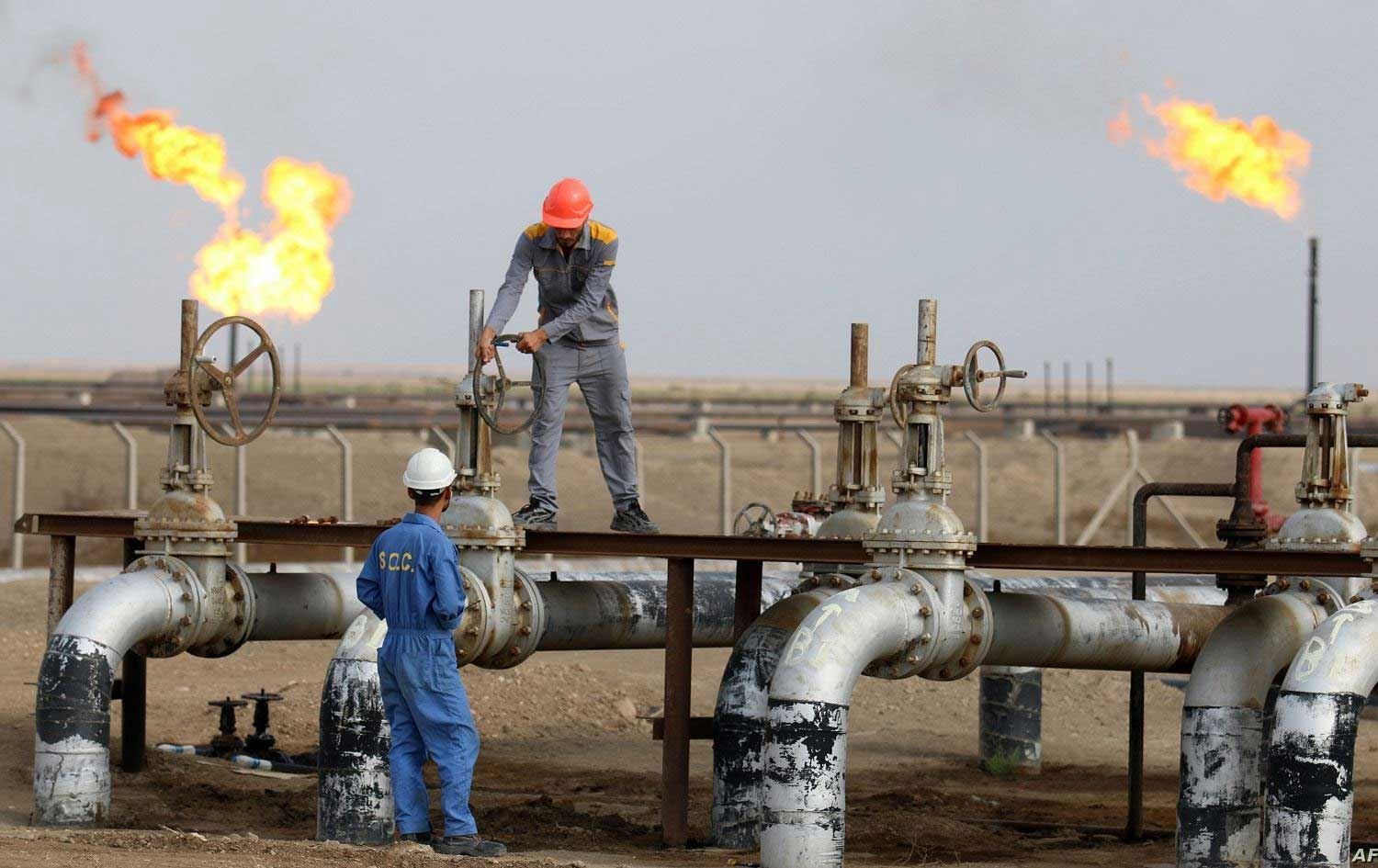
ERBIL, Kurdistan Region - The Iraqi Ministry of Oil announced on Thursday that the country exported more than 106 million barrels of crude oil and condensates in November, generating revenues exceeding $6.5 billion, according to data by the state-run Iraq Oil Marketing Organization (SOMO).
“The total quantity of crude oil exports, including condensates, reached 106,593,352 barrels" during the month of November, adding that total revenues amounted to more than $6,595,391,000, according to a statement issued by the ministry’s media and communications office.
Oil revenue is Iraq’s main source of income, and the federal government relies on oil sales to cover its costs and pay the salaries of its civil servants.
The country is the second largest oil producer in OPEC after neighboring Saudi Arabia. It produces an average 4.4 million barrels of oil per day. Of this number, it exports 3.3 million barrels, and uses the remaining to meet domestic demands.
The statement added that figures show that the bulk of Iraq’s exports came from oil fields in central and southern parts of the country, saying that the exports from oil fields in central and southern Iraq reached 98,709,795 barrels" during the month.
It also states that exports from the Kurdistan Region also contributed to the overall total. The ministry stated that 7,583,733 barrels were exported from the Kurdistan Region through the Turkish port of Ceyhan.
Oil exports from the Kurdistan Region resumed on September 27 following a tripartite agreement involving the Kurdistan Regional Government (KRG), the federal government in Baghdad, and international oil companies operating in the Region. Exports had been halted since March 2023 after Iraq won an arbitration case against Turkey in a Paris-based court.
The current agreement is due to expire in late December.
“The agreement will be renewed without any problem,” said Hamdi Shingali, deputy head of SOMO. “Oil exports from the Kurdistan Region will continue.”


Comments
Rudaw moderates all comments submitted on our website. We welcome comments which are relevant to the article and encourage further discussion about the issues that matter to you. We also welcome constructive criticism about Rudaw.
To be approved for publication, however, your comments must meet our community guidelines.
We will not tolerate the following: profanity, threats, personal attacks, vulgarity, abuse (such as sexism, racism, homophobia or xenophobia), or commercial or personal promotion.
Comments that do not meet our guidelines will be rejected. Comments are not edited – they are either approved or rejected.
Post a comment