
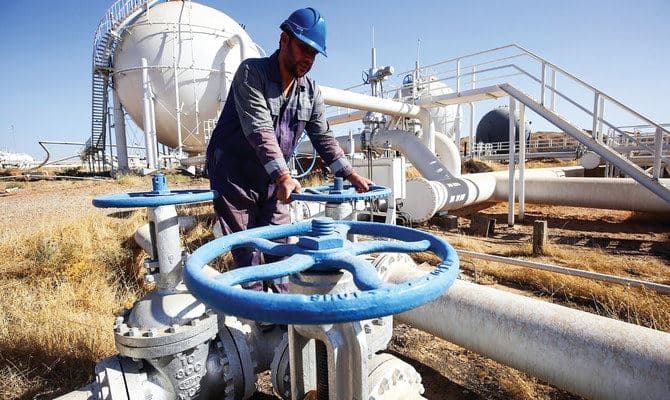

ERBIL, Kurdistan Region - Kurdish oil exports are expected to resume within the next two days, more than two years after they were halted, Amer Khalil, CEO of the North Oil Company, told Rudaw on Saturday.
"The federal government, the oil companies, and the Kurdistan Region have agreed to resume oil exports by 95 percent," Khalil said, adding that they expect exports to resume “in the next 48 hours.”
North Oil Company operates under the federal Oil Ministry.
Earlier in the day, Kurdistan Region Prime Minister Masrour Barzani announced that Baghdad had reached an agreement with international oil companies.
“I have been informed that the oil companies producing oil in the Kurdistan Region and Baghdad have apparently reached an understanding or agreement. This will be a very good start for removing the challenges and hurdles that still exist,” Barzani said during a speech in Duhok province.
Oil exports from the Kurdistan Region through the Iraq-Turkey pipeline have been suspended since March 2023, when a Paris-based arbitration court ruled in favor of Baghdad that Ankara had violated a 1973 pipeline agreement by allowing Erbil to export oil independently beginning in 2014.
The Iraqi federal government and the Kurdistan Regional Government (KRG) have been locked in a long-running dispute over oil revenues and export rights. After months of negotiations, they have agreed that the KRG will deliver its oil to SOMO and keep some for domestic production.
An agreement between the producers and the federal government was the final hurdle to resuming exports.
An amendment to the Iraqi budget law in early February set a temporary entitlement of $16 per barrel for production and transportation costs, to be paid to the oil producers until an international consultant determines the real value. However, the amendment made no provision for repayment of past debts.
Reuters, citing unnamed sources, reported on Friday that Baghdad was close to reaching a final deal. The agreement stipulates that the KRG will provide at least 230,000 barrels of oil per day to SOMO, while keeping 50,000 for local use. An independent trader will handle sales from Turkey’s Ceyhan port, using SOMO's official pricing. From each barrel sold, $16 will be placed into an escrow account for producers and SOMO will receive the rest of the revenue, according to Reuters.
Rudaw English has reached out to Myles Caggins, spokesperson for the Association of the Petroleum Industry of Kurdistan (APIKUR), an umbrella group of oil producers operating in the Kurdistan Region, but he was not immediately available for comment.
Before the halt, Erbil exported around 400,000 barrels per day through the pipeline, in addition to some 75,000 barrels of Kirkuk’s oil.


