
Constitution and Kurdish question
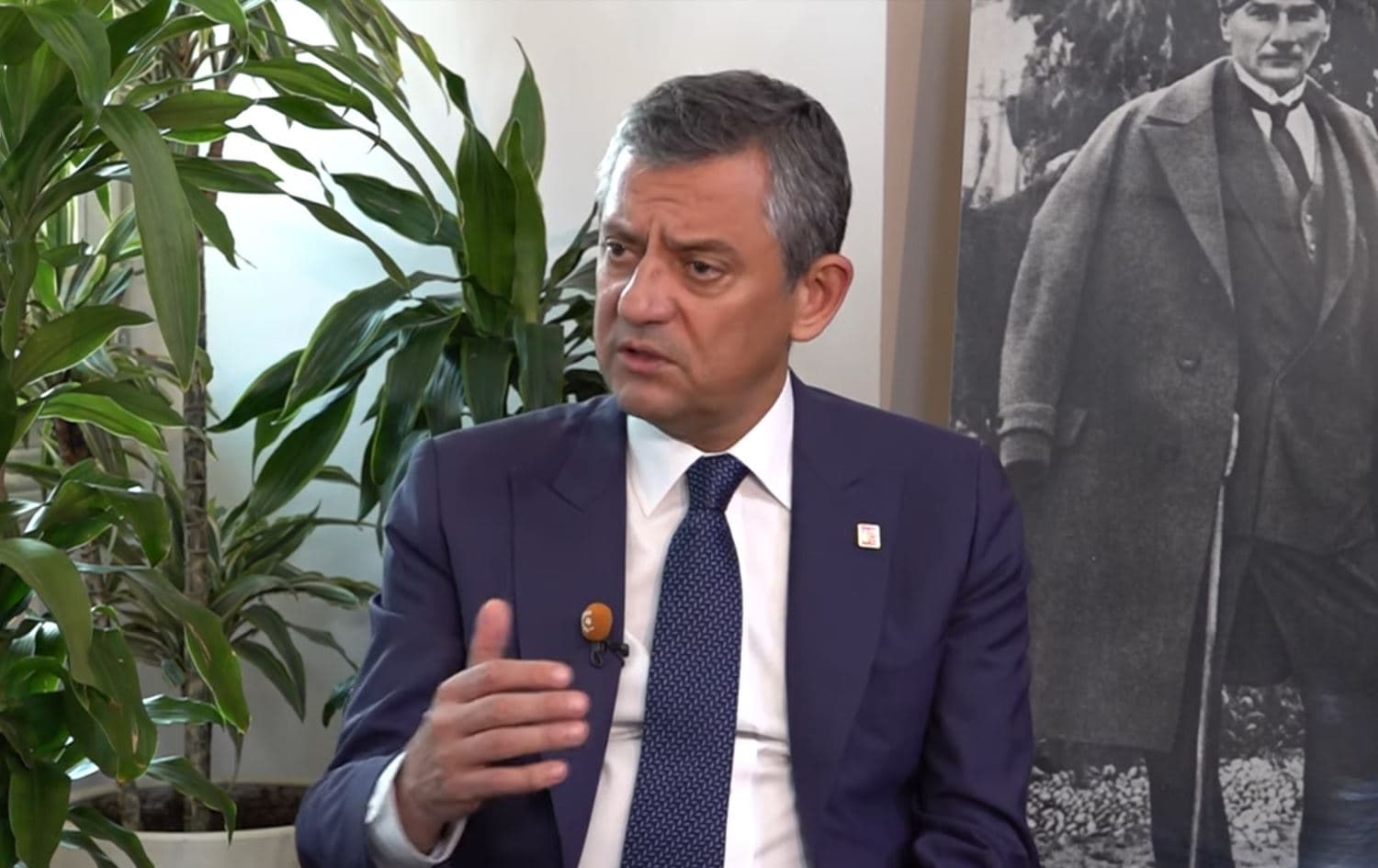
“Turkey, of course, needs a civil, liberal, and inclusive constitution, but I am not going to sit down with those who do not comply with the constitution and violate the constitution every day and make a [new] constitution,” Ozel said on Wednesday. He added that “in order for us to draft a new constitution with [Turkish President Recep] Tayyip Erdogan, he must comply with the current constitution.”
Ankara in recent months has been engaged in peace talks to address the decades-long conflict with the Kurdistan Workers’ Party (PKK). However, some critics argue that the push is an attempt to gain Kurdish backing for a new constitution.
Earlier in May, Erdogan said that he has “no interest in being re-elected or running for office again,” and that the push for a new constitution is “not for ourselves, but for our country.”
Ozel questioned the government’s sudden shift in rhetoric regarding the Kurds, stating that during the last election, Erdogan and Nationalist Movement Party (MHP) leader Devlet Bahceli “only and only in order to win the elections,” harshly cracked down on Kurdish politicians, artists, intellectuals, and youth while keeping them imprisoned.
He further suggested that the Turkish president’s renewed interest in constitutional reform raises “suspicions that Erdogan has some demands of his own.”
Turkey is scheduled to hold a presidential election no later than 2028.
Erdogan has led Turkey for 22 years, first elected as prime minister in 2003 and then as president since 2014. He is currently barred from running again unless the constitution is amended.
Ozel also pointed to shifting regional dynamics, particularly the situation in Syria, as another factor behind the change. Referring to the Turkish government’s earlier stance that “the PKK will lay down its arms and that’s it,” he welcomed recent developments, saying, “I evaluated it with pleasure, it is very right for the organization to dissolve itself, it is very right to lay down its arms.”
“In the Kurdish issue, before coming to the constitution, there are laws that can be taken with the current constitution, as many democratic steps as there are in the world, and even the right application of the current laws,” he said.
The PKK announced its dissolution and an end to its four-decade armed struggle on May 12, responding to a call from its jailed leader Abdullah Ocalan to end the conflict that has claimed around 40,000 lives and pursue a political and democratic path.
Ankara has welcomed the move but wants the decision to materialize. The PKK expects democratic steps from Ankara.
Founded in 1978, the PKK initially sought an independent Kurdish state but later shifted its focus toward achieving broader political and cultural rights for Kurds in Turkey. The group has been labeled as a terrorist organization by Turkey and its allies.
Mayor Imprisonments
Since 2016, dozens of elected Kurdish mayors have been dismissed and sentenced on terrorism-related charges for alleged ties to the PKK. The dismissed mayors are replaced with state-appointed trustees.
The Peoples’ Equality and Democracy Party (DEM Party) has denied any links to the PKK and maintains it is merely pro-Kurdish.
The CHP has also had its fair share of mayors being removed recently, a policy frequently condemned by Ozel.
“This is not just the CHP's problem. During this period, there were over ten municipalities belonging to the DEM Party, but last term, trustees were appointed to 49 municipalities, many of the mayors were detained and arrested, and some were imprisoned for 6 years,” Ozel said.
He further slammed the policy, saying it is “really a blow to the national will, the will of the people, and the decision of the people.”
Turkish-Kurdish legal reforms
Ozgur stressed that the country should look to its parliament, which he called the “only pluralistic ground in Turkey,” to spearhead Turkish-Kurdish reforms.
“We have a very good preparation, but we are looking for a suitable ground to talk about them,” Ozel said. “The ground is the parliament ground … the only pluralistic ground in Turkey right now is the legislative ground.”
The CHP leader further condemned the ruling Justice and Development Party (AKP) for expressing exclusionary resolutions to the process.
“The last resolution process in the process that was expressed as AK Party did not share this work with anyone and excluded all the actors, demonized those who opposed it, and excluded those who wanted to support it,” Ozel added.
On forming a new parliamentary commission to draft a national strategy for a “terrorism-free” Turkey, Ozel said that the CHP came up with the idea.
“We are the owners of this commission idea. We were the first ones to say this, we have been saying it for years,” he said, emphasizing that the proposed commission should include all political parties but be smaller than the 100-member size proposed by Bahceli.
In May, Bahceli said that a 100-member commission should be formed that should include representatives from all 16 political parties in parliament and be chaired by the assembly’s speaker.
“In a commission of 100 people, you cannot easily follow the agenda, that would be a parliament. We do not need a parliament; we need a commission that will work quickly,” Ozel stressed.
Syria developments
Ozel emphasized the need for a unified and democratic Syria, warning that fragmented structures pose a serious risk of renewed civil war.
“It is very risky for Syria to remain fragmented and separate, and especially in structures that carry the risk of civil war,” he said, stressing the importance of building a strong united state.
He argued that all of Syria’s minorities and components should be “represented together in a democratic constitutional basis,” both during the drafting of a new constitution and in governance.
Following a swift offensive in early December, the Hay’at Tahrir al-Sham (HTS), then headed by Sharaa, spearheaded a coalition of opposition groups that toppled the regime of Syrian dictator Bashar al-Assad.
Sharaa was in late January named interim president when he vowed to form an “inclusive transitional government that would reflect Syria's diversity.” He has, however, faced domestic and international criticism that he has marginalized minority communities.