

Error occured during this request! Please try again later.

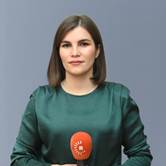
Yehor Cherniev, deputy chairman of Ukraine’s National Security, Defense and Intelligence Committee in an interview with Rudaw in Kyiv on December 5, 2025. Photo: screengrab/Rudaw
ERBIL, Kurdistan Region - Yehor Cherniev, deputy chairman of Ukraine’s National Security, Defense and Intelligence Committee, told Rudaw on Friday that Russia is pressing hard on the battlefield and is not negotiating in good faith, rejecting any peace that would require Ukraine to cede land.
Cherniev said Moscow’s talk of negotiations should not be taken at face value. “We shouldn't be fooled by Russians that they are ready for the end of this war. Unfortunately, they are not,” he said, arguing that Russia uses negotiations to buy time, avoid sanctions and continue military production.
Cherniev said Kyiv has accepted compromises on many points of proposed peace plans but insisted Ukraine will not trade territory for peace. “It shouldn't be a peace with the concession of the territory from the Ukrainian side,” he said, adding that any settlement must protect Ukraine’s sovereignty, its right to choose alliances and include “solid security guarantees.”
This winter marks the fourth since the war began.
Diplomatic efforts to end the conflict are intensifying. The United States has put forward a peace proposal and high-level discussions between US and Russian officials took place in Moscow on Tuesday. US President Donald Trump confirmed that White House envoy Steve Witkoff and advisor Jared Kushner met Russian President Vladimir Putin for nearly five hours.
“President Putin had a very good meeting yesterday with Jared Kushner and Steve Witkoff,” Trump said on Thursday. “What comes out of that meeting, I can't tell you.”
On NATO, Cherniev argued Ukraine already operates by alliance standards. “We are already a part of NATO de facto,” he said, but acknowledged that full membership would require political decisions by alliance members.
“The situation is quite difficult because Russia is pushing now and they, I think, increase the pressure on the battlefield,” Cherniev said, noting that Moscow’s recent gains are limited. He added that “this success not so big or strategic for Ukraine,” and that Ukrainian forces remain in control despite the pressure.
Cherniev pointed to manpower as the core reason Moscow has made advances. “The main factor is manpower,” he said. “They are ready to lose hundreds of people, even 1,000 person, 1,000 per day with the killed people just to move forward in a few square meters.”
He contrasted Russia’s willingness to sustain heavy casualties with Ukraine’s efforts to preserve personnel and rely more on technology. Cherniev described how Ukrainian units have used drones and other robotic systems to reduce casualties but said those measures are “not enough to stop Russians” when Moscow commits large numbers of troops.
He warned that shortages of munitions and air defenses have hampered Ukrainian operations. “The shortage of the weapon is also a problem for us to counteract the Russians,” Cherniev said, pointing to gaps in artillery shells and air-defense capability despite domestic drone production.
Asked whether the conflict will extend into next year, he said, “Unfortunately, it looks like yes.”
The following is the full transcript of the interview with Yehor Cherniev:
Rudaw: How would you describe the current situation in the battlefield actually, especially in Pokrovsk, where Russia claimed to capture the city?
Yehor Cherniev: Well, the situation is quite difficult because Russia is pushing now and they, I think, increase the pressure on the battlefield. But I cannot say that this is like a break of our front line. Yeah, they have some success unfortunately, but this success not so big or strategic for Ukraine. So I just remind you that Russia has been fighting for Donbas since 2014. And these requests from their side that we should go out from the Donetsk region and just give up Donbass because Russia still have a power and sources to get it by the force, it's not true. So we are not ready just to give up and not fight, not to continue to fight for our activities and our people on the Donbas region. So situation is difficult, but under control of Ukrainian forces.
What do you see as the main factors behind the recent advances of Russia forces in several areas?
Could you please repeat the question?
What do you see as the main factors?
The main factor?
Yes.
Well, the main factor is manpower. Russia has, unfortunately, bigger population and bigger sources in the manpower than we have on the battlefield. This is why… and they don't care about their losses. They are ready to lose hundreds of people, even 1,000 person, 1,000 per day with the killed people just to move forward in a few square meters.
We care about our personnel, and we try to use more robotic systems like drones, land robots, and other thing. But it's not enough to stop Russians when you… You know, I was talking about the situation just a few days ago with one of the soldiers who were in the front line, and he described the situation like: We have the same situation every day. Like Russia starts their assault attack on our position with small groups like 10-12 people. Our soldiers killed them, eight of them, for example. Two who are still alive tried to get in the position of our position, and
then can be imprisoned or also killed. And in a few hours we have the same situation. So they just go through the bodies of just killed their soldiers and tried to go ahead. We use not a soldier, not a manpower, we use a few drones, for example, to stop them. So this is, I think, the main reason why they still have some success on the battlefield.
Do you believe the reduction in military aid caused Ukraine to lose more territories during these recent months?
This is another problem, this is another problem, because when we had a famine with shells when it was a year ago, two years even ago, when we had a problem, we tried to replace them with something new, and we developed a strategy or tactic to use [First Person View] FPV drones instead of the artillery shells. Now we produce 90 percent of the drones inside of Ukraine. But still we have a problem with the artillery shells that our partners provide us. We still have problems with air defense. We still have problems how to construct the guided bombs of Russians. So, yeah, the shortage of the weapon is also a problem for us to counteract the Russians
.
Now Russia is rejecting all negotiations that Ukraine and the European side offer. Is Ukraine willing to make any compromises?
We made a lot of compromises and actually those 28 points of the peace plan that was offered to us. We agreed with some of them, and we, I think, found a compromise. But there are some points that… that are crucial for us, and it's like red lines for Ukraine. Because Russia still try to request, to refuse, of our territories. I mean, that Ukraine refuse of the territories and just give up the territories to Russia. It's inappropriate offer to us, and even this issue President Zelenskyy was ready to discuss on the higher level with President Trump. But unfortunately, we see the unwillingness and unreadiness of the Russian side.
And we shouldn't be fooled by Russians that they are ready for the end of this war. Unfortunately, they are not, and we see all the signals that show that they are preparing for the continuation of this war. They… even if we have a look on their budget, and their plans to increase the production, military production in 2026, it also shows us that they are planning to continue. And all these games with peace negotiations is just for one reason. Because they want to play for time and to continue this war as much as they can without new sanctions from the US side. That's why they're showing that they are ready to negotiations and they are open for these negotiations, but it's not true.
We see that they just use a time to move forward, to press on us, to strike on our critical infrastructure, electricity grids, and to try to put Ukraine in a total blackout this winter and try to move forward on the battlefield. So, I don't see any signals that Russia is really ready for peace negotiations. They tried to just to show that they are ready, but it's not true.
So what is the next step? What does a peace negotiation look like where both sides, the Ukrainian side and the Russian side, can agree to?
Look, as I said before, we agreed with the… and we found a compromise with a lot of points in this peace.
Yeah, but still there is no peace.
Yeah, there are no peace, but it shouldn't be peace for any price with.
You mean the price of land, of territories?
Yes, exactly. It shouldn't be a peace with the concession of the territory from the Ukrainian side. Why we are not talking about the concession from the Russian side? Why do we not talk about that Russia has to go out from some Ukrainian territories? Why we should benefit an aggressor with the new territories and recognize something, that recognize that in the 21st century we have not a rule of law, but a rule of power, and you can change the borders of other countries and it will be okay and will be agreed by the word. So, yes, we found trade-offs in some points of this peace proposal, but three main points that are crucial for us it's our territory with our people who still live there. It's our sovereignty.
Because there shouldn't be any limitation of the sovereignty of Ukraine. I mean, there shouldn't be intervention in our internal policy with some special status of Russian language or Russian church or something like this. There shouldn't be intervention in our foreign policy. We should choose by ourselves alliance that we want to join. And third point, which is very important for us, a solid security guarantees for Ukraine. Because without security guarantees, I think it will be just a pause in this war, but not at the end of this war. Because we will just give it time to Russia, for Russia to prepare better and to start a new wave of aggression in a year, two years or three years.
If this war continues, do you believe Ukraine can fight without US support? How could NATO help with this situation?
Well, for now we have support from the United States as a data, intelligence data, and through their program Pearl, where European countries buy a weapon for Ukraine. We buy, or our European partners buy, air defense systems and air defense missiles for Ukraine. So, another type of weapon we are trying to find somewhere in Europe or around the world. So without intelligence data, it will be more difficult to strike to Russian critical infrastructure or military military production inside, deep inside of their country, but still we can do it even without this intelligence data.
Without their missiles for air defense systems, we will have more problems with our electricity grids and our critical infrastructure because Russia will continue. And there are no doubts that Russia will try to put us in a blackout this winter. But, winter will end, and spring will come. So I think after the end of winter the problem with the electricity will decrease and we are trying to find a solution even despite this all strikes to our infrastructure. And you probably see that we are now with the electricity despite the massive attacks on our electricity grid and critical infrastructure.
What are the main steps Ukraine still needs to take in order to join NATO?
It's not up to Ukraine, it's up to our partners.
So what do they think? How is the process now?
It’s political, it's a political issue. It's not about the standards of NATO, because for example Ukraine already implemented about 32-35 percent of their standards in Ukraine. And actually we are fighting with the NATO weapon, we are fighting according to NATO standards, we are fighting with the personnel who was trained by NATO countries. So, we are already a part of NATO de facto, but it should be made a decision by 32 countries.
Almost every time that they talk, they say, Ukraine should be part of NATO. So what's the problem?
The problem is that nobody wants to have a war on their side and they are thinking that if Ukraine will join NATO, it can bring a war on their...
Other countries?
On their territory. But the true is that actually an umbrella of NATO gives to country a protection and prevention of the war. We can have a look on the Baltic States. I think if Baltic States wouldn't be part of NATO, they probably were the first target for Russians. And it would be
more easier to them to conquer these three countries. But Russia doesn't want to face with NATO. So I think… and we are not talking about our participation or our membership of NATO during the war. It should be made after the war and it will be, I think, the best security guarantee for Ukraine.
Before joining NATO, what else does Ukraine need to achieve?
If you're talking about some standards, I think we are on the right path and despite that we don't have the final political decision, we are moving forward in integration to NATO de facto, because we are already partners in different programs of NATO in an alliance. And we continue to do this and I think we are ready actually for this future membership. But it should be again a political will for this decision.
Perfect. So for upcoming days, we see any other big meeting between USA, Ukraine and Russia? What do you think?
We'll see. I don't think that again Russia is ready for real peace negotiations, so they probably will try to imitate this peace process, but I dont’… I'm not waiting for some breakthrough decisions that can bring peace in the coming days, unfortunately. But we are ready. We are ready for a just and long-lasting peace.
So you believe in this situation that we see war still be continued to the next year?
Unfortunately, it looks like yes.


Comments
Rudaw moderates all comments submitted on our website. We welcome comments which are relevant to the article and encourage further discussion about the issues that matter to you. We also welcome constructive criticism about Rudaw.
To be approved for publication, however, your comments must meet our community guidelines.
We will not tolerate the following: profanity, threats, personal attacks, vulgarity, abuse (such as sexism, racism, homophobia or xenophobia), or commercial or personal promotion.
Comments that do not meet our guidelines will be rejected. Comments are not edited – they are either approved or rejected.
Post a comment