ERBIL, Kurdistan Region - A subsidiary of the Chinese state-owned ZhenHua Oil said on Sunday that Iraq is its “core market” and pledged to expand investments in the country’s energy sector, as Baghdad pushes to boost production and cut gas flaring.
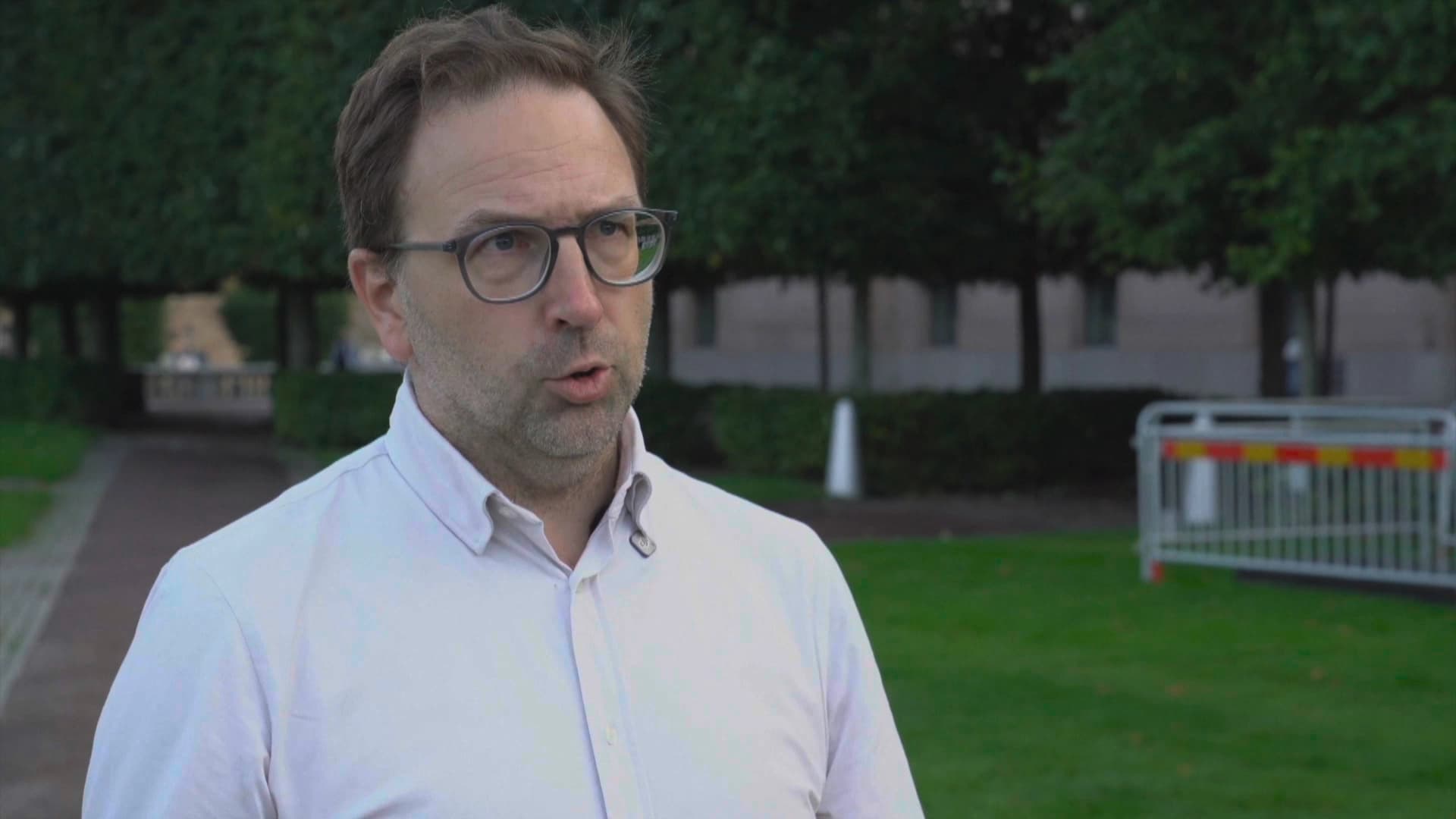
“We regard [the] Iraq market as our core market globally. So in the coming years, we will emphasize and we will concentrate our capital and our technical [capacity] in this market,” Abu Khema Petroleum, General Manager Zhang Bo, told Rudaw on the sidelines of the Baghdad International Energy Conference.
He said that ZhenHua entered Iraq in 2008 and has invested around $10 billion to date. The company operates the Ahdab oil field southeast of Baghdad with China National Petroleum Corporation, the East Baghdad Oil Field Southern Part (EBS), and the Abu Khema field in Muthanna province. In August, Iraq’s state news agency reported that ZhenHua was awarded an exploration contract for the al-Qarnain block in Najaf province.
Bo noted that the company is “in the mid[dle] of contracting several projects” to reduce gas flaring at Abu Khema and EBS.
Iraq is among the world’s top offenders for gas flaring, ranking third after Russia and Iran, according to the World Bank.
Gas flaring, the burning of excess natural gas released during oil production, is widely used to dispose of associated petroleum gas but has severe consequences for the environment, public health, and global warming.
Under the Paris Agreement, Iraq has pledged to eliminate the practice by 2030. Prime Minister Mohammed Shia’ al-Sudani has stated that Baghdad aims to end flaring of associated gas by 2028 and redirect it to electricity production.
Trade between Iraq and China rose in 2024 to an estimated $55 billion, Iraqi Ambassador to Beijing Shoresh Khalid said in May. China remains Iraq’s largest oil customer, while Baghdad is working to reduce its reliance on volatile oil revenues and diversify its economy.
Bilateral ties have strengthened in recent years. China opened a consulate general in Basra in 2024, followed by an Iraqi consulate in Guangzhou a year later. Beijing has also expanded investment into Iraq’s infrastructure and education sectors, including an agreement to build thousands of new schools to address a nationwide shortage.

“We regard [the] Iraq market as our core market globally. So in the coming years, we will emphasize and we will concentrate our capital and our technical [capacity] in this market,” Abu Khema Petroleum, General Manager Zhang Bo, told Rudaw on the sidelines of the Baghdad International Energy Conference.
He said that ZhenHua entered Iraq in 2008 and has invested around $10 billion to date. The company operates the Ahdab oil field southeast of Baghdad with China National Petroleum Corporation, the East Baghdad Oil Field Southern Part (EBS), and the Abu Khema field in Muthanna province. In August, Iraq’s state news agency reported that ZhenHua was awarded an exploration contract for the al-Qarnain block in Najaf province.
Bo noted that the company is “in the mid[dle] of contracting several projects” to reduce gas flaring at Abu Khema and EBS.
Iraq is among the world’s top offenders for gas flaring, ranking third after Russia and Iran, according to the World Bank.
Gas flaring, the burning of excess natural gas released during oil production, is widely used to dispose of associated petroleum gas but has severe consequences for the environment, public health, and global warming.
Under the Paris Agreement, Iraq has pledged to eliminate the practice by 2030. Prime Minister Mohammed Shia’ al-Sudani has stated that Baghdad aims to end flaring of associated gas by 2028 and redirect it to electricity production.
Trade between Iraq and China rose in 2024 to an estimated $55 billion, Iraqi Ambassador to Beijing Shoresh Khalid said in May. China remains Iraq’s largest oil customer, while Baghdad is working to reduce its reliance on volatile oil revenues and diversify its economy.
Bilateral ties have strengthened in recent years. China opened a consulate general in Basra in 2024, followed by an Iraqi consulate in Guangzhou a year later. Beijing has also expanded investment into Iraq’s infrastructure and education sectors, including an agreement to build thousands of new schools to address a nationwide shortage.

Comments
Rudaw moderates all comments submitted on our website. We welcome comments which are relevant to the article and encourage further discussion about the issues that matter to you. We also welcome constructive criticism about Rudaw.
To be approved for publication, however, your comments must meet our community guidelines.
We will not tolerate the following: profanity, threats, personal attacks, vulgarity, abuse (such as sexism, racism, homophobia or xenophobia), or commercial or personal promotion.
Comments that do not meet our guidelines will be rejected. Comments are not edited – they are either approved or rejected.
Post a comment