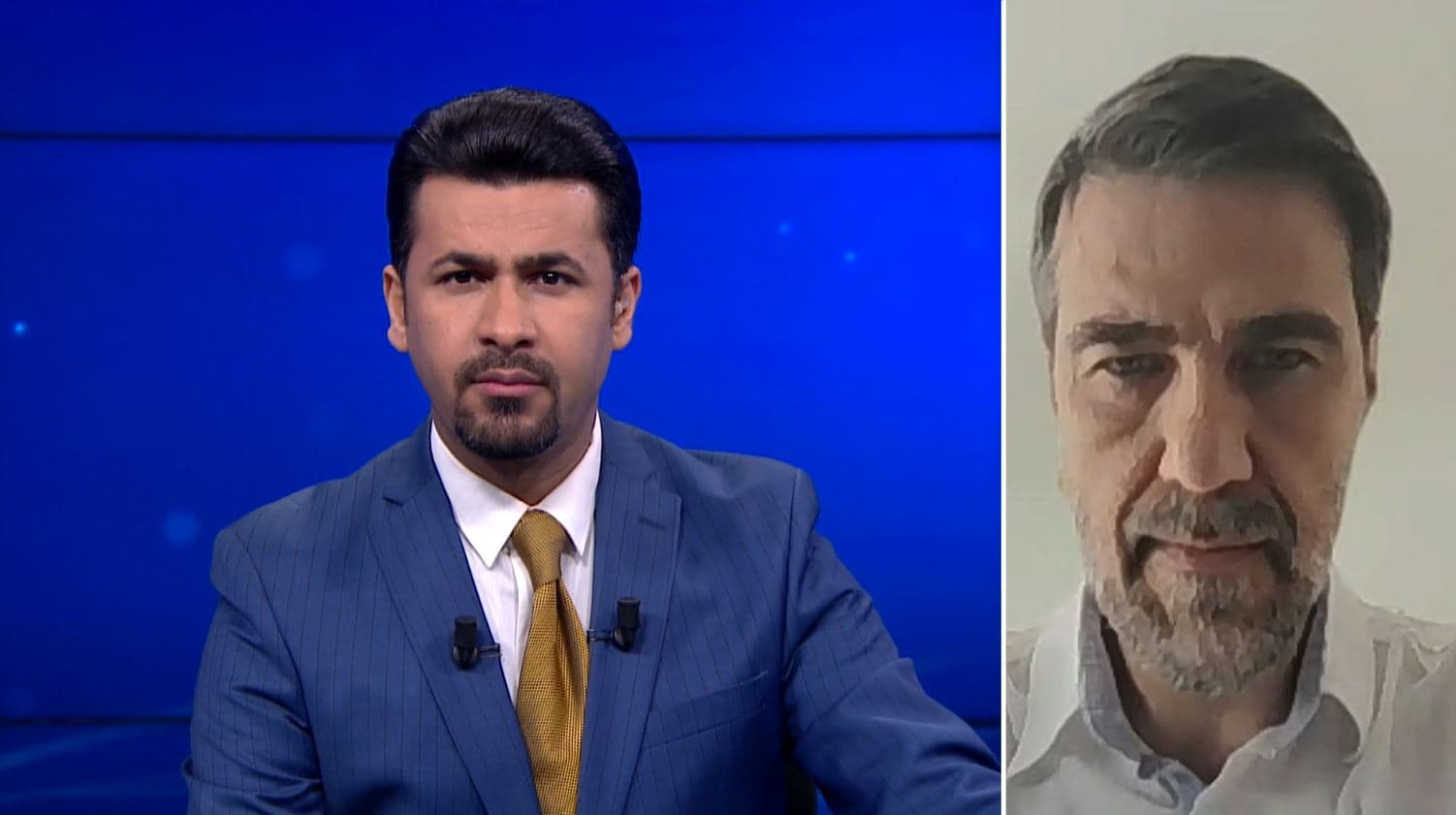
ERBIL, Kurdistan Region - Iran’s refusal to participate in the second-round of Pakistan-mediated talks with the United States in Islamabad is a setback but not the end of the “ongoing” diplomatic process, a former Pakistani envoy to Tehran told Rudaw on Monday, noting that while Tehran and Washington have reached “some agreements,” the latest US restrictions on Iranian shipping may have “created new problems.”
Asif Durrani, former Pakistani ambassador to Iran, told Rudaw's Sima Abkhezr that while Islamabad hosted the first round of talks “that were going on very well, there were a few issues which remained unresolved.”
He suggested that the two sides may be at odds over Washington’s demand regarding Iran’s estimated 440 kilograms of highly enriched uranium, which “I think Iran is not going to agree to,” anticipating that “most probably Iran will be agreeing [that it remains in the possession of] a third country.”
The diplomat added that Iran “has to give assurances that it will not pursue the nuclear route at least for some time,” he further added, while noting that Tehran is also demanding assurances that “there will be no future wars” against it.
The US and Israel launched a preemptive air campaign on February 28, targeting more than 17,000 sites across Iran over six weeks of hostilities before the warring sides agreed to a Pakistan-mediated April 8 ceasefire to halt fighting for two weeks and pursue talks.
While the first round of discussions ended without a final agreement on April 11, a high-level Pakistani “political-security delegation” arrived in Iran on Wednesday, reportedly to deliver a “new message” from Washington to Tehran and lay the groundwork for a second round of talks, Iranian state media reported.
However, tensions escalated on Monday after Tehran vowed retaliation for the seizure of an Iranian-flagged cargo ship in the Gulf of Oman.
US President Donald Trump had hours earlier stated that American forces had taken “full custody of the ship and are inspecting its contents.” Earlier in mid-April, Trump announced a naval blockade on all maritime traffic entering and exiting Iranian ports amid ongoing talks with Tehran.
Trump on Sunday also said that his negotiators were heading to Islamabad on Monday evening to reach a deal, urging Iran to accept it or face serious consequences. A source familiar with the matter in Washington DC reaffirmed to Rudaw’s Diyar Kurda on Monday that “the U.S. delegation plans to travel to Islamabad soon.”
For his part, the former Pakistani ambassador to Iran remarked that Washington’s “blocking of Iranian ports and their ships, shipping, has created new problems.”
The former Pakistani ambassador to Iran on Monday remarked that Washington's “blocking of Iranian ports and their ships, shippings, has created new problems.”
Durrani also noted other thorny issues, including,“the lifting of sanctions against Iran,” stating that Washington “cannot demand everything and not give in return.” He added that a third item under discussion is “the unfreezing of Iran’s assets,” stating that “more than $60 billion worth of Iranian assets are frozen by the United States and, at its behest, by European countries.”
Nonetheless, he underscored his country’s deep investment in the success of these talks, stating, “For us, being in the region, the biggest concern was and remains that talks should succeed because we are also directly impacted by rising oil prices, and it is also a threat to regional as well as global security.”
He expressed hope that in the anticipated second round of talks, the negotiating teams “will pick up the threads from where they left in the first round,” while at the same time urging patience..
“One should not be disappointed [if the talks take time], but take it as a process,” he said.