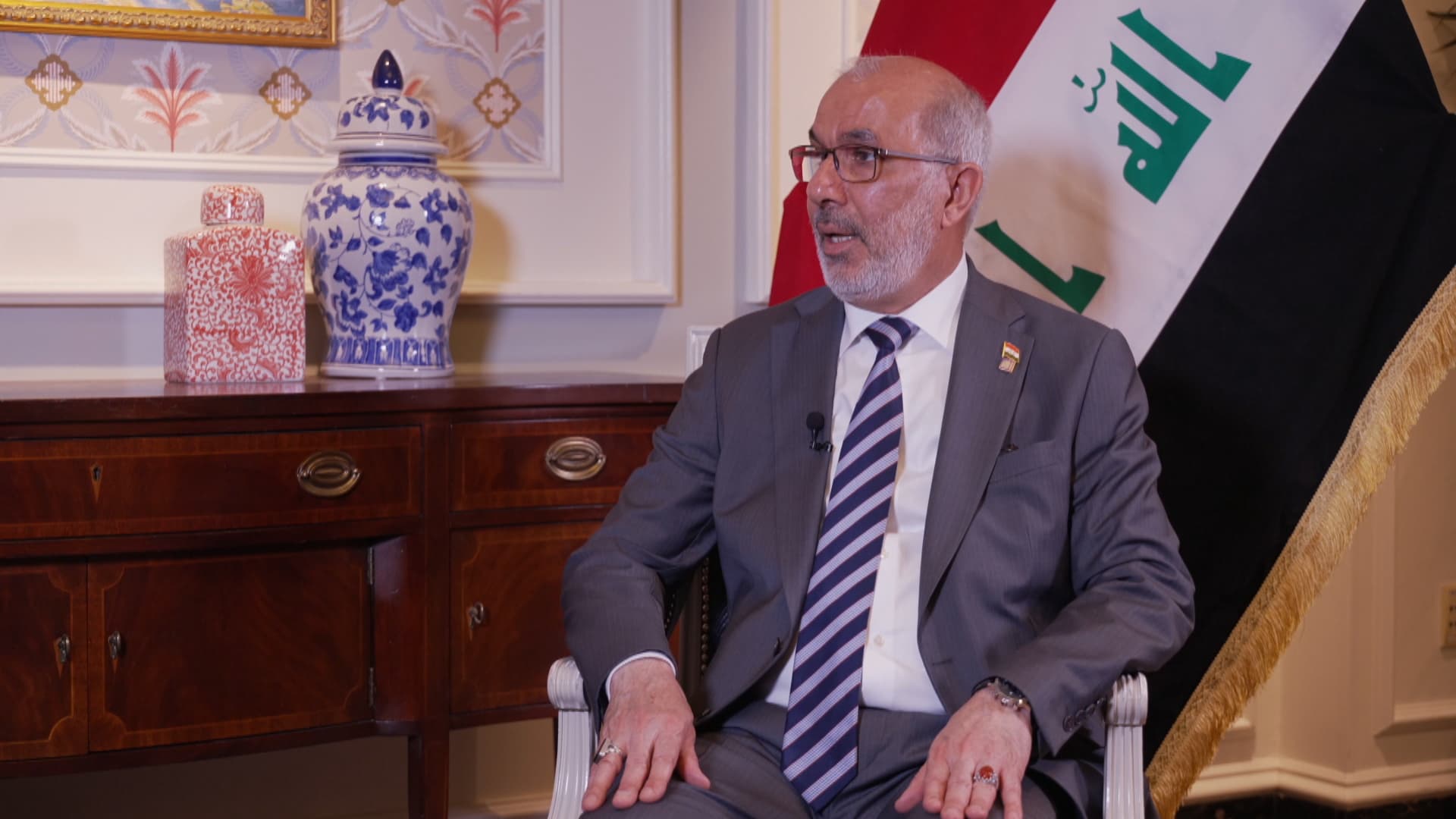
“Frankly, our top concern is the physical safety of religious minorities in the region. Things are still, I think, unsecure. We see that in particular with the situation for the Druze and the Alawis and some Christians within Syria, and we see the insecurity for Christians in Iraq,” said Commissioner Stephen Schneck.
In Syria, Schneck said he was concerned that, while the administration of US President Donald Trump is engaging with the new authorities in Damascus, it was not putting enough focus on the issue of religious freedom.
International human rights monitors have reported serious abuses during clashes between government-aligned forces and Alawites in the west and Druze in the south.
In the northeast (Rojava), tensions are high between Damascus and the Kurdish-led administration that has condemned the consolidation of power in the hands of the interim authorities and called for decentralization. Schneck praised the level of religious freedom in Rojava and said he supports some level of autonomy to preserve those freedoms.
“It seems to me that in the north and east in the autonomous region, that there needs to be recognized a degree of autonomy there. And I worry that as the power gets consolidated within the transitional authority, I worry that the kinds of freedoms and the kinds of autonomy that have worked so well in that region now for several years will be lost,” he said.
In Iraq, Schneck said he was concerned about the safety of Christians, especially in the Nineveh Plains where he said the international community has failed to provide the kind of humanitarian assistance needed to protect religious minorities.
“Unfortunately, we're in a situation where countries around the world seem to be backtracking a little bit in terms of, you know, their support for humanitarian assistance and so forth. Nevertheless, that kind of humanitarian assistance, I think, is actually critical for the protection of religious minorities in places like the Nineveh Plains,” he said.
The following is the full interview with Stephen Schneck:
Rudaw: Can you tell us what's your commission’s assessment on religious minorities in Iraq, how are the militia groups and sectarian politics affecting their lives?
Stephen Schneck: Yes, we are concerned about the situation of religious freedom in Iraq. It seems to us that a number of the religious minorities within the country are being gradually marginalized and gradually pushed out of public life in Iraq, and so we have a great deal of concern about it. And in particular, we're concerned about the normalization of the presence of militias within the country and the way in which these militias seem to be harassing religious minorities within the country. So it remains a country about which we have a number of concerns.
So, when we speak about Iraq, we have another government in Iraq, which is Kurdistan Region. How do you assess religious freedom in the Kurdistan Region of Iraq? Is it the same with the rest of Iraq or do you see some differences?
No, I actually do see some differences. So in the Kurdistan portion of Iraq, it seems to us that the situation for religious freedom is much better than it is in Iraq generally. That said, there are some problems there as well, but the problems don't rise to the level that we see in other parts of Iraq.
Can you name some of these problems?
Well, again, there are militias that are active within the Kurdistan area of Iraq, and those militias we have seen engaging in, as I said, harassment of religious minorities there. But I don't want to over stress, the comparison is apples to oranges. What we see in the Kurdistan Region is much less of concern to us than what we see in Iraq generally.
So, I will talk about ISIS and the Yazidi communities and Christian communities in Iraq. But, how do you see the religious minorities in Syria, how are they vulnerable with the current situation that we have in Syria?
Well of course, the whole world is glad to see the Assad regime gone. You know that said, the transitional government in Syria, to our mind, has not sufficiently worked to guarantee the safety and security of some religious communities within the country. We've seen kidnappings and harassment, even killings of Christians, of Druze, of Alawis. Obviously, we're all familiar with the situation for the Druze in Suwayda, which is a great deal of concern to us. And just in general, we would like to see some guarantees from the transitional authority in Syria that religious freedom will be on the front burner, as it were, as they develop new constitution and new government in the region.
Now the United States, from the government and also from the Congress, they are very much engaging with Syria, to have a Syria that's prosperous for everyone. Do you have an engagement with them to make sure that they will protect the religious minorities and they will not repeat the same mistakes that the former Syrian regime did against the minorities?
Yeah, that's a really good question. So, we, of course, I mean, the whole world wants to see Syria come back to some kind of normalization and so we applaud the Trump administration's engagement and efforts to encourage Syria along that path. That said, we would also encourage the Trump administration to not forget about the importance of religious freedom as part of the progress toward that normalization of life in Syria. So, we are concerned that the administration perhaps isn't, isn't putting perhaps as much emphasis on religious freedom as it should, given the situation on the ground that we see there, as volatile as it seems to be for religious minorities.
It's true that ISIS has been defeated on the battleground, but still there are ISIS cells and ISIS activities in that region. If you have tracked it, what progress has been made for justice for the survivors of ISIS attacks on religious minorities, like finding the missing people and then rebuilding places like Sinjar [Shingal] or the Nineveh Plains?
Right. Well, of course, some progress has been made. And you know, we have to recognize that, and applaud that. At the same time, Yazidis in particular, are still largely in internal displacement camps. Their ability to return to Sinjar still seems as if it's a remote goal rather than a near goal, and that's of concern to us, as well as the situation for other religious minorities in the region.
So, the Iraqi constitution promised religious freedom, but so far, we haven't seen the implementation of those articles from the Iraqi constitution, not even in the recent bills that have been passed by the Iraqi parliament regarding the Yazidis and other minority groups in Iraq. How do you work with them? How do you engage with them to implement these articles from the constitution?
So, my commission doesn't engage directly with foreign governments. That's the job of the United States Department of State. Nevertheless, we do encourage the Department of State to engage strongly with the Iraqi government to make demonstrable progress toward religious freedom for all people within the country. As Secretary Rubio has outlined in some recent statements, you know, the United States government is quite clearly speaking out in favor of religious freedom. And you know, I hope that the Iraqi government recognizes that and takes, as I say, demonstrable steps.
So, what more can the United States government do to protect minority groups in Iraq and Syria and in the region?
Aside from working with the transitional authority in Syria and with the Iraqi government, it has at its disposal a number of sanctions that can be applied at the individual level to, for example, some of the leaders of the militias that are known to be engaging in the harassment and persecution of minority religions. I think the United States government should consider those remedies to the situation, particular, particularly if the situation continues to worsen.
If you look into the population of minorities, like Christians in Iraq, we see a big difference from now and 10 years ago or maybe 20 years ago.
Correct.
So how concerned are you about this? Is there anything that the international community can do to make sure that these people who left their homes, who left their nation, can go back without having fear that someone is coming to their home, to kick them out from their home?
I think that the international community really has a responsibility to address the situation of the lack of progress that is so evident for the Christian minorities in Iraq. The situation in the Nineveh Plains is, frankly, not something that should be tolerated in the international community. So I would hope that international organizations would step up. I would hope that individual countries would step up. Unfortunately, we're in a situation where countries around the world seem to be backtracking a little bit in terms of, you know, their support for humanitarian assistance and so forth. Nevertheless, that kind of humanitarian assistance, I think, is actually critical for the protection of religious minorities in places like the Nineveh Plains.
You say that the humanitarian system is not enough to make sure that these groups are safe when they are going back to their homes. What else should be done beyond this humanitarian assistance, from the government in the region?
The government itself, I think, needs to put in place procedures and policies that can, in kind of unquestionable terms, protect the rights of religious minorities. And I don't see that those rights are being sufficiently protected right now. So I think there's room for new policies, there's room for new laws, both in Iraq and in Syria, to better secure the rights of religious freedom for these minorities.
I will ask my last two questions. What's your commission's top concern for religious minorities in Iraq and in the Kurdistan Region?
Frankly, our top concern is the physical safety of religious minorities in the region. Things are still, I think, unsecure. We see that in particular with the situation for the Druze and the Alawis and some Christians within Syria, and we see the insecurity for Christians in Iraq. So that physical security, I think, needs to be paramount in our list of priorities.
And last question on Syria. We know the current people who are running Syria, they have a past and they were engaged in violations against religious minorities. So, do you have any concern about the future of religious minorities in Syria, when you have a centralized government without giving more autonomy or freedom to the people, the religious minorities? I mean having some sort of autonomy or federalism?
Yes, I do have those concerns. It seems to me that in the north and east in the autonomous region, that there needs to be recognized a degree of autonomy there. And I worry that as the power gets consolidated within the transitional authority, I worry that the kinds of freedoms and the kinds of autonomy that have worked so well in that region now for several years will be lost. So, I would encourage the Syrian authorities to respect and in fact, to promote some kind of protection, some kind of autonomy for regions like the north and east.
And have you passed these concerns to the administration?
We have indeed.