


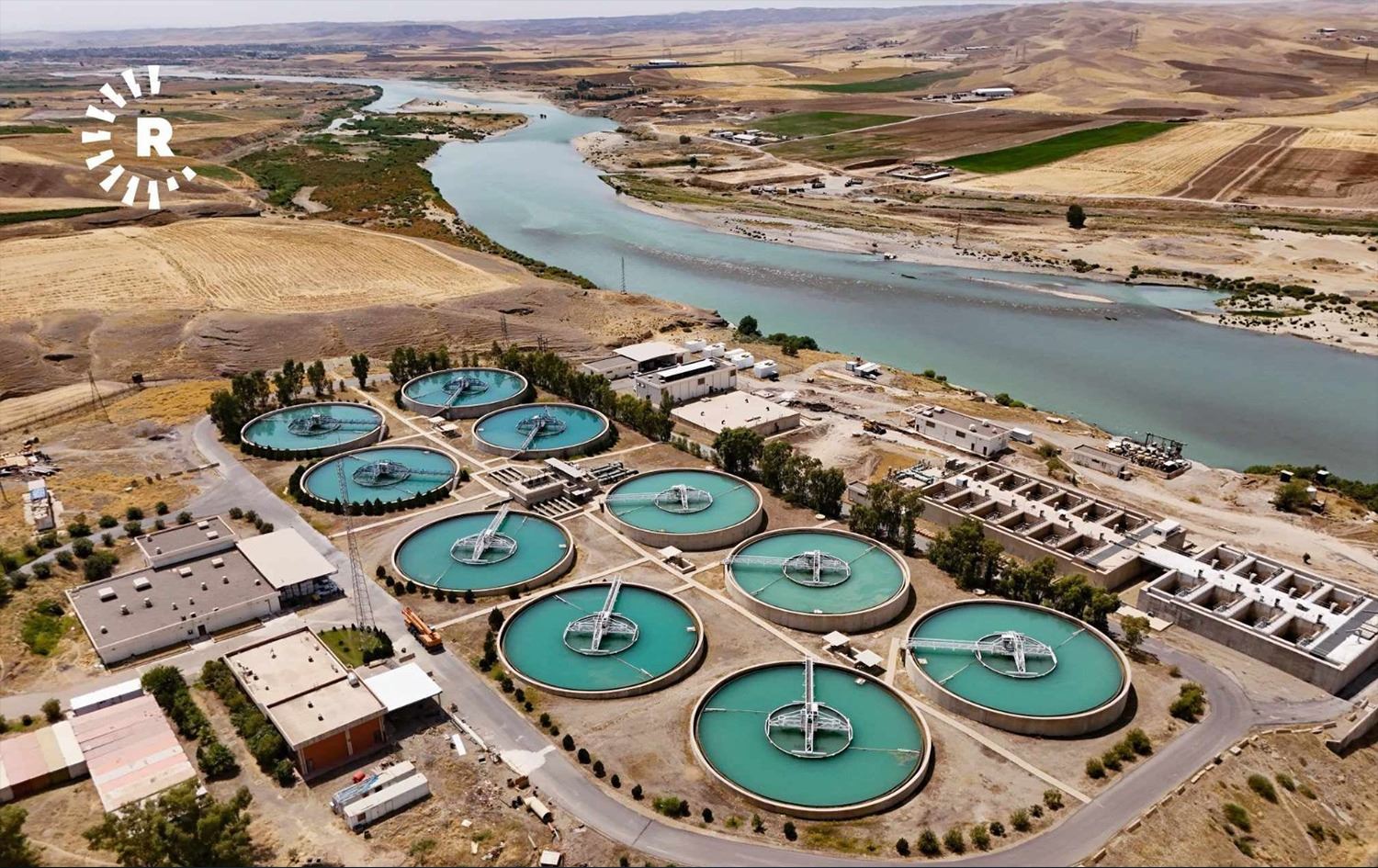
ERBIL, Kurdistan Region - One line of the Erbil Rapid Water Emergency Project has been completed and is currently undergoing testing, with water expected to reach parts of the city soon, a local official said on Tuesday.
“For two days now, all work on one line of the project has been completed, electricity and other requirements have been connected,” project supervisor Hemen Nazif told Rudaw.
He added that his team is working around the clock to finish the remaining lines.
“Work on one line has been completed; now we are in the process of dry testing the line. After that, water testing in the pipes will be conducted, then water will reach those neighborhoods that fall on the line as soon as possible.”
Dry testing a water pipeline refers to testing its structural integrity and leak tightness without using water.
The completed line is set to deliver water to several neighborhoods on the southeastern outskirts of Erbil, where water shortages are a recurring issue, particularly during the scorching summer months.
The project is designed to supply 20,000 cubic meters of water per hour, covering about 60 percent of Erbil’s water needs. The remaining demand is expected to be met through other existing projects.
Nazif said the full project, with a budget of approximately $480 million, is expected to be completed by the end of the year.
Kurdistan Region Prime Minister Masrour Barzani laid the foundation stone for the project in September.
The World Resources Institute has listed Iraq among the 25 countries facing extreme water stress. It is using over 80 percent of its available supply of water and is at risk of running out in case of any short-term drought.
Iraq’s water shortages are caused by reduced rainfall, rising temperatures, mismanagement, and upstream dams on rivers shared with Turkey and Iran.
The Kurdistan Region’s provinces have seen significantly less rain this year than the previous year.
“For two days now, all work on one line of the project has been completed, electricity and other requirements have been connected,” project supervisor Hemen Nazif told Rudaw.
He added that his team is working around the clock to finish the remaining lines.
“Work on one line has been completed; now we are in the process of dry testing the line. After that, water testing in the pipes will be conducted, then water will reach those neighborhoods that fall on the line as soon as possible.”
Dry testing a water pipeline refers to testing its structural integrity and leak tightness without using water.
The completed line is set to deliver water to several neighborhoods on the southeastern outskirts of Erbil, where water shortages are a recurring issue, particularly during the scorching summer months.
The project is designed to supply 20,000 cubic meters of water per hour, covering about 60 percent of Erbil’s water needs. The remaining demand is expected to be met through other existing projects.
Nazif said the full project, with a budget of approximately $480 million, is expected to be completed by the end of the year.
Kurdistan Region Prime Minister Masrour Barzani laid the foundation stone for the project in September.
The World Resources Institute has listed Iraq among the 25 countries facing extreme water stress. It is using over 80 percent of its available supply of water and is at risk of running out in case of any short-term drought.
Iraq’s water shortages are caused by reduced rainfall, rising temperatures, mismanagement, and upstream dams on rivers shared with Turkey and Iran.
The Kurdistan Region’s provinces have seen significantly less rain this year than the previous year.


Comments
Rudaw moderates all comments submitted on our website. We welcome comments which are relevant to the article and encourage further discussion about the issues that matter to you. We also welcome constructive criticism about Rudaw.
To be approved for publication, however, your comments must meet our community guidelines.
We will not tolerate the following: profanity, threats, personal attacks, vulgarity, abuse (such as sexism, racism, homophobia or xenophobia), or commercial or personal promotion.
Comments that do not meet our guidelines will be rejected. Comments are not edited – they are either approved or rejected.
Post a comment