


Kurdistan

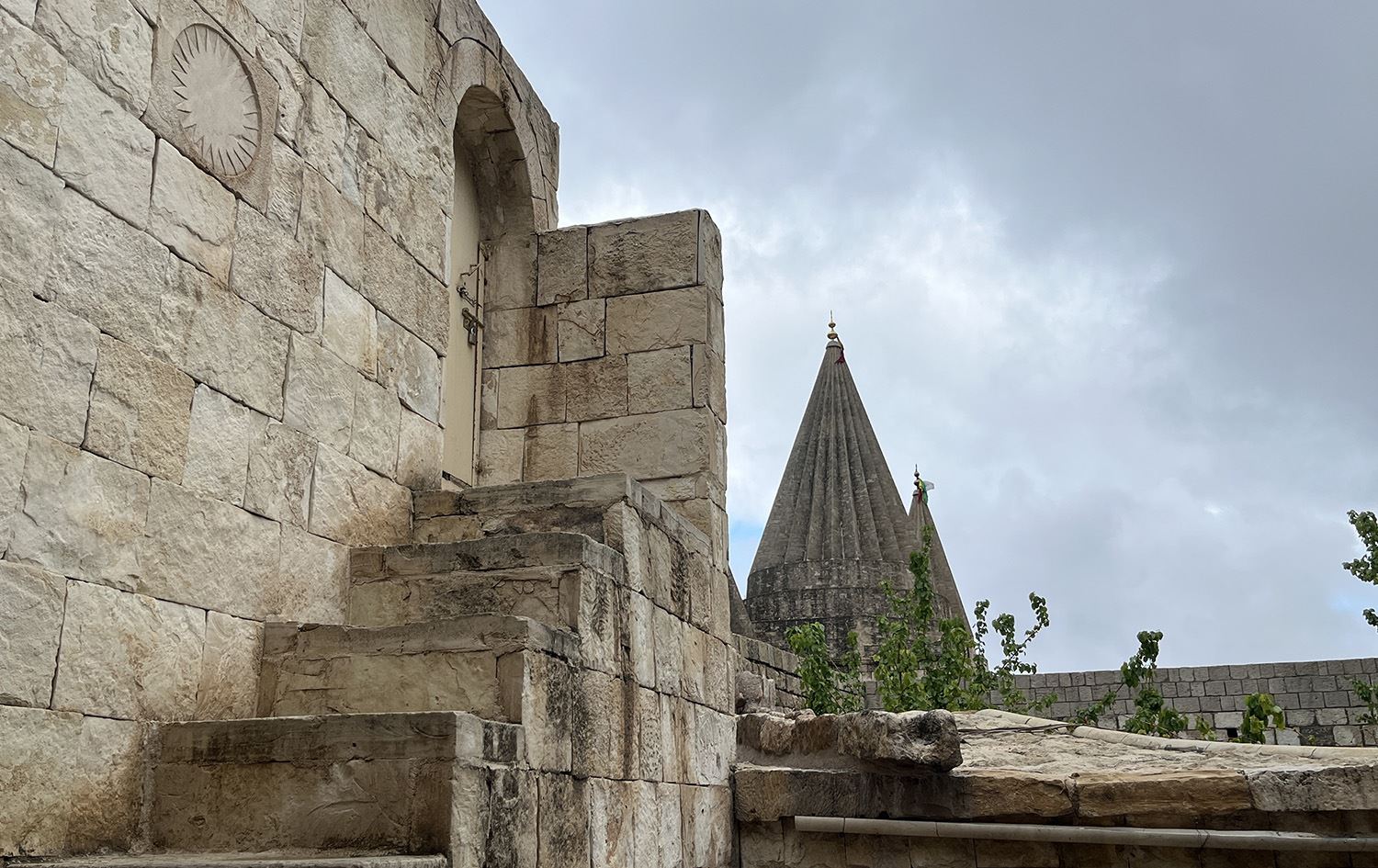
The holy temple of Lalish in the mountains of Duhok province, pictured on April 15, 2025. Photo: Donya Seif Qazi/Rudaw
ERBIL, Kurdistan Region - The Kurdistan Region’s leaders commemorated the 11th anniversary of the Yazidi genocide by the Islamic State (ISIS) on Sunday, urging Baghdad to implement a key 2020 agreement with Erbil aimed at restoring normalcy to the Yazidi heartland of Shingal (Sinjar).
“It is the Iraqi government’s responsibility to better care for its Yazidi citizens and compensate them, and no longer allow Shingal and Yazidi areas to become arenas for militia tensions and armed groups,” President Nechirvan Barzani said in a statement.
He reiterated the Kurdistan Region’s “full support” to the ethnoreligious community, while lamenting that “after eleven years, nearly half of the Yazidis still live in difficult economic, social, and psychological conditions in camps.”
ISIS launched a brutal offensive across swathes of northern and western Iraq in June 2014. By August, the group began its onslaught on the Yazidi community in their heartland of Shingal in Nineveh province, killing an estimated 5,000 to 10,000 Yazidi men and older women.
The jihadists also abducted some 7,000 women and girls for sexual slavery and human trafficking. Around 400,000 Yazidis were forced to flee, with most seeking refuge in the Kurdistan Region, according to data from the Office for Rescuing Abducted Yazidis, operating under the Kurdistan Region Presidency.
The Yazidis were subjected to heinous atrocities under ISIS’s brutal rule, including mass killings. The jihadists brought destruction to many villages and towns populated by the community and committed genocide.
“Trust, security, peace, safety, reconstruction, and services must be restored to Shingal and the other areas. Justice must be achieved for the Yazidi community and perpetrators must be punished,” President Barzani said, calling for the implementation of the Shingal Agreement.
In 2020, the Iraqi federal government and the Kurdistan Regional Government (KRG) signed the Shingal Agreement to restore governance, security, and stability to the district and resolve a number of issues that have prevented the return of its inhabitants. Under that deal, Baghdad was to assume responsibility for security, expelling all armed groups and establishing a new armed force recruited from the local population.
The agreement has never been fully implemented and thousands of Yazidis are still unable to return home.
Kurdistan Region Prime Minister Masrour Barzani also commemorated the genocide, reiterating that Baghdad must compensate the Yazidi victims.
“We reiterate that the federal government must fulfill its duties and responsibilities, compensate our Yazidi brothers and sisters, help the displaced, and create conditions for their dignified return to their areas,” he said, stressing that the Shingal Agreement must be implemented and armed groups must withdraw from the district.
Political disputes over the region between Baghdad and Erbil, as well as the presence of armed groups like the Kurdistan Workers’ Party (PKK) and the Popular Mobilization Forces (PMF), have disrupted the reconstruction of the city that suffered heavy destruction during the war against ISIS.
“Due to the non-implementation of the Shingal Agreement and the undesirable situation imposed on Shingal after its liberation, it has not been possible to reconstruct and provide necessary services to the people of that region,” the prime minister added.
He asserted that the KRG remains hard at work to find and return Yazidis remaining in captivity.
Kurdistan Democratic Party (KDP) leader Masoud Barzani described ISIS’s crimes against the Yazidis as “exceeding all boundaries of cruelty and brutality,” stressing that the Kurdistan Region’s citizens and the Kurdish Peshmerga forces stand in full solidarity with the Yazidi community.
“The Iraqi state must compensate the victims of the Shingal catastrophe and all genocides committed against the people of Kurdistan. There must be an end to these chauvinistic thoughts and behaviors,” he said in a statement.
International actors, such as the United Nations and the United States, have repeatedly called on Iraqi and Kurdish authorities to implement the Shingal Agreement and “break the political deadlock” in the city.
Although Iraq declared the full liberation of its territory from ISIS in 2017, around 21,000 Yazidi families remain displaced, primarily in camps in the Kurdistan Region’s Duhok province.


Comments
Rudaw moderates all comments submitted on our website. We welcome comments which are relevant to the article and encourage further discussion about the issues that matter to you. We also welcome constructive criticism about Rudaw.
To be approved for publication, however, your comments must meet our community guidelines.
We will not tolerate the following: profanity, threats, personal attacks, vulgarity, abuse (such as sexism, racism, homophobia or xenophobia), or commercial or personal promotion.
Comments that do not meet our guidelines will be rejected. Comments are not edited – they are either approved or rejected.
Post a comment