


Kurdistan

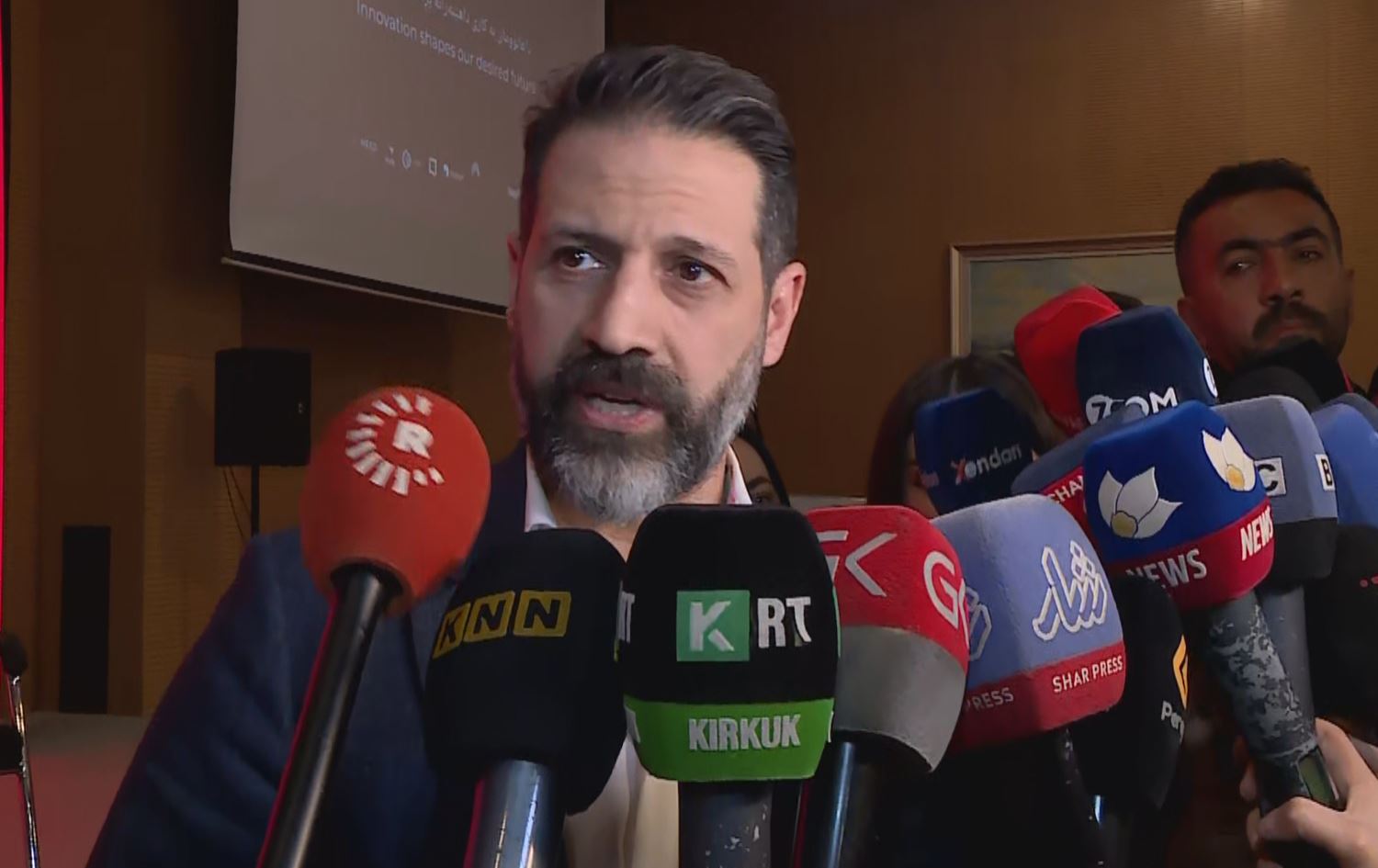
Kurdistan Region Deputy Prime Minister Qubad Talabani speaking to reporters in Sulaimani on January 7, 2024. Photo: Rudaw/screengrab
ERBIL, Kurdistan Region - The Kurdistan Regional Government (KRG) is starting the new year off with the goal of a comprehensive solution to all its salary and budget-related issues with Baghdad, Deputy Prime Minister Qubad Talabani told reporters on Sunday.
“I hope we can reach a radical and permanent solution for the salary issue in 2024, so we do not have such a thing as a ‘salary issue’ in 2024. [I hope] for salaries to be fixed, for the budget to be implemented, and for everyone to abide by the budget,” Talabani told reporters, including Rudaw’s Peshawa Bakhtyar.
The frequent delay in paying salaries, which has been an issue for the cash-strapped KRG for nearly a decade, has made life difficult for civil servants, many of whom have no other source of income and have not been paid for the last three months of 2023. Students in Sulaimani and Halabja provinces have yet to begin the school year because teachers are on strike over unpaid wages and contract demands.
A KRG delegation, headed by Finance Minister Awat Sheikh Janab, arrived in Baghdad on Saturday and met with Iraqi government officials to discuss amending the federal budget in a way that guarantees Kurdish civil servants receive their salaries on time.
Talabani described Saturday’s discussions as “positive” and said the delegation will have further meetings on budget-related issues.
Baghdad and Erbil struck a deal in mid-September that saw the federal government agree to loan the KRG 2.1 trillion Iraqi dinars in three 700 billion dinar installments, to cover three months of payroll and finally disperse wages to public servants who had been unpaid for around 90 days. The KRG has repeatedly claimed that it needs over 900 billion dinars per month to cover its payroll, but with its oil exports through Turkey halted since March, it does not have the funds.
“We must bring this problem to an end… We need a comprehensive agreement with the federal government, so that we do not even mention salary issues in 2024,” said Talabani.
Kirkuk provincial council
Talabani also discussed Kirkuk where his party, the Patriotic Union of Kurdistan (PUK), received the highest number of votes in provincial elections on December 18, securing five spots on the 16-seat council.
He said these election results mean the PUK is entitled to Kirkuk’s governorship, but stressed that all the Kurdish parties in Kirkuk need to come together to address the problems that are facing the province’s Kurdish population.
“It is necessary for all the Kurdish parties to meet and agree to have a united stance and agenda so we can stop any further wrongdoings towards the people of Kirkuk,” said Talabani.
It is uncertain if the PUK and its rival Kurdistan Democratic Party (KDP), which has two seats on Kirkuk’s provincial council, will be able to form a coalition and work together to restore a Kurdish governor as they are feuding over economic and governance issues in the Kurdistan Region and have not yet announced any cooperation in multi-ethnic Kirkuk.
Raad Salih al-Jabouri, head of the Arab coalition’s public office, told Rudaw on Thursday that they want to work with the KDP and Turkmen political parties. The Arabs have six seats on the council and the Turkmens have two.
Two amendments made to the provincial council elections law in May, which apply only to Kirkuk, make it difficult to predict who will fill the province’s governor seat next.
One amendment states that “the results of the elections shall not act as a legal or administrative basis to determine the future of Kirkuk province.”
“Power shall be distributed in a fair representation which guarantees the participation of the province’s components regardless of the results of the elections,” reads another amendment.
Rakan al-Jabouri, a Sunni politician and head of the Arab coalition, has served as Kirkuk’s acting governor since October 2017. His tenure has been a topic of debate. He is accused by some of attempting to revive the Ba'athist policy of Arabization to weaken the Kurdish population, but others praise him for breathing life back into previously-neglected Arab neighborhoods.
“I hope we can reach a radical and permanent solution for the salary issue in 2024, so we do not have such a thing as a ‘salary issue’ in 2024. [I hope] for salaries to be fixed, for the budget to be implemented, and for everyone to abide by the budget,” Talabani told reporters, including Rudaw’s Peshawa Bakhtyar.
The frequent delay in paying salaries, which has been an issue for the cash-strapped KRG for nearly a decade, has made life difficult for civil servants, many of whom have no other source of income and have not been paid for the last three months of 2023. Students in Sulaimani and Halabja provinces have yet to begin the school year because teachers are on strike over unpaid wages and contract demands.
A KRG delegation, headed by Finance Minister Awat Sheikh Janab, arrived in Baghdad on Saturday and met with Iraqi government officials to discuss amending the federal budget in a way that guarantees Kurdish civil servants receive their salaries on time.
Talabani described Saturday’s discussions as “positive” and said the delegation will have further meetings on budget-related issues.
Baghdad and Erbil struck a deal in mid-September that saw the federal government agree to loan the KRG 2.1 trillion Iraqi dinars in three 700 billion dinar installments, to cover three months of payroll and finally disperse wages to public servants who had been unpaid for around 90 days. The KRG has repeatedly claimed that it needs over 900 billion dinars per month to cover its payroll, but with its oil exports through Turkey halted since March, it does not have the funds.
“We must bring this problem to an end… We need a comprehensive agreement with the federal government, so that we do not even mention salary issues in 2024,” said Talabani.
Kirkuk provincial council
Talabani also discussed Kirkuk where his party, the Patriotic Union of Kurdistan (PUK), received the highest number of votes in provincial elections on December 18, securing five spots on the 16-seat council.
He said these election results mean the PUK is entitled to Kirkuk’s governorship, but stressed that all the Kurdish parties in Kirkuk need to come together to address the problems that are facing the province’s Kurdish population.
“It is necessary for all the Kurdish parties to meet and agree to have a united stance and agenda so we can stop any further wrongdoings towards the people of Kirkuk,” said Talabani.
It is uncertain if the PUK and its rival Kurdistan Democratic Party (KDP), which has two seats on Kirkuk’s provincial council, will be able to form a coalition and work together to restore a Kurdish governor as they are feuding over economic and governance issues in the Kurdistan Region and have not yet announced any cooperation in multi-ethnic Kirkuk.
Raad Salih al-Jabouri, head of the Arab coalition’s public office, told Rudaw on Thursday that they want to work with the KDP and Turkmen political parties. The Arabs have six seats on the council and the Turkmens have two.
Two amendments made to the provincial council elections law in May, which apply only to Kirkuk, make it difficult to predict who will fill the province’s governor seat next.
One amendment states that “the results of the elections shall not act as a legal or administrative basis to determine the future of Kirkuk province.”
“Power shall be distributed in a fair representation which guarantees the participation of the province’s components regardless of the results of the elections,” reads another amendment.
Rakan al-Jabouri, a Sunni politician and head of the Arab coalition, has served as Kirkuk’s acting governor since October 2017. His tenure has been a topic of debate. He is accused by some of attempting to revive the Ba'athist policy of Arabization to weaken the Kurdish population, but others praise him for breathing life back into previously-neglected Arab neighborhoods.


Comments
Rudaw moderates all comments submitted on our website. We welcome comments which are relevant to the article and encourage further discussion about the issues that matter to you. We also welcome constructive criticism about Rudaw.
To be approved for publication, however, your comments must meet our community guidelines.
We will not tolerate the following: profanity, threats, personal attacks, vulgarity, abuse (such as sexism, racism, homophobia or xenophobia), or commercial or personal promotion.
Comments that do not meet our guidelines will be rejected. Comments are not edited – they are either approved or rejected.
Post a comment