


Kurdistan

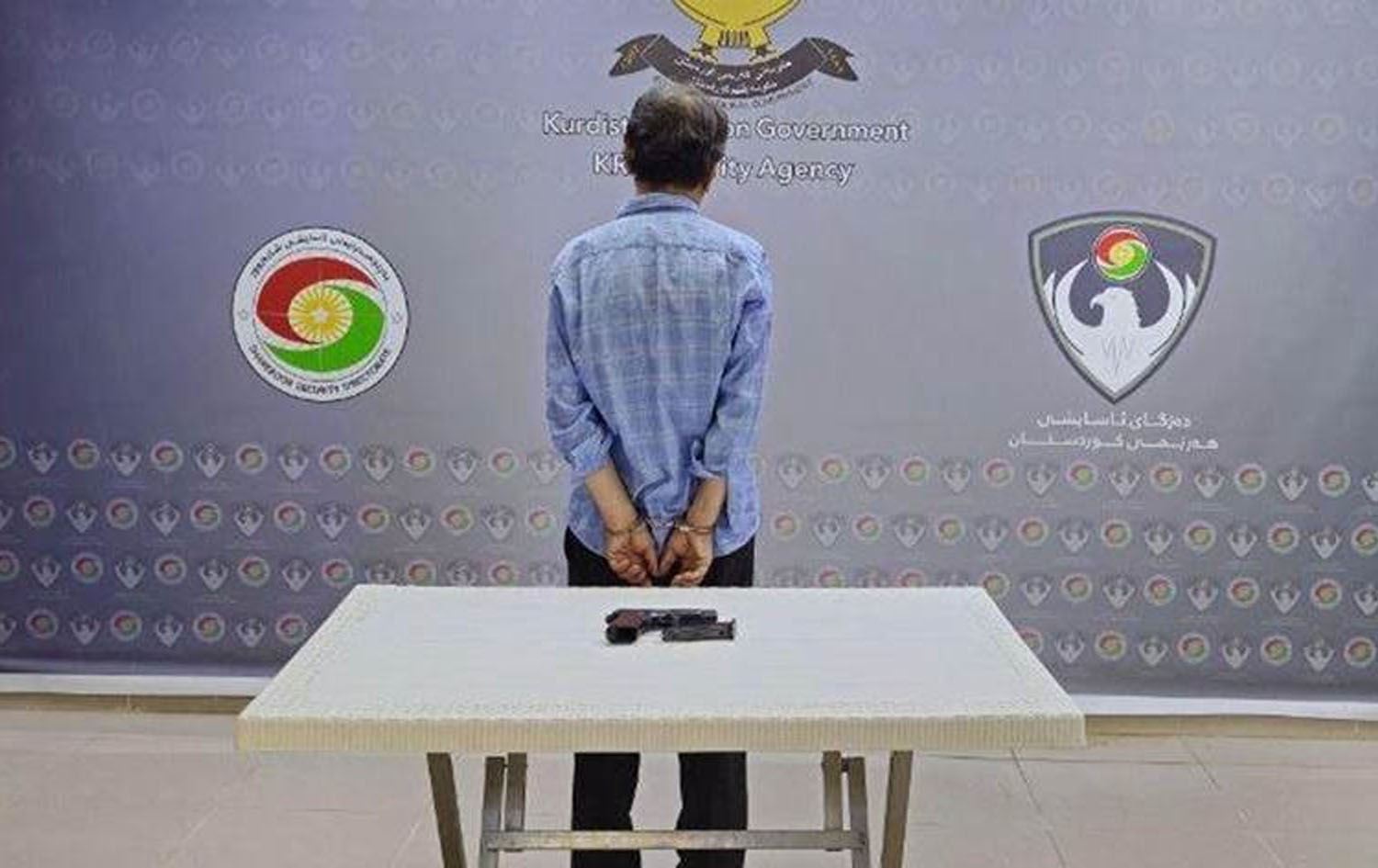
A suspect who allegedly killed his wife and daughter in the Kurdistan Region's Halabja province on September 6, 2025. Photo: Kurdistan Region Security Agency (Asayish)
ERBIL, Kurdistan Region - Security forces (Asayish) in Halabja said Saturday that a man suspected in the double homicide of his wife and daughter was arrested, citing a “social dispute” and saying that he allegedly tried to commit suicide during the operation.
A mother, 54, and daughter, 17, were found dead in Halabja on Saturday with gunshot wounds, according to police. An investigation was promptly launched, and Asayish later at night announced that the suspect was arrested.
Residents of the neighborhood were seemingly unaware about any potential issues between the family. “This family has lived in the neighborhood for several years, and until today, no one had heard them arguing,” a resident told Rudaw.
The Asayish said that the suspect attempted to commit suicide as they moved in to detain him. According to information obtained by Rudaw, the suspect had sent a message telling his brother that he wants to commit suicide and kill his family in the process.
The case is under investigation, the Asayish noted.
Such incidents in the Kurdistan Region frequently raise concerns about the widespread availability of firearms. Despite ongoing efforts by the Kurdistan Regional Government (KRG) to regulate gun ownership, illegal firearms remain prevalent.
An estimated 70 percent of the Kurdistan Region’s population is believed to own firearms, fueled by a thriving black market that supplies everything from handguns to sniper rifles.
The Kurdistan Region suffers from high rates of gender-based violence, including sexual violence, domestic violence, so-called honor killings, child marriages, and female genital mutilation.
Femicides in the Kurdistan Region are often linked with the terms “social dispute” and “honor killings,” which perpetrators use to justify murdering their mothers, sisters, daughters, or wives.


Comments
Rudaw moderates all comments submitted on our website. We welcome comments which are relevant to the article and encourage further discussion about the issues that matter to you. We also welcome constructive criticism about Rudaw.
To be approved for publication, however, your comments must meet our community guidelines.
We will not tolerate the following: profanity, threats, personal attacks, vulgarity, abuse (such as sexism, racism, homophobia or xenophobia), or commercial or personal promotion.
Comments that do not meet our guidelines will be rejected. Comments are not edited – they are either approved or rejected.
Post a comment