


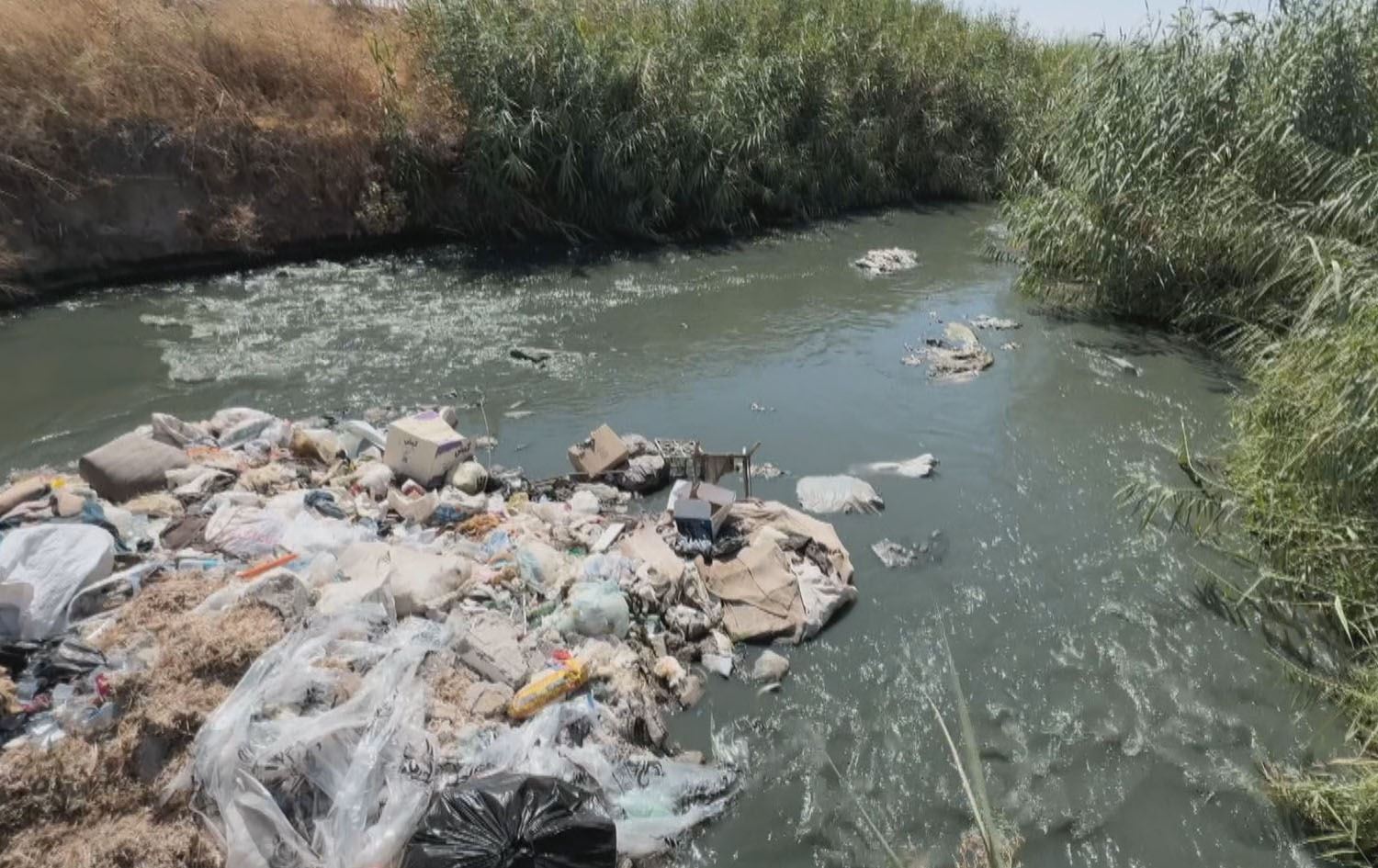
ERBIL, Kurdistan Region - Japan’s International Cooperation Agency (JICA) has launched Iraq’s first wastewater treatment project in Erbil, a $230 million initiative aimed at providing clean water for the city and surrounding farmland, its ambassador told Rudaw on Tuesday.
“Today, we announced the ceremony for signing the wastewater treatment project in the Kurdistan Region. The project involves cleaning Erbil's wastewater and several other similar projects,” said Japanese Ambassador to Iraq Akira Endo.
“Upon completion of the project, a better environment and life will be available for the people of the Kurdistan Region,” Kiro added.
He explained that the project will clean Erbil’s wastewater in eight phases. The first phase, covering 82,000 square meters in western Erbil, began on Tuesday and is expected to take three years to complete. The project will also provide irrigation for agricultural lands.
Amozhgar Hawezi, the project supervisor, lauded the project and said that it will guarantee clean water for irrigation.
“Now when we eat vegetables, we eat them with fear, not knowing whether the water is contaminated or clean. After the project's completion, we will be reassured that vegetables are irrigated with clean water,” Hawezi said.
The project will cover half a million square meters of land. Once completed, it is expected to benefit more than three million people, with over 200,000 served by the first phase alone.
This is part of a larger effort by the Kurdistan Regional Government (KRG) towards more sustainable methods of providing water.
A $200-million emergency water project in Erbil will be completed in two months and is set to begin supplying neighborhoods in December, according to the head of the Kurdistan Region’s water and sewerage department.


Comments
Rudaw moderates all comments submitted on our website. We welcome comments which are relevant to the article and encourage further discussion about the issues that matter to you. We also welcome constructive criticism about Rudaw.
To be approved for publication, however, your comments must meet our community guidelines.
We will not tolerate the following: profanity, threats, personal attacks, vulgarity, abuse (such as sexism, racism, homophobia or xenophobia), or commercial or personal promotion.
Comments that do not meet our guidelines will be rejected. Comments are not edited – they are either approved or rejected.
Post a comment