
ERBIL, Kurdistan Region - A veteran Kurdish politician from Turkey said Ankara must amend its terrorism law, speaking on Thursday ahead of a historic disarmament of the Kurdistan Workers’ Party (PKK).
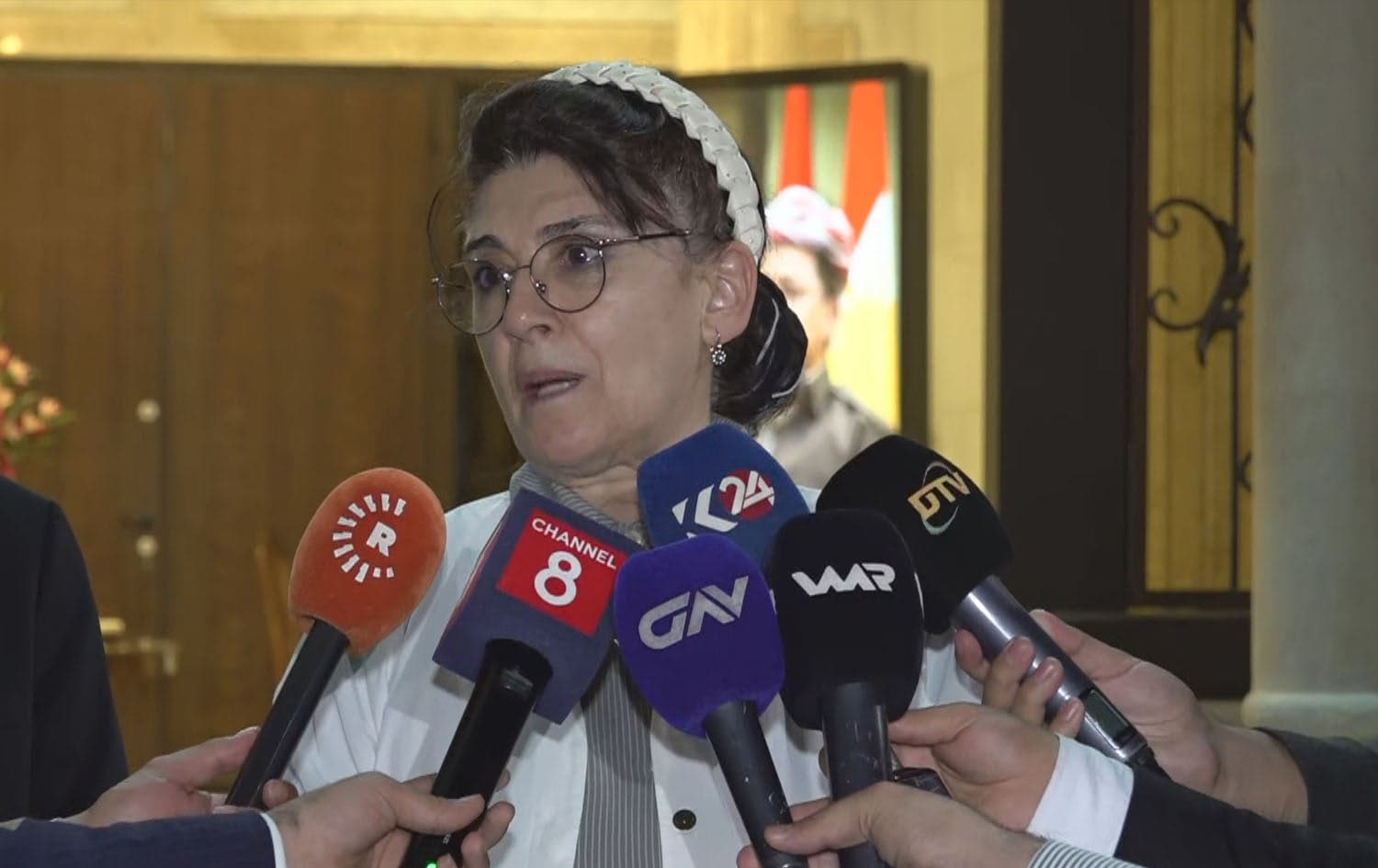
“It is necessary that the terrorism law be changed now and I do not accept that Kurds be accused of terrorism,” Leyla Zana said on her arrival in Zakho, Kurdistan Region on her way to attend a PKK disarmament ceremony in Sulaimani province.
A group of PKK fighters is expected to destroy their weapons during a ceremony on Friday that marks a significant step in a peace initiative to end the four-decade conflict between Turkey and the PKK that has claimed more than 40,000 lives.
The PKK, founded in 1978 in response to discrimination against the Kurdish population in Turkey, is considered a terrorist organization by Ankara and its allies. The group initially called for an independent Kurdistan, but it later dropped that demand and shifted focus to securing cultural and political rights for Kurds in Turkey.
Human rights organizations have accused Turkey of using its anti-terror laws to infringe on human rights and limit civic space.
“For 100 years oppression has been inflicted on Kurds and for 100 years Kurds have resisted. We were not defeated and those who attacked us were not defeated,” Zana told journalists in Zakho. “In this 21st century, we say, let neither us, nor our partners, nor the oppressed peoples lose anything.”
Zana made history in 1991 as the first Kurdish woman elected to the Turkish parliament. During her swearing-in ceremony, she caused a major stir by adding a sentence in Kurdish to her oath, which was illegal at the time. This act became a powerful symbol of Kurdish identity and resistance.
For her political activism, including speaking Kurdish in parliament and alleged ties to the PKK, she was imprisoned for 10 years, from 1994 to 2004.
While incarcerated, she received international support and numerous awards, including the Sakharov Prize for Freedom of Thought from the European Parliament in 1995 and the Rafto Prize in 1994. Amnesty International recognized her as a prisoner of conscience.
Zana said that future generations must not endure the same suffering.
“Destruction is easy but construction requires effort and sacrifice. We also want good things to happen today. Today in the world, everyone approaches each other with suspicion and speaks with harsh language,” Zana said. “Let Kurdistan become an example.”
She said that the most important thing that has come out of the peace process is that “from today onward, no one in the world arena can say that Kurds do not exist.”
Zana has played a role in previous attempts at peace negotiations between the Turkish state and the PKK. She met with then-Prime Minister Recep Tayyip Erdogan in 2012 to discuss the Kurdish-Turkish peace process and was actively involved in the negotiations that led to PKK leader Abdullah Ocalan's historic call for the party to move from armed resistance to political struggle in 2013.
She remains an influential figure in Kurdish politics and a symbol of resilience.