


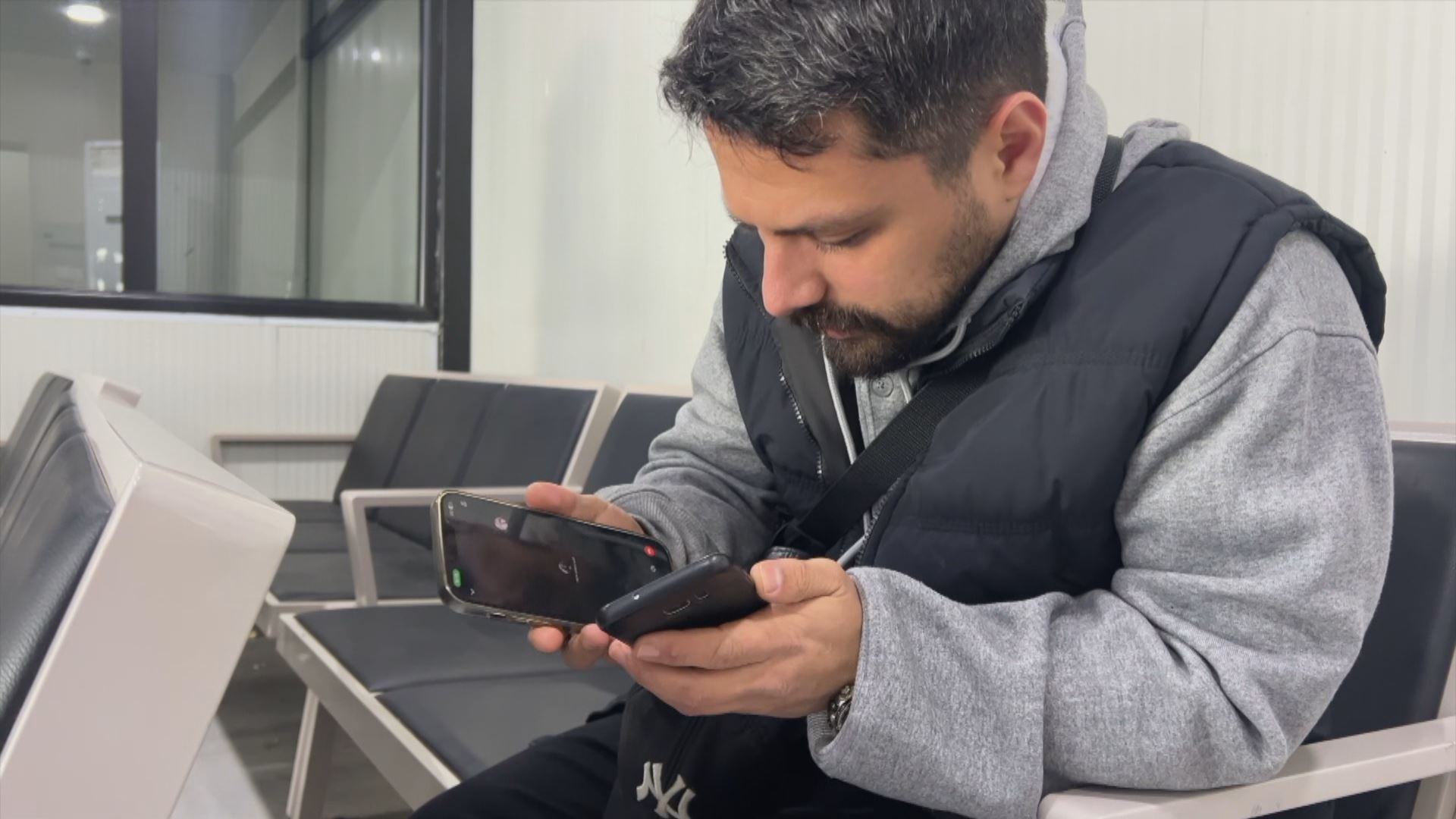
ERBIL, Kurdistan Region - At Erbil province's border crossing of Haji Omaran, silence is broken only by fragile phone signals and the quiet desperation of families trying to stay connected with loved ones inside Iran.
Fardin Jamalai has traveled a long distance from Erbil city to this mountainous edge of the Kurdistan Region, not for trade or tourism, but for a fleeting mobile signal.
Standing near the border, he holds two phones - one linked to an Iranian SIM card, the other to a European number - to connect a worried daughter abroad and an anxious mother in Tehran.
“She is in Europe. I use the other mobile to phone this Iranian number,” Jamalai explained. “I use two phones so they can talk. Even this small connection is only possible here, at the border crossing.”
Iran is facing one of its most serious internal security crises in years, triggered by a historic economic collapse that saw the rial plunge to a record low of 1.45 million to the US dollar. Waves of anti-government protests have followed, and with them, widespread internet blackouts and the cutting of telephone lines.
For families already separated by years of exile, the enforced silence has been agonizing.
Many residents of the Kurdistan Region now make long, exhausting journeys toward the Iranian border simply to catch the signal of Iranian SIM cards - all for the chance to hear their loved ones on the other side of the border.
Over the past two weeks, Iran has been gripped by near-total communication shutdowns. Calls from international SIM cards to Iranian lines are impossible, leaving families abroad cut off and fearful.
“We have had no news from them since last Thursday,” said Narmin Ahmedi. “Just to check on our family, we have to go to the Haji Omaran border crossing, make a call, and then return home.”
The blackout has not only deepened personal suffering but has also obscured the reality on the ground. With internet access restricted and phone lines severed, media outlets and monitoring organizations struggle to verify information, including the true number of casualties.
The disruption has spilled over into daily life as well.
Trade and tourism between Erbil province and Iran have sharply declined. Before the protests, between 3,000 and 4,000 people crossed through Haji Omaran each day. That number has now fallen to fewer than 1,000, according to border officials.


Comments
Rudaw moderates all comments submitted on our website. We welcome comments which are relevant to the article and encourage further discussion about the issues that matter to you. We also welcome constructive criticism about Rudaw.
To be approved for publication, however, your comments must meet our community guidelines.
We will not tolerate the following: profanity, threats, personal attacks, vulgarity, abuse (such as sexism, racism, homophobia or xenophobia), or commercial or personal promotion.
Comments that do not meet our guidelines will be rejected. Comments are not edited – they are either approved or rejected.
Post a comment