Kurdistan
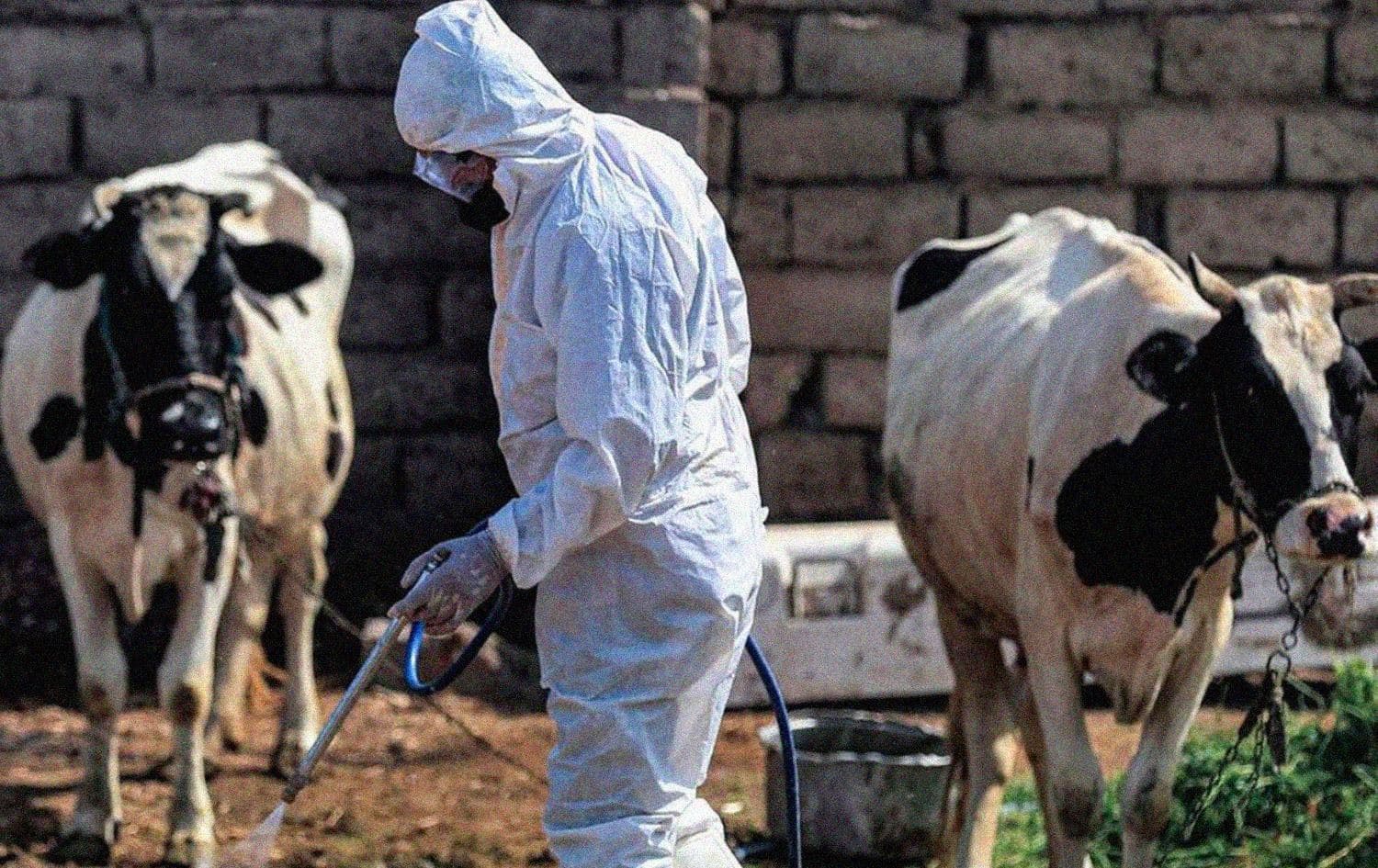
An employee of the Iraqi health ministry's veterinarian department disinfects, as a precaution against the spread of Congo haemorrhagic fever, past cows at a farm in the southwestern Baghdad suburb of al-Bouaitha on May 22, 2023. Photo: AFP
ERBIL, Kurdistan Region - A woman from Mosul has been diagnosed with Crimean-Congo Hemorrhagic Fever (CCHF) in Erbil, the Kurdistan Region’s health ministry announced on Sunday, amid nationwide concern over rising CCHF cases.
“A citizen from Mosul was diagnosed with hemorrhagic fever in Erbil,” the Region’s health ministry stated, elaborating that the infected woman is 27 years old.
The ministry added that in the last month, two other CCHF cases had been reported in the Kurdistan Region. One patient in the Region’s northern Duhok province, who had passed away, and another who completely recovered and was discharged from the hospital. The ministry did not specify the location of the second case.
In early May, the Kurdistan Region recorded its first confirmed case of CCHF in the town of Koya, southeast of Erbil.
CCHF is a highly infectious viral disease transmitted to humans through multiple routes, including bites from infected ticks, contact with the blood or tissues of infected animals, exposure to bodily fluids of infected individuals, and consumption of raw or undercooked meat from infected livestock.
As of early May, Iraq had reported 53 confirmed infections and seven deaths, the director general of the country’s Public Health Directorate at the health ministry, Riyadh al-Halfi, then told Rudaw.
Preventive measures are ongoing. They include the use of protective gear, such as gloves, masks, and goggles, especially for those who work with animals or meat. Veterinary hospitals have also been conducting large-scale tick control campaigns since late April.
The Iraqi government stated in April that it is “exerting full efforts” to contain the outbreak, reassuring citizens that “with proper measures in place, transmission to citizens will remain rare.” The ministry then urged caution in meat handling, especially among homemakers, recommending the use of protective gloves and separate utensils for raw meat.
“A citizen from Mosul was diagnosed with hemorrhagic fever in Erbil,” the Region’s health ministry stated, elaborating that the infected woman is 27 years old.
The ministry added that in the last month, two other CCHF cases had been reported in the Kurdistan Region. One patient in the Region’s northern Duhok province, who had passed away, and another who completely recovered and was discharged from the hospital. The ministry did not specify the location of the second case.
In early May, the Kurdistan Region recorded its first confirmed case of CCHF in the town of Koya, southeast of Erbil.
CCHF is a highly infectious viral disease transmitted to humans through multiple routes, including bites from infected ticks, contact with the blood or tissues of infected animals, exposure to bodily fluids of infected individuals, and consumption of raw or undercooked meat from infected livestock.
As of early May, Iraq had reported 53 confirmed infections and seven deaths, the director general of the country’s Public Health Directorate at the health ministry, Riyadh al-Halfi, then told Rudaw.
Preventive measures are ongoing. They include the use of protective gear, such as gloves, masks, and goggles, especially for those who work with animals or meat. Veterinary hospitals have also been conducting large-scale tick control campaigns since late April.
The Iraqi government stated in April that it is “exerting full efforts” to contain the outbreak, reassuring citizens that “with proper measures in place, transmission to citizens will remain rare.” The ministry then urged caution in meat handling, especially among homemakers, recommending the use of protective gloves and separate utensils for raw meat.
Comments
Rudaw moderates all comments submitted on our website. We welcome comments which are relevant to the article and encourage further discussion about the issues that matter to you. We also welcome constructive criticism about Rudaw.
To be approved for publication, however, your comments must meet our community guidelines.
We will not tolerate the following: profanity, threats, personal attacks, vulgarity, abuse (such as sexism, racism, homophobia or xenophobia), or commercial or personal promotion.
Comments that do not meet our guidelines will be rejected. Comments are not edited – they are either approved or rejected.
Post a comment