


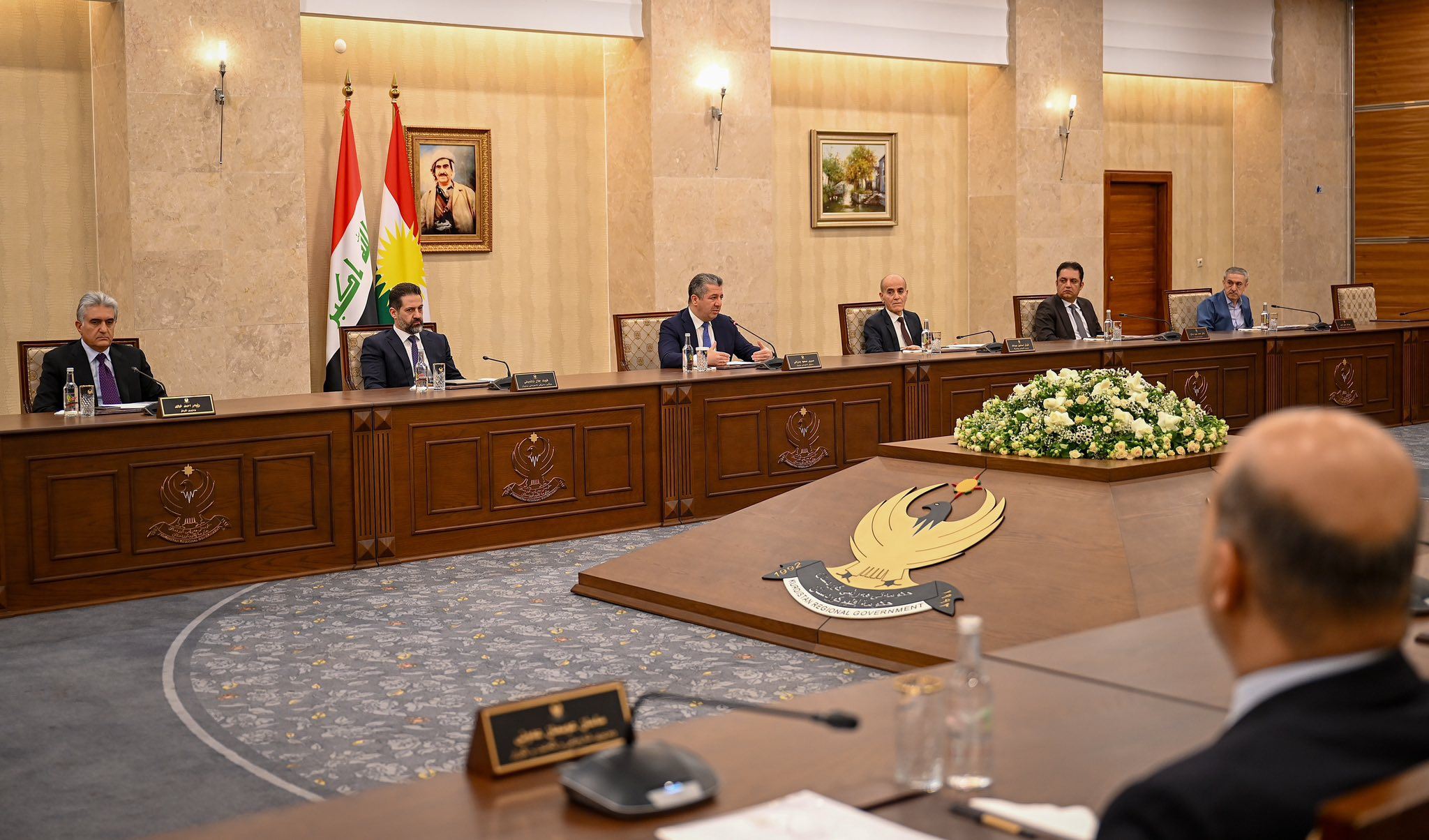
ERBIL, Kurdistan Region - The Kurdistan Regional Government (KRG) is set to hold its weekly meeting on Wednesday. The latest military tensions in the Middle East will top the agenda of the meeting.
“In the first section, the latest situation in the region and the war, chaos, and political, military, and security developments and their impacts on the Kurdistan Region will be discussed,” read a statement from the KRG’s Department of Media and Information.
Tensions between Iran and Israel reached a boiling point on Friday after the latter carried out an extensive operation in western Iran, killing several top commanders and nuclear scientists. Iran has carried out 11 waves of missile and drone attacks since. The devastating attacks have killed at least 24 civilians in Israel and 224 Iranians, according to latest official figures. Nearly 600 Israelis and 1,300 Iranians have been injured.
The Kurdistan Region Presidency called for de-escalation hours after the escalation took place.
"These events further complicate the peace and stability of the region and pose a threat to regional and international security and stability," the presidency said in a statement.
"Confrontation and military measures make the situation worse. At this sensitive time, it is the responsibility of the international community to have a rapid and urgent response and work to prevent chaos and disorder from spreading further and as soon as possible prevent further escalation of the situation," it added.
During his phone call with Iranian Foreign Minister Abbas Araghchi on Monday, Kurdistan Region President Nechirvan Barzani reiterated Erbil’s call for a peaceful solution to the conflict.
The Kurdistan Region's security has largely remained unaffected by the recent escalation, aside from the downing of a few suspected drones over the capital, Erbil. The Kurdish government has maintained a neutral stance throughout the conflict.


Comments
Rudaw moderates all comments submitted on our website. We welcome comments which are relevant to the article and encourage further discussion about the issues that matter to you. We also welcome constructive criticism about Rudaw.
To be approved for publication, however, your comments must meet our community guidelines.
We will not tolerate the following: profanity, threats, personal attacks, vulgarity, abuse (such as sexism, racism, homophobia or xenophobia), or commercial or personal promotion.
Comments that do not meet our guidelines will be rejected. Comments are not edited – they are either approved or rejected.
Post a comment