


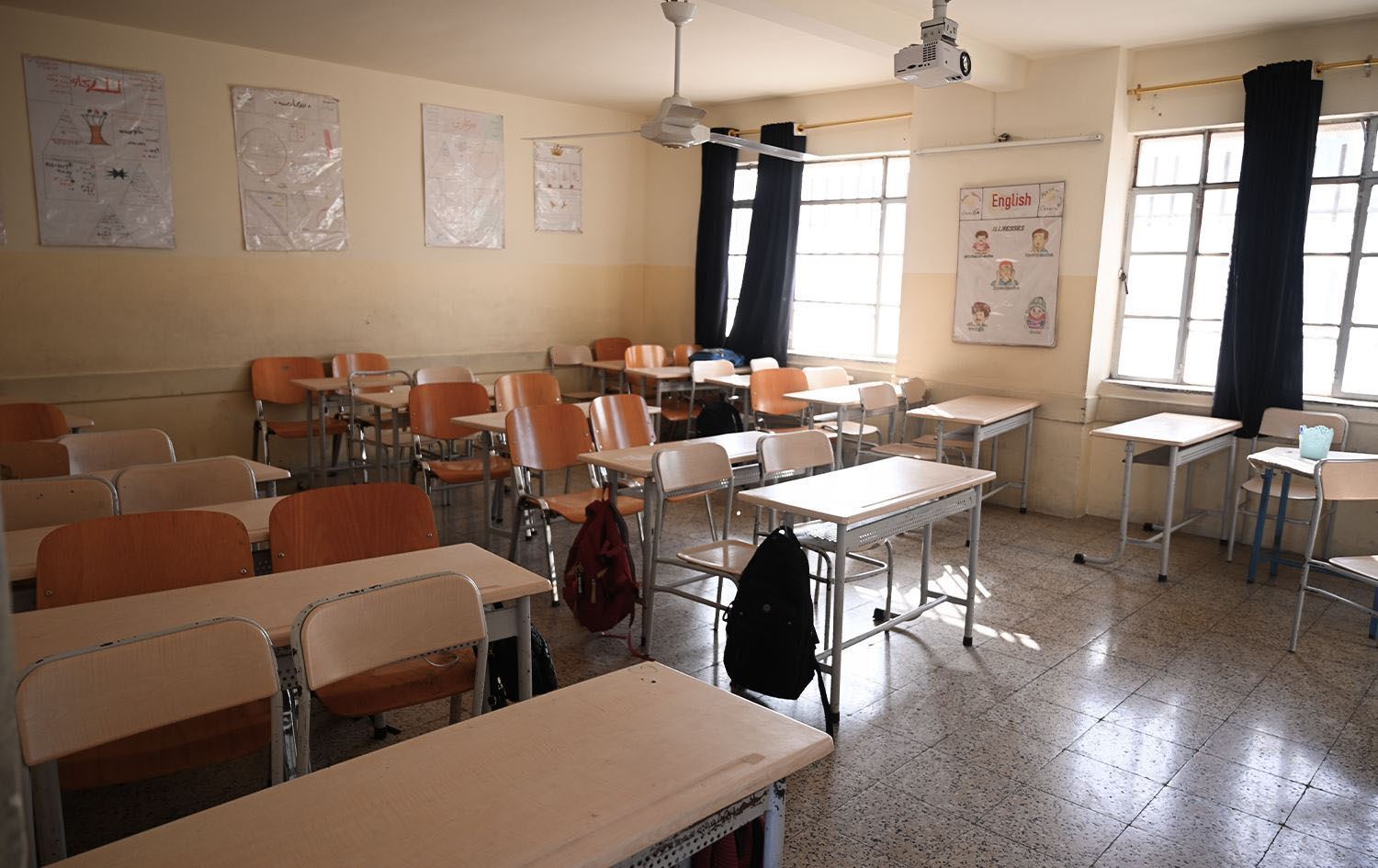
ERBIL, Kurdistan Region - Thirty schools under the jurisdiction of Sulaimani’s western education directorate need to be rebuilt, said an official on Thursday. The new school year in the Kurdistan Region is set to begin next week.
“Thirty schools under our jurisdiction need to be rebuilt,” Shanga Osman, an official at the directorate, told Rudaw, adding that “those that pose a danger to the lives of students and teachers have been abandoned.”
She explained that while some schools require full reconstruction, others only need their walls demolished and rebuilt. The directorate oversees 420 schools in total.
Sunday marks the first day of the school year for public schools in the Kurdistan Region, but the long-standing problems of dilapidated buildings and shortages of schools remain unresolved. Many schools are forced to operate on two-shift schedules, and in some cases, even three shifts - typically with one in the morning and another in the afternoon.
Osman said that under her directorate, the three-shift system no longer exists, though all schools continue to run on two shifts. She noted that additional classrooms have been added to help ease pressure but emphasized the urgent need for new facilities.
“If we want to properly reorganize school schedules and make them all single-shift while solving the classroom shortage problem, we need a large number of new schools to be built,” she said.
According to the Kurdistan Regional Government’s Ministry of Education, the Region requires nearly 3,000 new school buildings, while there are currently about 7,000 schools. Osman added that due to financial constraints, no new schools have been built in her jurisdiction in recent years, except for about ten constructed through charitable initiatives and some inside residential compounds.
Ahmad Garmiyani, head of the Kurdistan Teachers Union, told Rudaw on Sunday that there are an estimated 1.8 million students across the Kurdistan Region.
Bilal Ahmad and Soran Hussein contributed to this report.


Comments
Rudaw moderates all comments submitted on our website. We welcome comments which are relevant to the article and encourage further discussion about the issues that matter to you. We also welcome constructive criticism about Rudaw.
To be approved for publication, however, your comments must meet our community guidelines.
We will not tolerate the following: profanity, threats, personal attacks, vulgarity, abuse (such as sexism, racism, homophobia or xenophobia), or commercial or personal promotion.
Comments that do not meet our guidelines will be rejected. Comments are not edited – they are either approved or rejected.
Post a comment