


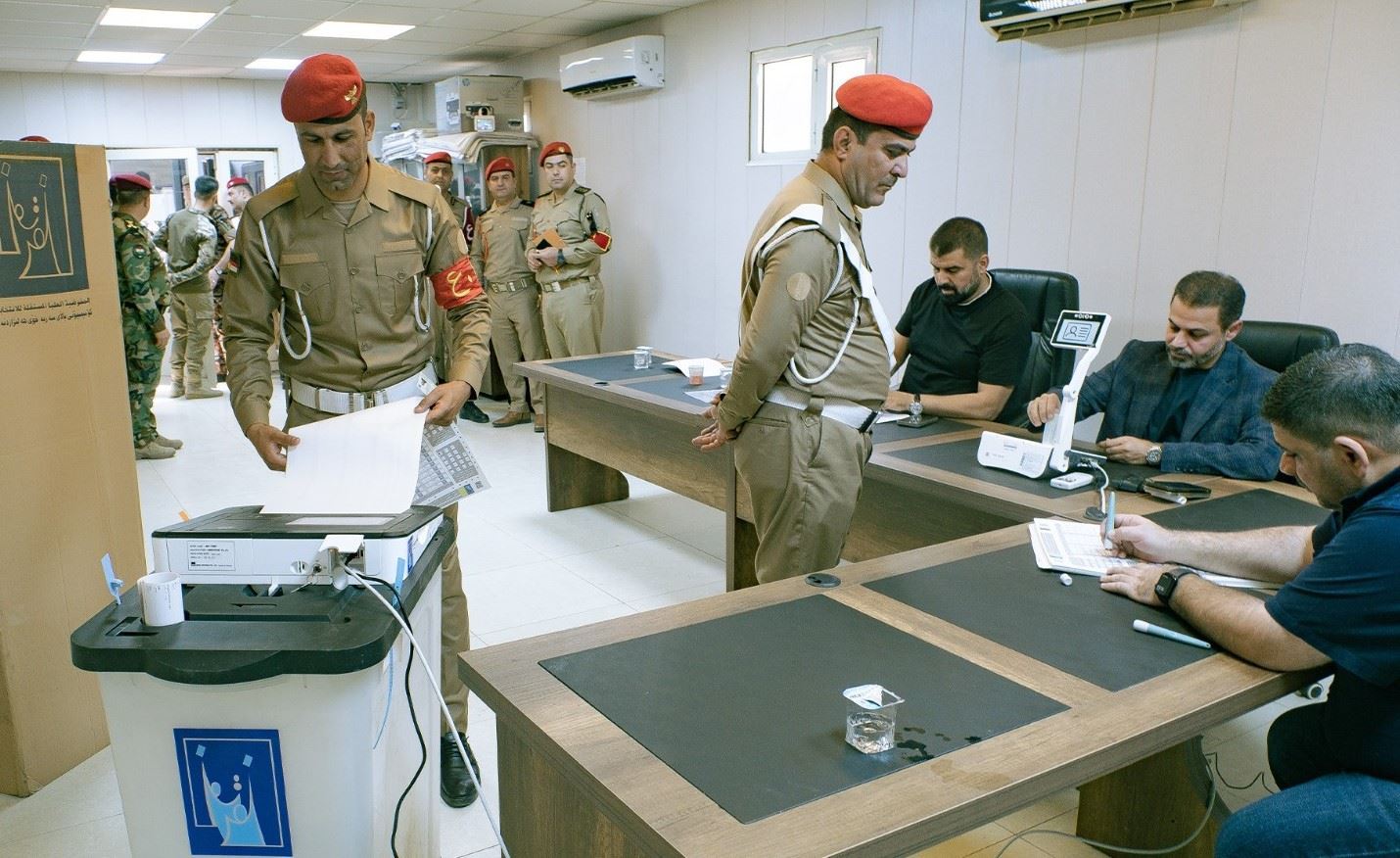
ERBIL, Kurdistan Region - Over 120 pallets containing approximately 3.5 million ballot papers arrived in the Kurdistan Region on Monday, with the majority sent to the eastern province of Sulaimani, Rudaw has learned.
Nabard Omar, head of the Kurdistan Region’s office at the Iraqi Independent High Electoral Commission (IHEC), told Rudaw that "election necessities have been sent from Iraq to the Kurdistan Region, the most important of which is the ballot papers, which arrived on Monday night."
According to data obtained by Rudaw, the IHEC has delivered 123 pallets in total, including 3,497,650 ballot papers.
Erbil province received approximately 1,257,650 ballots, while Sulaimani and Halabja were allocated 1,361,600. The northern province of Duhok received 878,400.
The IHEC will safeguard these ballot papers until election day.
Muzaffar Abdulrahman, head of IHEC’s security coordination in the Kurdistan Region, told Rudaw that “on November 5, the education ministry will provide a list of schools [to be used as polling stations]. Security forces will then be deployed to those locations to protect the ballot papers and ensure safety on election day.”
Iraq and the Kurdistan Region are set to hold legislative elections on November 11.
According to IHEC data, the elections will see participation from 31 political alliances, 38 parties, 23 independent candidates, and 56 candidates running for minority quota seats.
In total, 7,768 candidates - including 5,520 men and 2,248 women - are competing for 329 parliamentary seats, nine of which are reserved for minority groups.
More than 39,000 polling stations will be open across 8,703 voting centers for the general vote. An additional 4,501 stations have been designated for special voting, while 97 polling stations will be available for displaced persons living in and around camps in the Kurdistan Region.
Following a recent nationwide update to biometric voter registration, over 21 million Iraqis are now eligible to vote.


Comments
Rudaw moderates all comments submitted on our website. We welcome comments which are relevant to the article and encourage further discussion about the issues that matter to you. We also welcome constructive criticism about Rudaw.
To be approved for publication, however, your comments must meet our community guidelines.
We will not tolerate the following: profanity, threats, personal attacks, vulgarity, abuse (such as sexism, racism, homophobia or xenophobia), or commercial or personal promotion.
Comments that do not meet our guidelines will be rejected. Comments are not edited – they are either approved or rejected.
Post a comment