


Kurdistan

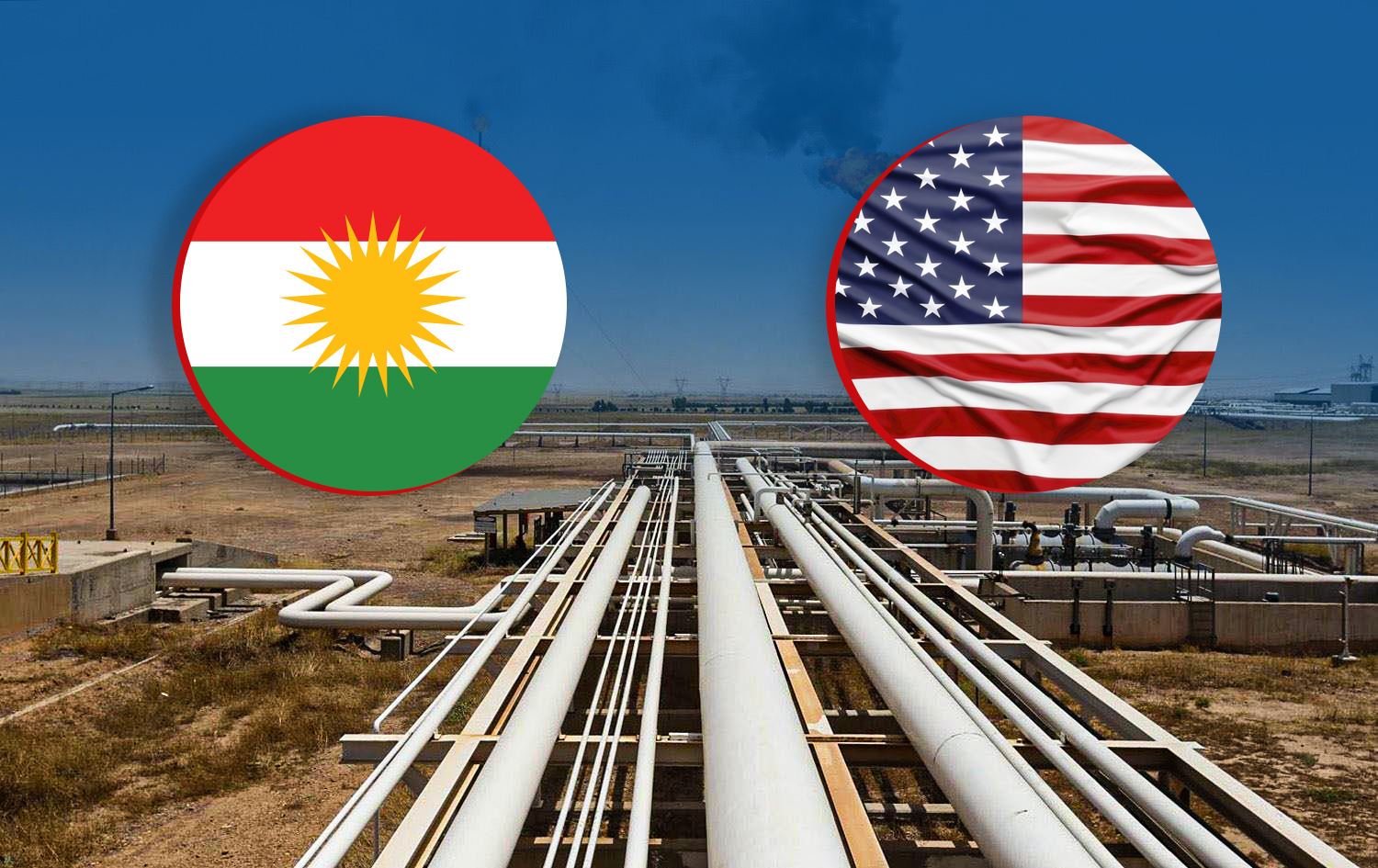
An oil field in the Kurdistan Region. File photo: Rudaw. Flags of the US and the Kurdistan Region. Graphic: Rudaw
ERBIL, Kurdistan Region - Kurdish officials on Thursday welcomed the United States publicly supporting the development of the Kurdistan Region’s gas sector after major energy agreements were signed between Washington and Erbil worth a combined $110 billion.
Two major energy agreements were signed between Erbil and two US companies valued at a combined $110 billion over their lifespans during Kurdistan Region Prime Minister Masrour Barzani’s visit to the US.
Aziz Ahmad, deputy chief of staff to Prime Minister Barzani, and Kurdistan Regional Government (KRG) Cabinet Secretary Amanj Raheem met with US State Department officials on the sidelines of Barzani’s visit to urge Washington’s support for the KRG’s reforms.
“On oil and gas, we welcomed US public support for the recent energy deals, which will help lift all of Iraq, including the Kurdistan Region,” Ahmad said on X, lauding the agreements as “good news for all of the country.”
The two deals, signed between the KRG and US-based companies HKN Energy and WesternZagros, grant the American firms the rights to develop two oil and gas fields - the Miran Gas Field and the Topkhana-Kurdamir block - in the Kurdistan Region.
But Baghdad’s oil ministry slammed the deals as a “blatant violation of Iraqi law,” saying in a Tuesday statement that any investment in Iraq’s oil resources must go through the federal government.
It also declared the contracts null, prompting a response from the KRG’s natural resources ministry in defense of the deals.
Robin Mills, CEO of Dubai-based Qamar Energy, described the gas fields as “two of the most important gas resources in the Kurdistan Region.”
“The US has been pushing hard to improve the situation of gas and electricity in the Kurdistan Region, and these US companies have obviously been trying to advance their interests and encourage the US government to support them,” Mills told Rudaw on Thursday.
According to Mills, the Kurdistan Region will have “more than enough gas” after the new fields are developed, combined with the major Khor Mor field in Sulaimani, operated by UAE-based Dana Gas, to meet domestic supply and export, both to Iraq and neighboring countries such as Turkey.
“There are severe problems with gas and electricity supplies throughout the country, this will ease that. Potentially, Turkey could be interested in the imports, so it is positive for Turkey to have another supplier close by," he said.
On Wednesday, the US State Department hailed the deals as ones that “will strengthen gas production in Iraq and benefit both of our peoples.”
Secretary of State Marco Rubio later in the day described the Kurdistan Region’s autonomy as the “linchpin” of Washington’s approach toward Iraq, stressing that part of Washington’s commitment to the Kurds is “allowing them the economic lifeline that allows them to prosper and succeed.”
Barzani is set to attend an energy conference in Washington with US Energy Secretary Chris Wright, hosted by Al-Monitor Global Institute, according to a KRG statement.
In the conference, Barzani and Wright “will discuss the future of energy in the Kurdistan Region and Iraq, as well as relations between the Kurdistan Region and the US, in two separate panels,” the statement said.
Washington and Erbil enjoy strong ties. The US has been one of the primary backers of the Kurdistan Region since it secured autonomy in the 1990s and has played an instrumental role in the development of the Kurdish Peshmerga forces, especially as the head of a global coalition against the Islamic State (ISIS) in the country. It is also the primary backer of Peshmerga reforms.
The US is also set to open the largest consulate general in the world in Erbil soon.
Two major energy agreements were signed between Erbil and two US companies valued at a combined $110 billion over their lifespans during Kurdistan Region Prime Minister Masrour Barzani’s visit to the US.
Aziz Ahmad, deputy chief of staff to Prime Minister Barzani, and Kurdistan Regional Government (KRG) Cabinet Secretary Amanj Raheem met with US State Department officials on the sidelines of Barzani’s visit to urge Washington’s support for the KRG’s reforms.
“On oil and gas, we welcomed US public support for the recent energy deals, which will help lift all of Iraq, including the Kurdistan Region,” Ahmad said on X, lauding the agreements as “good news for all of the country.”
The two deals, signed between the KRG and US-based companies HKN Energy and WesternZagros, grant the American firms the rights to develop two oil and gas fields - the Miran Gas Field and the Topkhana-Kurdamir block - in the Kurdistan Region.
The U.S. remains a vital security and economic partner for the Kurdistan Region, and we are working to further deepen and strengthen that partnership. pic.twitter.com/iUT29wUvzB
— Masrour Barzani (@masrourbarzani) May 21, 2025
But Baghdad’s oil ministry slammed the deals as a “blatant violation of Iraqi law,” saying in a Tuesday statement that any investment in Iraq’s oil resources must go through the federal government.
It also declared the contracts null, prompting a response from the KRG’s natural resources ministry in defense of the deals.
Robin Mills, CEO of Dubai-based Qamar Energy, described the gas fields as “two of the most important gas resources in the Kurdistan Region.”
“The US has been pushing hard to improve the situation of gas and electricity in the Kurdistan Region, and these US companies have obviously been trying to advance their interests and encourage the US government to support them,” Mills told Rudaw on Thursday.
According to Mills, the Kurdistan Region will have “more than enough gas” after the new fields are developed, combined with the major Khor Mor field in Sulaimani, operated by UAE-based Dana Gas, to meet domestic supply and export, both to Iraq and neighboring countries such as Turkey.
“There are severe problems with gas and electricity supplies throughout the country, this will ease that. Potentially, Turkey could be interested in the imports, so it is positive for Turkey to have another supplier close by," he said.
On Wednesday, the US State Department hailed the deals as ones that “will strengthen gas production in Iraq and benefit both of our peoples.”
Secretary of State Marco Rubio later in the day described the Kurdistan Region’s autonomy as the “linchpin” of Washington’s approach toward Iraq, stressing that part of Washington’s commitment to the Kurds is “allowing them the economic lifeline that allows them to prosper and succeed.”
Barzani is set to attend an energy conference in Washington with US Energy Secretary Chris Wright, hosted by Al-Monitor Global Institute, according to a KRG statement.
In the conference, Barzani and Wright “will discuss the future of energy in the Kurdistan Region and Iraq, as well as relations between the Kurdistan Region and the US, in two separate panels,” the statement said.
Washington and Erbil enjoy strong ties. The US has been one of the primary backers of the Kurdistan Region since it secured autonomy in the 1990s and has played an instrumental role in the development of the Kurdish Peshmerga forces, especially as the head of a global coalition against the Islamic State (ISIS) in the country. It is also the primary backer of Peshmerga reforms.
The US is also set to open the largest consulate general in the world in Erbil soon.


Comments
Rudaw moderates all comments submitted on our website. We welcome comments which are relevant to the article and encourage further discussion about the issues that matter to you. We also welcome constructive criticism about Rudaw.
To be approved for publication, however, your comments must meet our community guidelines.
We will not tolerate the following: profanity, threats, personal attacks, vulgarity, abuse (such as sexism, racism, homophobia or xenophobia), or commercial or personal promotion.
Comments that do not meet our guidelines will be rejected. Comments are not edited – they are either approved or rejected.
Post a comment