


Error occured during this request! Please try again later.

Bilind with his father, Shukir (L), and Bilind at work in the Kurdistan Region. Photos: Submitted
ERBIL, Kurdistan Region - A commotion among women and children can be heard in the background of the final audio message sent from Bilind Shukir to his anxious father in the Kurdistan Region, as the 21-year-old asks him to sleep and not worry about his journey across the English Channel on the boat that would fall into catastrophic difficulties.
Bilind’s dinghy was one of around 18 carrying somewhere between 300 to 600 people that motored across the cold and dark English Channel on the night of November 23 from northern France to the United Kingdom. It would never arrive, with the bodies of 27 migrants on board found dead the following day.
“Oh my god, why has the water turned this way,” a woman speaking in Kurdish is heard exclaiming in the audio message, as Bilind tells his father that he must turn off his mobile or the smuggler would become upset. As his father prayed for a safe voyage, his son reassured him that he had shared his location on the instant messaging app Snapchat with his two brothers in Canada.
For Shukir, this was the most dangerous leg of the journey for his young son since he left his hometown of Zakho in Duhok province in late October, embarking upon a journey that had taken him to France through Belarus and Germany. “May god be with you,” Shukir texted back on the instant messaging platform Viber, at 3 minutes past midnight (Baghdad time). Bilind responded shortly after, telling his father, “Sleep, please don’t stay up worrying about me.”
Shukir was extremely worried about the journey. A smuggler by the name of Majid, from Duhok province, was the point of contact. “Our agreement [with the smuggler] was that he would travel in a lorry, but then the smuggler Majid called and said that it has been 17 or 18 days that no one had passed in a lorry because the police had brought in sniffer dogs,” Shukir told Rudaw English on Tuesday, recalling his conversation with the smuggler. “He could stay in the area for two more months, [so] the only way was the dinghy,” Majid had told him.
Bilind was one of 33 people, mostly Iraqi Kurds, who boarded the doomed dinghy from the coast of Calais around 21:00 UK time on November 23. The French authorities recovered 27 bodies and identified all but one of them last week.
Two people on board the vessel, Kurdish and Somali men, were rescued after spending at least twelve hours in the water, on November 24. The first person to be buried was Sirwan Alipour from the Kurdish region in Iran, who was laid to rest on Tuesday afternoon in his hometown of Sardasht after his body was flown to Tehran on Monday.
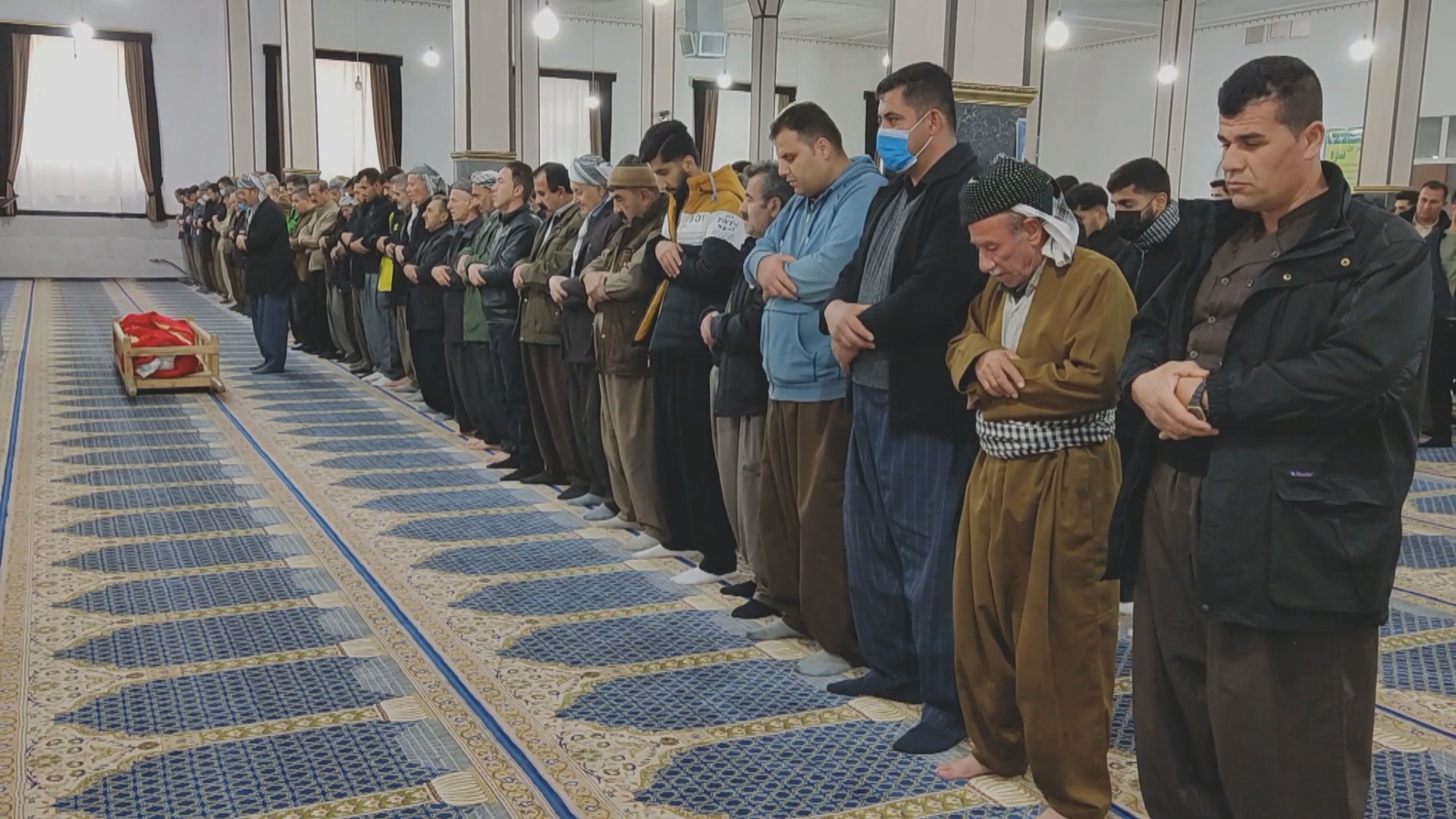
The Kurdish authorities in Iraqi Kurdistan are repatriating 16 bodies in the early hours of Friday morning, including that of Bilind.
Like many others of those on the dinghy, Bilind was on his way to the UK in search of a better life. Two of his brothers went to Canada several years ago, and he had friends and relatives across Europe and in the UK, where he hoped to continue his work as a barber.
“His skills were better than mine,” Forad Mahmood, a colleague of Bilind told Rudaw’s Yousuf Mousa on Monday. “When he started talking about going abroad, I was not happy and I tried to dissuade him but it did not work. He insisted that he would go to Britain.”
Bilind studied to the 7th grade before he started working. He spent most of his time in his hometown of Zakho, in the scenic mountainous region of Duhok province. He enjoyed hiking in the mountains, his close friends say, although most of the region was off-limits as a bloody war raged between Kurdish militants of the Kurdistan Workers’ Party (PKK) and the Turkish army. He occupied himself with his hairdressing job, playing music with friends, and going regularly to the gym.
This summer, as a network of smugglers in cohorts with numerous travel agencies in the Kurdistan region persuaded thousands of Iraqi Kurds to travel to the Belarus-Poland border to reach Europe, Bilind decided that he should try his luck, too.
“He asked me to go with him but I don’t like Europe,” Bilind’s close friend Alind Mustafa told Rudaw English from Zakho. Alind, who referred to Blind as Qezho, meaning someone with long curly hair,said that he stayed in close contact with his friend as he made his journey across Europe. “He went to Syria first and from there to Baghdad and then to Belarus,” Alind said. “He stayed in Belarus for one or two days and from there he went to Germany.”
In Germany, Bilind stayed with a relative for over two weeks and even obtained a German sim card that he would later use to contact his father on the dinghy. From Germany, he travelled to France where he stayed before he found a smuggler by the name of Majid; a Kurdish Bahdini speaker from Duhok province.
In Calais, the Kurdish migrants are generally divided into two categories based on their regional and linguistic differences. The Sorani speaking Kurds from Sulaimani, Kirkuk and most of Erbil often go with Sorani smugglers, and the Bahdini speaking go with the smugglers from the Bahdinan region which includes all of Duhok and part of Erbil province.
How Bilind ended up in a boat as the only Bahdini speaking Kurd is a mystery to his father. A smuggler by the name of Milat in Italy introduced the family to Majid in Calais, where Majid handed him over to someone called Bashdar, according to his father. “We dealt with someone who spoke Bahdini but later we realised that Bilind was passed on to two other Sorani speaking smugglers, [so] he was sold on,” Shukir told Rudaw English from Zakho.
At 20:43 (Baghdad time), Bilind sends an audio message that lasts 35 seconds in which he tells his dad that he had to walk for over an hour to the point of departure and switch off his mobile phone so that the French police would not detect him. At 00:03 (Baghdad time), he sends another audio message lasting 15 seconds, saying that he had to switch off his mobile phone but that they are in the water.
“I got up around 8am and went to work and until 9 there was no contact from him so I thought, ok, they must have reached the other side,” Shukir told Rudaw’s Yousuf Mousa on Monday. “I kept calling him to see if I could get through. Then it was around 11pm that this headline was published and we became anxious.”
Shukir called the smuggler, Majid, and was reassured that the boat was not his son’s. “He said they are not ours because I spoke to them at 4:30 in the morning, and they said they were five kilometers from the UK shores,” Shukir recalled his conversation with the smuggler.
Like many other families in the Kurdistan region anxious about their loved ones, Shukir made frantic calls to relatives and friends on both sides of the Channel, seeking desperate reassurance that his son would be found alive. Shukir sent a photo of his son to a Rudaw reporter in Calais who interviewed the two survivors of the incident, one of whom was a Kurd from Sulaimania. “Even the survivor did not recognize Bilind’s photo,” Shukir said. But as there was no news, the family provided DNA evidence to the French authorities and finally they confirmed that Bilind was among the dead.
“Britain did not go to their rescue, the boat was in British waters,” Shukir insists. “They sent [the] location to the French but they said they were in British waters,” an accusation echoed by the two known survivors of the tragedy.
“He was a barber and even had a car, his friends from the neighborhood went there and then he said, I am going to go too,” Shukir said. “Like all these people, he went to Belarus and then to Germany and from there to France.”
The smuggler is a culprit in his son’s death, Shukir says, but so too are the British and French governments for failing to respond to the migrants’ calls for help. Families of two other drowned migrants on board the fated vessel launched legal action on Tuesday against the British government, accused of ignoring repeated calls for help from the migrants as they were reportedly in trouble in British waters.
For Alind, a message from the close friend he knew as Qezho haunts him to this day. “Tell anyone whom I have wronged to forgive me,” Bilind told his friend on October 27 as he left his house on his journey to Europe; the phrase Muslims often utter before their last moments on earth.
Additional reporting by Shahyan Tahseen


Comments
Rudaw moderates all comments submitted on our website. We welcome comments which are relevant to the article and encourage further discussion about the issues that matter to you. We also welcome constructive criticism about Rudaw.
To be approved for publication, however, your comments must meet our community guidelines.
We will not tolerate the following: profanity, threats, personal attacks, vulgarity, abuse (such as sexism, racism, homophobia or xenophobia), or commercial or personal promotion.
Comments that do not meet our guidelines will be rejected. Comments are not edited – they are either approved or rejected.
Post a comment