Kurdistan
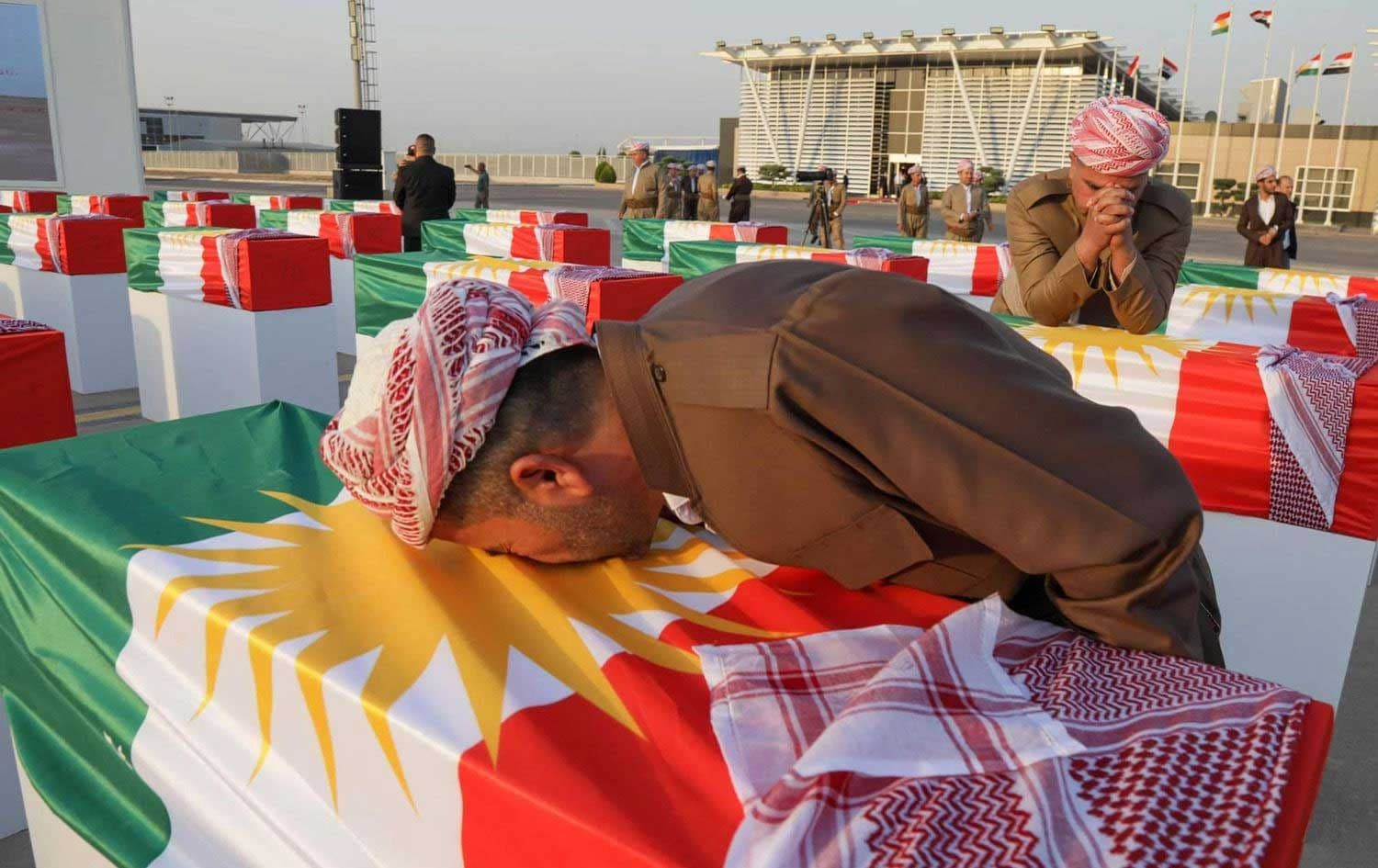
Barzani men mourn over coffins draped with the Kurdish flag and containing the remnants of victims of Barzan genocide on July 31, 2022. File photo: Bilind T. Abdullah/Rudaw
ERBIL, Kurdistan Region - The Iraqi High Tribunal on Sunday sentenced a former Baath party official to death for his role in the killing of 15 Kurdish members of the Barzani tribe during the rule of the Baath regime, a judge familiar with the matter said on Sunday.
Judge Aso Mohammed, former head of the Barzani Genocide case at the Iraqi High Tribunal, who attended the session, told Rudaw that the court “sentenced Shakir Taha Yahya al-Douri, a former official of the Baath party regime, to death on charges of involvement in the case of killing 15 Barzanis in 1984.” He added that “the crime was committed in the Saqlawiyah area of Anbar province.”
Douri was arrested on January 31 by the Iraqi National Security Service (INSS) alongside four other former regime officials accused of various crimes. The trial was held on Sunday in Baghdad.
According to Judge Mohammed, Douri played a significant role at the time as he was “an officer with the rank of captain in the Baghdad security apparatus," he said, adding that Douri "committed the crime alongside a group of other officers."
The judge also noted that another defendant named in the same case, Sadoun Sabri, was ruled “innocent” in this specific case.
The document of the ruling obtained by Rudaw confirms that Douri was "sentenced to death by hanging until dead... for his participation in the mass execution operations by shooting of Kurdish tribesmen from the Barzani clan in mass graves in Fallujah/Saqlawiyah, as a crime of genocide and a crime against humanity."
The court also granted the families of the victims the right to pursue compensation through civil courts once the verdict becomes final.
Judge Mohammed emphasized that while the sentence has been issued, legal procedures are ongoing. He noted that the ruling "is still subject to appeal" until it is ratified by higher judicial authorities.
On July 31, 1983, an estimated 8,000 members of the Barzani tribe were rounded up and abducted from their homes in the Kurdistan Region’s Zagros Mountains before being transported to the deserts of southern Iraq, where they were executed on the orders of the Baathist regime.
The atrocity was an act of collective punishment of the Barzanis, whose leaders were active in Kurdish revolts against the Iraqi regime. Men and boys were the primary targets, but women, children, and the elderly were all victims.
The killings were part of former Iraqi dictator Saddam Hussein’s wider Anfal campaign against the Kurds. During the eight phases of the campaign in the 1980s, more than 182,000 people were killed, and over 4,500 villages were destroyed, culminating in the chemical attack on Halabja.
Iraq’s Federal Supreme Court has recognized the Anfal campaign as constituting genocide, crimes against humanity, and war crimes, but little has been done to compensate the survivors of the victims’ families.
Despite these rulings, the Anfal campaign has yet to be formally recognized as genocide by much of the international community.
Judge Aso Mohammed, former head of the Barzani Genocide case at the Iraqi High Tribunal, who attended the session, told Rudaw that the court “sentenced Shakir Taha Yahya al-Douri, a former official of the Baath party regime, to death on charges of involvement in the case of killing 15 Barzanis in 1984.” He added that “the crime was committed in the Saqlawiyah area of Anbar province.”
Douri was arrested on January 31 by the Iraqi National Security Service (INSS) alongside four other former regime officials accused of various crimes. The trial was held on Sunday in Baghdad.
According to Judge Mohammed, Douri played a significant role at the time as he was “an officer with the rank of captain in the Baghdad security apparatus," he said, adding that Douri "committed the crime alongside a group of other officers."
The judge also noted that another defendant named in the same case, Sadoun Sabri, was ruled “innocent” in this specific case.
The document of the ruling obtained by Rudaw confirms that Douri was "sentenced to death by hanging until dead... for his participation in the mass execution operations by shooting of Kurdish tribesmen from the Barzani clan in mass graves in Fallujah/Saqlawiyah, as a crime of genocide and a crime against humanity."
The court also granted the families of the victims the right to pursue compensation through civil courts once the verdict becomes final.
Judge Mohammed emphasized that while the sentence has been issued, legal procedures are ongoing. He noted that the ruling "is still subject to appeal" until it is ratified by higher judicial authorities.
On July 31, 1983, an estimated 8,000 members of the Barzani tribe were rounded up and abducted from their homes in the Kurdistan Region’s Zagros Mountains before being transported to the deserts of southern Iraq, where they were executed on the orders of the Baathist regime.
The atrocity was an act of collective punishment of the Barzanis, whose leaders were active in Kurdish revolts against the Iraqi regime. Men and boys were the primary targets, but women, children, and the elderly were all victims.
The killings were part of former Iraqi dictator Saddam Hussein’s wider Anfal campaign against the Kurds. During the eight phases of the campaign in the 1980s, more than 182,000 people were killed, and over 4,500 villages were destroyed, culminating in the chemical attack on Halabja.
Iraq’s Federal Supreme Court has recognized the Anfal campaign as constituting genocide, crimes against humanity, and war crimes, but little has been done to compensate the survivors of the victims’ families.
Despite these rulings, the Anfal campaign has yet to be formally recognized as genocide by much of the international community.
Comments
Rudaw moderates all comments submitted on our website. We welcome comments which are relevant to the article and encourage further discussion about the issues that matter to you. We also welcome constructive criticism about Rudaw.
To be approved for publication, however, your comments must meet our community guidelines.
We will not tolerate the following: profanity, threats, personal attacks, vulgarity, abuse (such as sexism, racism, homophobia or xenophobia), or commercial or personal promotion.
Comments that do not meet our guidelines will be rejected. Comments are not edited – they are either approved or rejected.
Post a comment