


Kurdistan

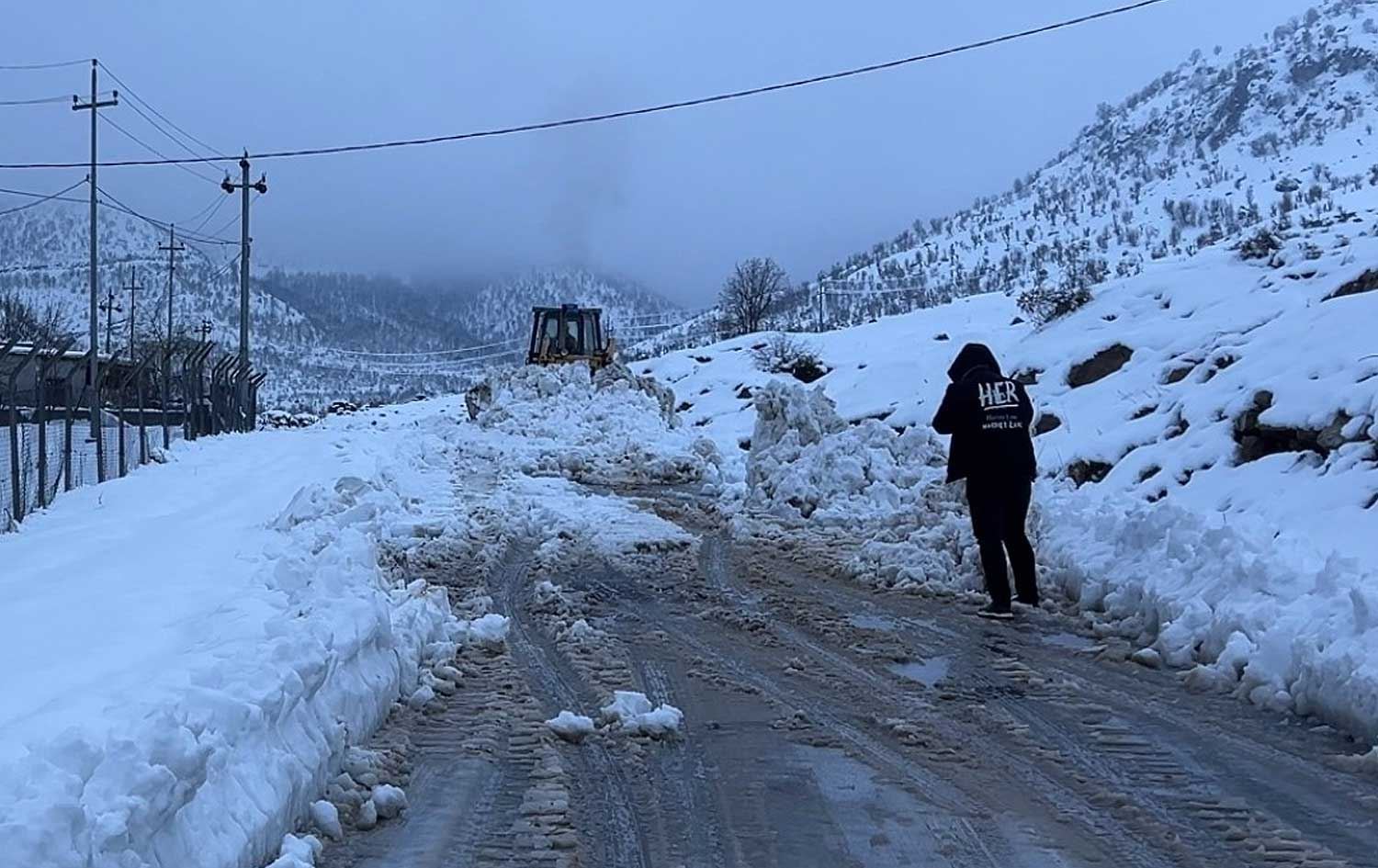
Municipal teams clear a snow-blocked road in the Zini Warte sub-district of Erbil’s Rawanduz district on Sunday. Photo: Ari Ismael/Rudaw
ERBIL, Kurdistan Region - All 21 people who went missing for nearly two days in the mountainous Sidakan area of Erbil’s Soran administration after heavy snowfall blocked access routes have been rescued, local authorities confirmed on Monday.
Sidakan mayor Ihsan Chalabi told Rudaw that the group, who had been stranded in the Lolan highlands near the Iranian border for around 48 hours, was found alive after weather conditions improved.
The group disappeared overnight as snow accumulation reached up to two meters in parts of Sidakan, halting rescue operations and cutting off mountain routes.
“They were rescued today with the help of the municipality and their families,” Chalabi said, adding they will soon be returning home.
According to Rudaw’s Andam Jabar, 13 of those rescued are from Kurdish areas in western Iran (Rojhelat), while eight are from the Kurdistan Region.
Search teams, supported by relatives and local residents, had initially been forced to suspend operations because of severe weather. Karwan Mirawdali, head of Soran Civil Defense, previously said the eight locals were livestock owners who had entered the border mountains on Sunday.
"We do not know if they are trapped in the snow or what has happened to them," Mirawdali told Rudaw previously, noting that rescue efforts depended heavily on weather conditions.
Authorities had prepared for a large-scale search involving civil defense, police, security forces (Asayish), Peshmerga forces, local officials, and volunteers. Those plans were scaled back after confirmation that the missing individuals were located and rescued.
The Kurdistan Region has been hit by a second wave of snow and rain this year, with meteorological officials warning that intermittent precipitation will continue throughout the week.
Earlier this month, heavy rainfall across the Kurdistan Region and parts of Iraq triggered severe flash floods. A preliminary report from the Kurdistan Region’s Joint Crisis Coordination Center (JCC) recorded five deaths, 19 injuries, and damage to 2,225 homes across the Kurdistan Region and Kirkuk province, with Chamchamal district in western Sulaimani being the hardest-hit area.
This story has been updated at 11:26 am on December 29, 2025.


Comments
Rudaw moderates all comments submitted on our website. We welcome comments which are relevant to the article and encourage further discussion about the issues that matter to you. We also welcome constructive criticism about Rudaw.
To be approved for publication, however, your comments must meet our community guidelines.
We will not tolerate the following: profanity, threats, personal attacks, vulgarity, abuse (such as sexism, racism, homophobia or xenophobia), or commercial or personal promotion.
Comments that do not meet our guidelines will be rejected. Comments are not edited – they are either approved or rejected.
Post a comment