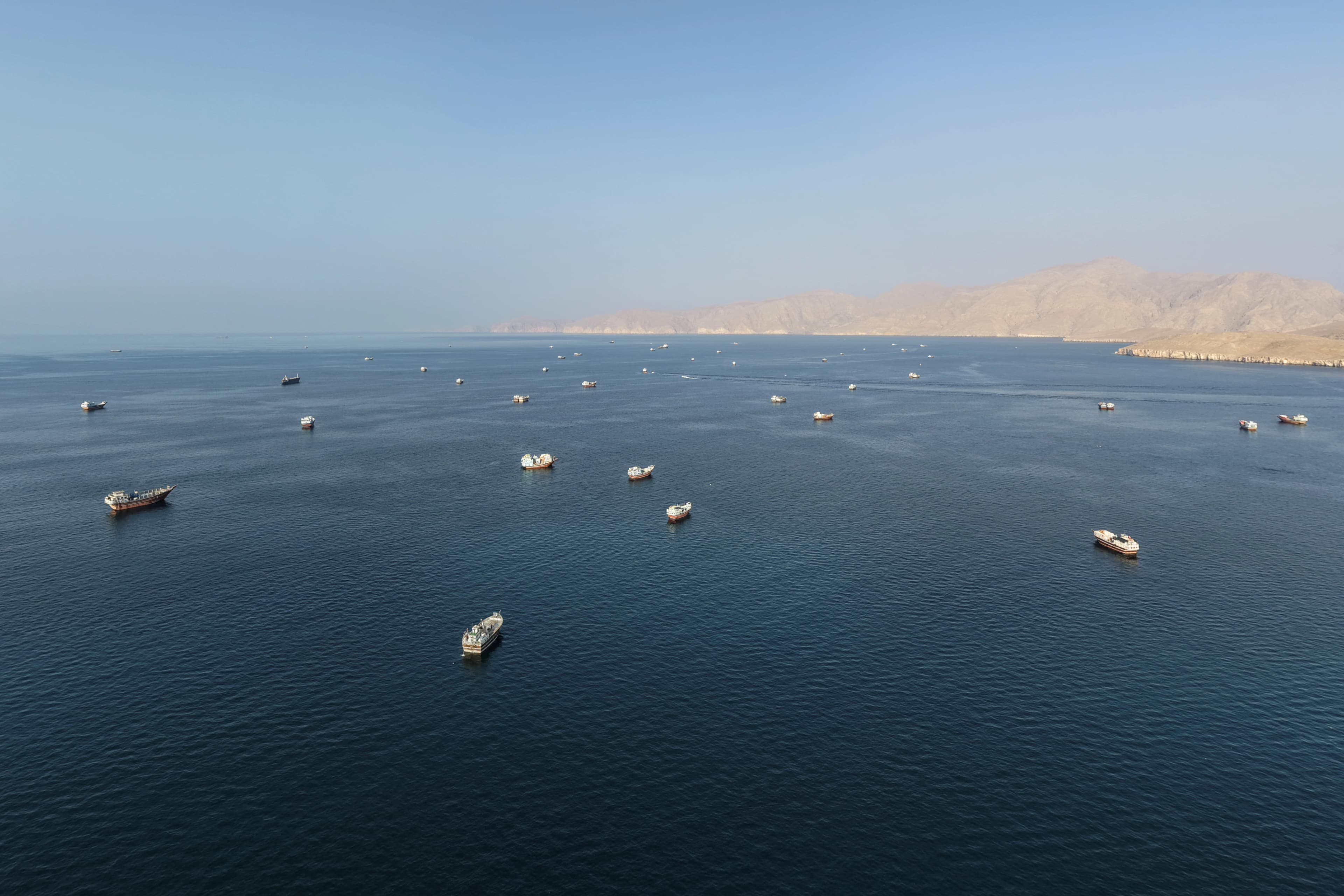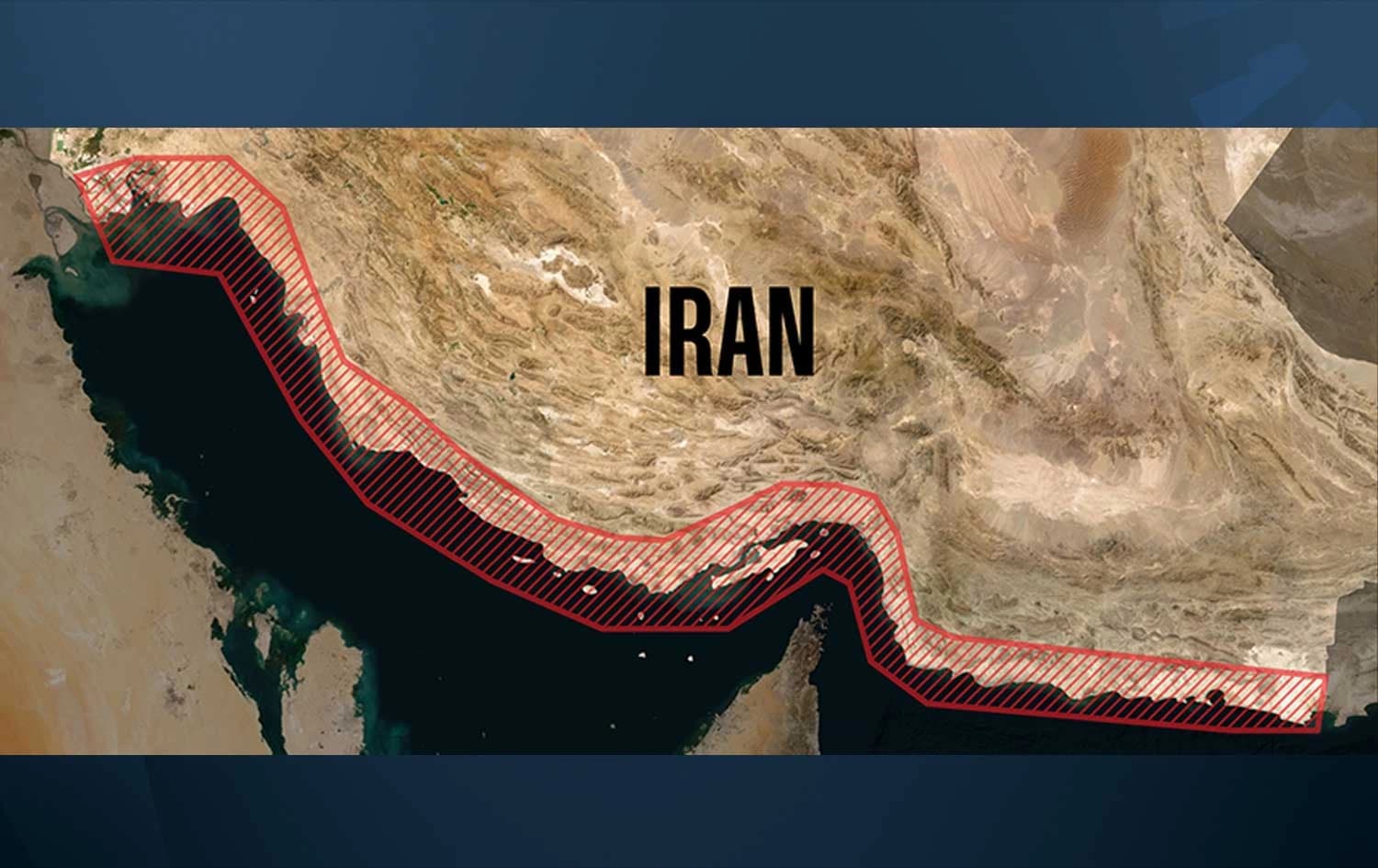

ERBIL, Kurdistan Region - Residents of the United Arab Emirates on Monday received a “potential missile threats” warning from the country’s interior ministry, Rudaw has learned. The alert came shortly after Abu Dhabi condemned what it described as an “Iranian terrorist [drone] attack” targeting a national oil tanker in the Strait of Hormuz, further denouncing Tehran’s use of the strategic waterway as a tool of “blackmail.”
At approximately 5:00 pm local time in the United Arab Emirates (UAE), residents were instructed to “immediately seek a safe place in the closest secure building,” avoid windows, doors, and open areas, and “await further instructions,” citing the “current situation in the region” and “potential missile threats.”
Earlier in the day, the state-run Emirates News Agency (WAM) reported that the UAE had “strongly condemned and denounced the Iranian terrorist attack involving two drones” targeting a vessel affiliated with the Abu Dhabi National Oil Company (ADNOC) as it transited the Strait of Hormuz. No injuries were reported.
Founded in 1971, ADNOC is the state-owned energy company of Abu Dhabi and one of the world’s largest oil producers, ranking 12th globally by output.
The Emirati foreign ministry slammed the attack as a “flagrant violation” of United Nations Security Council Resolution 2817, “which affirms the importance of freedom of navigation and prohibits the targeting of commercial vessels or obstruction of international maritime routes,” WAM said.
Abu Dhabi further asserted that “targeting commercial shipping and using the Strait of Hormuz as a tool for economic coercion or blackmail” amounts to “piracy” by Iran’s Revolutionary Guard Corps (IRGC) and poses a direct threat to regional stability and global energy security.
The UAE urged Iran to “halt these unprovoked attacks,” commit to an immediate cessation of hostilities, and ensure the “complete and unconditional reopening” of the Strait to safeguard regional and global economic stability.
The rising tensions come as a senior Iranian military official earlier on Monday warned that Tehran would target US forces if they attempted to enter the Strait.
“We warn every foreign armed force, particularly the invading American army, that should they intend to approach and enter the Strait of Hormuz, they will be subjected to attack,” Major General Ali Abdollahi of Iran’s Khatam al-Anbiya Central Headquarters said in a statement carried by the Islamic Republic of Iran Broadcaster (IRIB).
The US Central Command (CENTCOM) announced on Monday the launch of a major maritime operation, “Project Freedom,” aimed at restoring safe commercial navigation through the Strait.
The Strait of Hormuz is a critical global chokepoint, carrying roughly a quarter of the world’s seaborne oil trade, along with significant volumes of fuel and fertilizer.
The waterway was effectively closed during the six-week Iran war, which began on February 28 following a large-scale US and Israeli air campaign targeting over 17,000 sites across Iran.
In response, Tehran carried out drone and missile strikes across the Middle East, targeting alleged US assets - particularly in Gulf Arab states - as well as launching retaliatory attacks against Israel.
A Pakistan-mediated ceasefire came into effect on April 8, halting active hostilities and opening the door for negotiations, though a comprehensive resolution has yet to be reached.
In parallel to the talks, Tehran and Washington have in recent weeks carried out tit-for-tat maritime restrictions in the Strait of Hormuz, where Iran has tightened controls on shipping, while the US has enforced naval measures targeting vessels linked to Iranian ports.
For their part, senior Emirati officials have consistentiy censured Tehran’s actions in the key waterway.
Anwar Gargash, Diplomatic Advisor to the President of the UAE, stated, “In the ongoing debate over the Strait of Hormuz, collective international will and the provisions of international law emerge as the primary guarantee of freedom of navigation in this vital waterway, serving regional stability and the global economy in the post-war phase.”
In a post on X, he emphasized, “Naturally, no unilateral Iranian arrangements can be trusted or relied upon following its blatant aggression against all its neighbors.”
Of note, in the aftermath of the six week Iran war, Abu Dhabi’s defense ministry reported in early April that it intercepted nearly 2,900 aerial threats launched by Iran against its territory during the conflict, killing more than a dozen people and injuring over 220 others in the UAE.