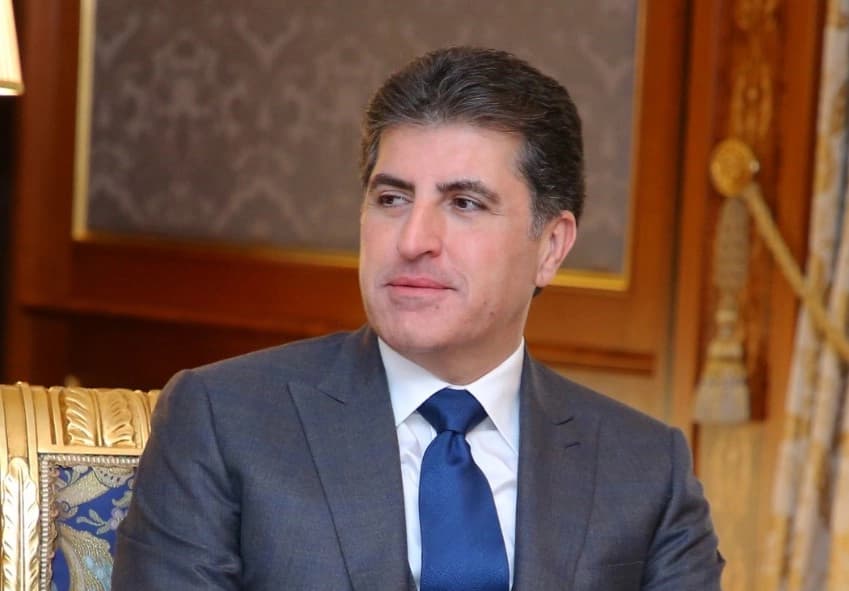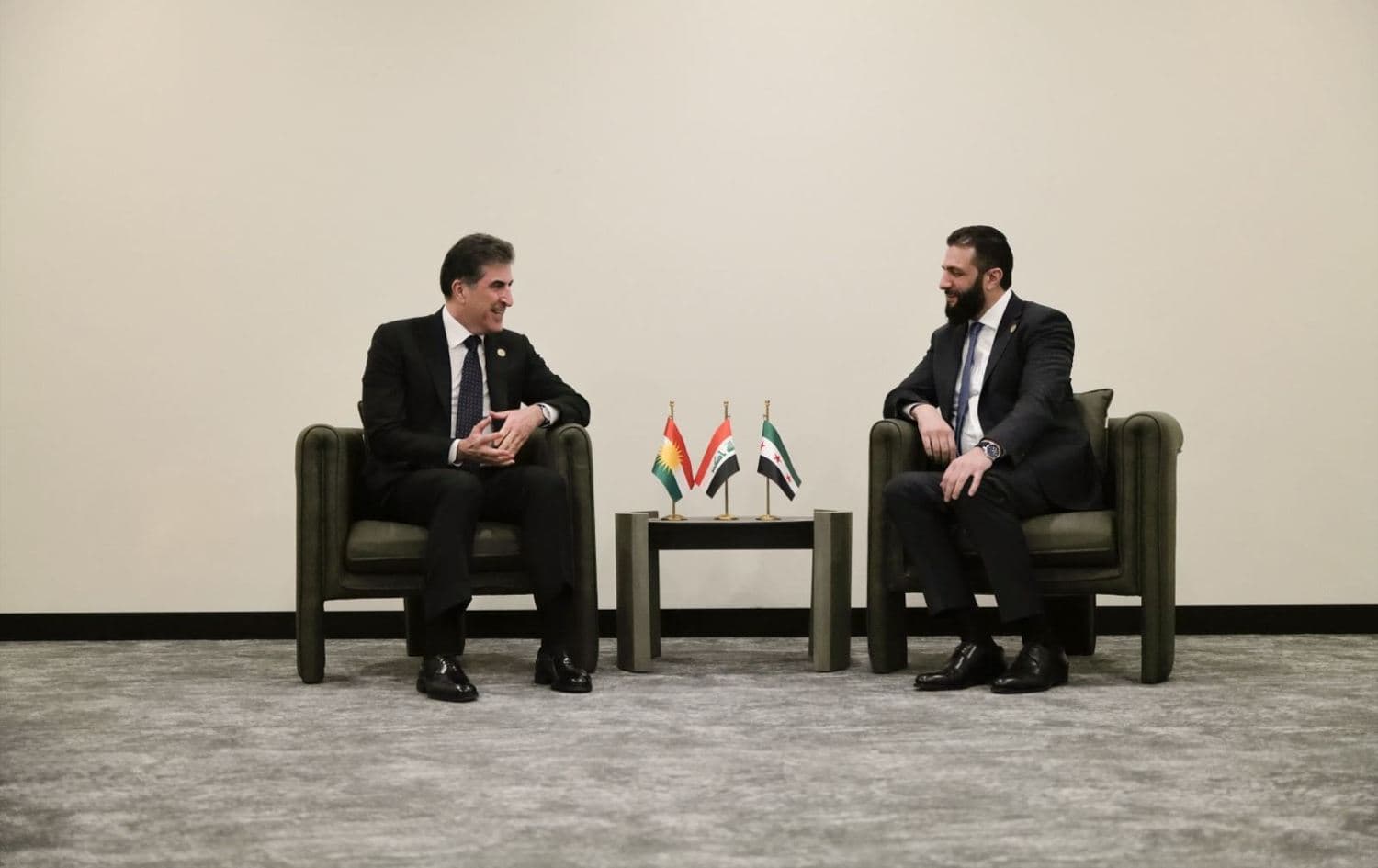

ERBIL, Kurdistan Region - Kurdistan Region President Nechirvan Barzani and Syrian interim President Ahmed al-Sharaa discussed the ongoing regional war and its impact on the Kurdistan Region during a phone call on Monday evening.
In the call, which Barzani received from Sharaa, “both leaders shared their perspectives on the regional situation and the recent developments regarding the war and its repercussions,” while emphasizing “the necessity of enhancing diplomatic initiatives to halt the conflict and achieve a peaceful resolution,” the Kurdistan Region Presidency said in a statement.
Since the onset of the war between the US, Israel, and Iran, the Kurdistan Region has endured 678 drone and missile attacks, with 540 targeting Erbil province, 111 striking Sulaimani, 25 in Duhok, and two in Halabja, according to Rudaw tracking. Iraqi pro-Iran armed groups have claimed responsibility for many of the attacks, framing them as part of Tehran’s response to the joint US-Israeli military campaign launched in late February.
The statement added that the leaders also stressed “the significance of upholding peace and stability within the Kurdistan Region and Iraq,” with Sharaa “denouncing the assaults on the Kurdistan Region.”
In late March, the residence of President Nechirvan Barzani in Duhok province was targeted by a drone attack without causing casualties. Iraqi, Kurdish, and regional leaders, as well as international actors, condemned the incident, while Iran and its Islamic Revolutionary Guard Corps (IRGC) denied involvement and also condemned the attack.
“The two leaders also addressed the circumstances of the Kurds and other communities in Syria, as well as Syria's relations with Iraq and various other matters of mutual concern,” the statement said.