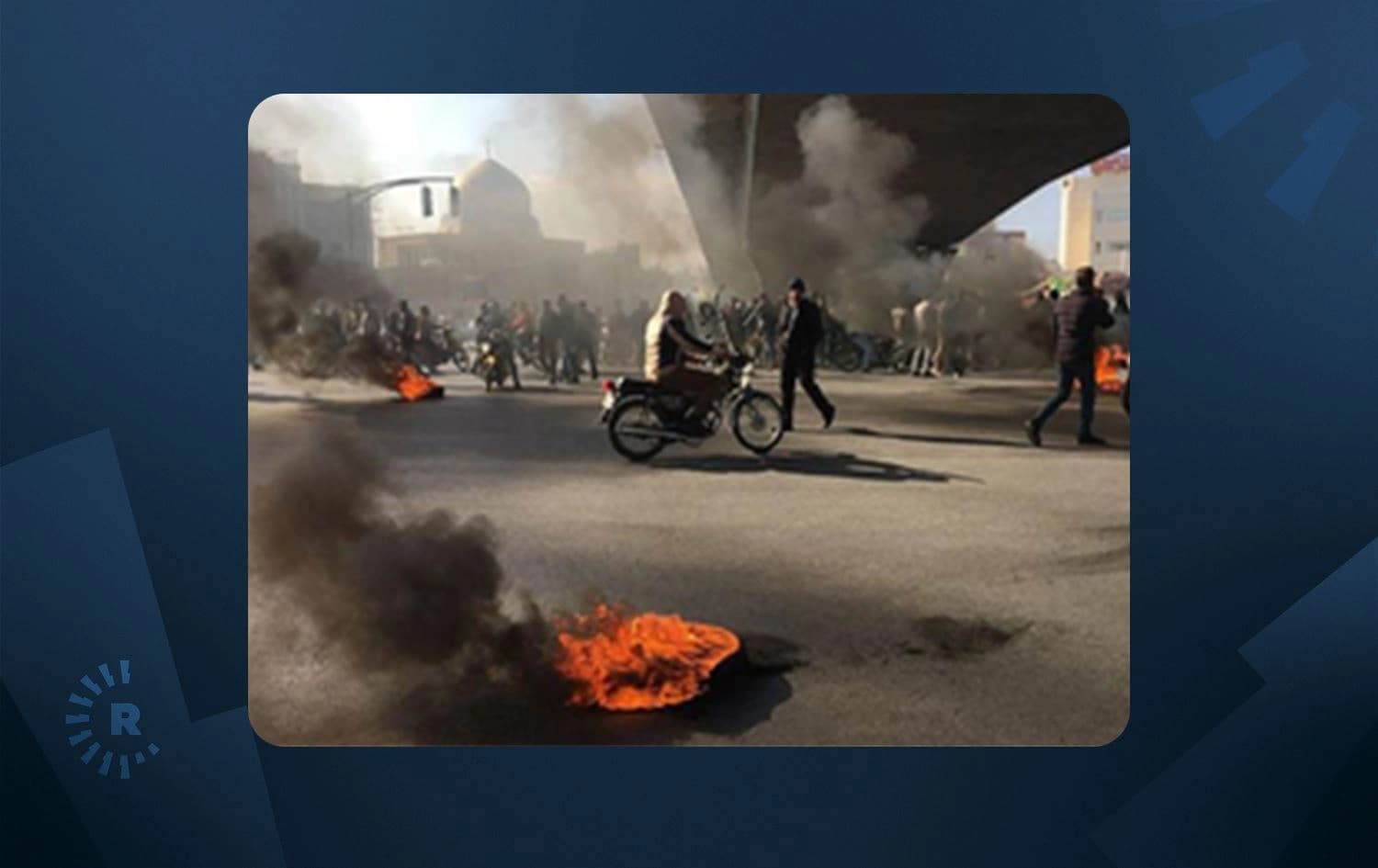

ERBIL, Kurdistan - A senior commander of the Islamic Revolutionary Guard Corps (IRGC) provided a detailed account to a people’s tribunal of the brutality Iranian protesters were subjected to during the widespread anti-government protests in November 2019. The guards and paramilitary forces cracked down on around a thousand protesters.
The commander, who has since left the IRGC, was introduced as “Witness Number 600” and testified via video before the Iran Atrocities Tribunal, a people’s tribunal set up in London to investigate the horrors of the crackdown on the November 2019 protests.
The protests were sparked by an unpopular decision by the government of former President Hassan Rouhani to increase the price of petrol to three times the amount without any prior notice.
The prosecutor at the tribunal listed 160 officials, including the Supreme Leader Ali Khamenei, as the culprits of the brutal crackdown. They were charged with “crimes against humanity” based on documents provided by 440 witnesses, 219 of whom have given testimonies to the tribunal and have had their accounts verified.
The tribunal is also referred to as the Aban Tribunal, a reference to the 8th month of the Iranian calendar, when the 2019 the crackdown happened.
The first public call for witnesses to come forward was made on the first anniversary of the violent protest during which around 300 to 1500 people were killed at the hands of the security forces. The international people’s tribunal was convened by three civil society groups: Justice for Iran, Iran Human Rights, and Together Against the Death Penalty. Amnesty International and individual experts also provided assistance.
The commander revealed that while people were not informed of the hikes in petrol prices, the IRGC were given a one week notice prior to the civil unrest to prepare for a tough response. He added that he was involved in the arrests and interrogations, as well as the killings, actions which he now repents. The former commander claimed that the IRGC even unleashed Lebanese and Syrian forces, which were being trained in Iran at the time, against the protesters.
“It was the second or the third day [of the protests] that the situation became very critical and an order came to fire at will. The November 2019 was the only case that the military people did not provide an account of shooting or the number of ammunition they discharged,” the former commander told the Tribunal while his face covered. “It was the second or the third day that the situation was red and they said the National Radio and Television could fall and we were ordered to do whatever needed … the order, I believe came from the commander of the
armed forces, I mean the leader [Ali Khamenei].”
The witness said that two special units within the IRGC, the Sabreen and Imam Ali units, were responsible for most of the repression against the protesters. The Imam Ali Central Security Headquarters of the IRGC was established after the 2009 protest with the sole purpose of cracking down on public protest.
The first time the tribunal convened was in November last year when 34 witnesses testified before a panel of international judges.
The commander said that hundreds of girls and boys were forced to undress and were then beaten up on Takhti Street in Tehran. Many of the families of the victims kept their dead at home, waiting for a month before they could bury their loved ones due to fear of retaliation.
“The witness number 600 messaged us the day before and said he wanted to testify, we interviewed him extensively and asked for documents so to verify his accounts, we spent the whole day yesterday and even today until before the tribunal to verify his account,” Maryam Foumani, from the tribunal told Radio Farda on Sunday. “We managed to verify his account using the same protocol that we use for other witnesses.”
“We had another case of a senior IRGC officer messaging us and we verified his identity and he had many shocking details and evidence but because we could not verify part of his testimony we did not bring him to court. One of the protocol of this court is to verify every details of a testimony,” Foumani, said.
Iranian Foreign Ministry Spokesperson Saeed Khatibzadeh described the tribunal in London as being “anti-Iran”. “We will not enter theatrical games and what is important for the British officials to understand is that they should not turn London into a place of actions for anti-Iranian people,” Khatibzadeh said in his weekly press conference on Monday when asked about the Aban Tribunal.
Updated with a comment from Iran’s foreign ministry on Monday at 11:10am