


Error occured during this request! Please try again later.
Iran

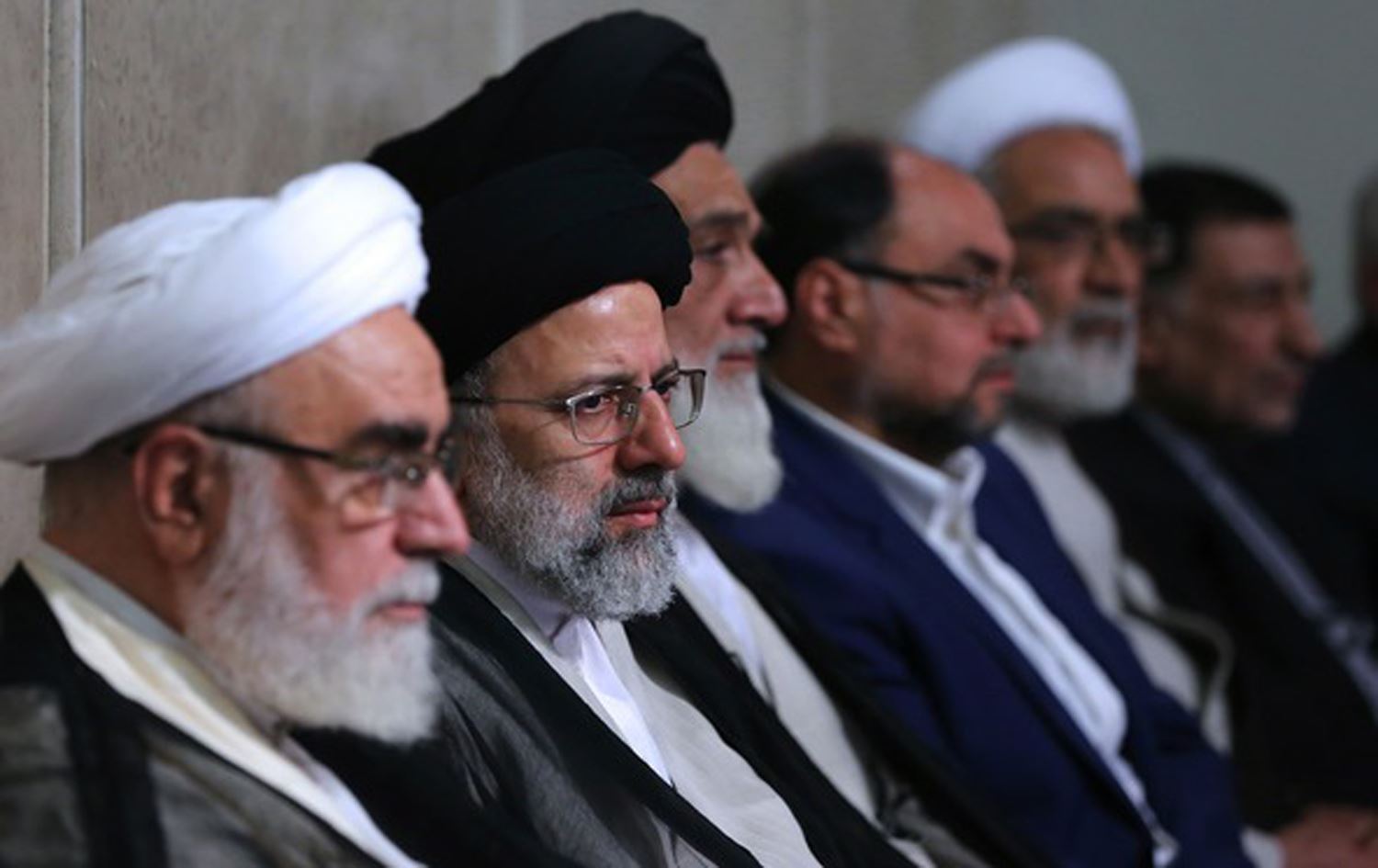
Supreme Leader Ali Khamenei meets with judiciary officials including Ebrahim Raisi on June 26, 2019. Photo: Khamenei.ir
ERBIL, Kurdistan Region — Dozens of activists, journalists and researchers have collectively been sentenced to over 1000 years in prison since a hardliner implicated in the execution of thousands of political prisoners in the 1980s took helm of Iran's judiciary earlier this year, leaving international and Iranian human rights advocates up in arms about the “outrageous” jail terms.
Supreme Leader Ali Khamenei appointed Ebrahim Raisi to the head of the judiciary in March, and has headed up a “crackdown” on civil disobedience and unrest through prolific arrests and hard-handed sentencing, human rights groups say.
“The spike in the number of rulings against political and civil activists in this short period is a sign of a new wave of … widespread crackdown against civil society and critics,” Human Rights Activists News Agency said on Monday. “Activists from different fields have been sentenced at least to one thousand and 27 years and six months … and 1428 lashes [in total].”
Prominent human rights lawyer Nasrin Sotoudeh, who has represented many Kurdish activists, was sentenced to 38 years in prison and 148 lashes a few days after Raisi’s appointment.
Seven prominent activists from Iran’s labor movement were sentenced on September 7 to lengthy sentences by revolutionary courts over peaceful protests. Those detained include Sepideh Gholian, a labor activist and journalist who covered worker strikes and was reportedly sentenced to 19 years and six months in prison, and leading activist Esmail Bakhshi.
“These outrageous sentences are just the latest to be meted out by Iran’s cruel justice system and expose the authorities’ complete disregard for journalists and workers’ rights,” Amnesty International’s Middle East and North Africa Research and Advocacy Director Philip Luther said.
“This disgraceful injustice must be reversed. We call on the Iranian authorities to quash these unjust verdicts and cruel sentences and immediately and unconditionally release all seven individuals.”
Human Rights Watch (HRW) was equally strong in its statement about recent sentences against labor activists. “Again and again, Iranian revolutionary court judges have been ensuring that anyone who dares challenge the authorities will pay a draconian price,” said Michael Page, HRW’s deputy Middle East director. “When activists who raise issues that concern many Iranians are crushed with such harsh sentences, the judiciary’s promise of combating wrongdoing becomes a mockery of justice.”
Gholam Hossein Esmaili, spokesperson for the justice ministry, responded to criticism by refuting the length of prison sentences given, saying on Sunday that the maximum given prison sentence for the labor activists was seven years.
“The respected head of the judiciary has ordered that during the appeal process, there must be a fair trial,” Esmaili said, adding that Raisi recognizes worker grievances should be addressed instead of activists being subjected to severe judicial and security measures.
Raisi gained notoriety as a deputy prosecutor general in 1988, when he was appointed as a member of a committee to purge political captives from prisons as the war with Iraq was coming to an end.
Known as the “Death Committee” by Iranian human rights organizations, it ran sham trials asking prisoners to repent for their alleged crimes. Around five thousand prisoners refused to comply and were sentenced to death.
Raisi, who has also come under domestic political fire for his hardline approach, is considered a rival to President Hassan Rouhani, who previously snubbed him for the role of justice minister.
In apparent reference to Raisi, Rouhani said “the people of Iran announce that they do not accept those who only know executions and prisons,” as he campaigned for his second presidency term in 2017. Rouhani instead appointed Mostafa Pourmohammadi - another member of the 1980s death committee.
Beyond those involved in labor activism, journalists, satirists, environmentalists, anti-death penalty campaigners, and researchers have been detained, with some sentenced in trials whose fairness has been questioned.
Kameel Ahmady, a British-Kurdish social anthropologist who researched female genital mutilation for several years in the country, has been held in Evin prison since last month. Authorities have given no indication as to why he was detained.
Iran’s ethnic minority groups are considerably over-represented in the country’s prison system for political offences, and are more likely to face harsher sentencing.
“Kurdish political prisoners charged with national security offences represent almost half of the total number of political prisoners in the Islamic Republic of Iran and constitute a disproportionately high number of those who received the death penalty and are executed,” Javaid Rehman, the UN Special Rapporteur on the human rights situation in Iran said in his latest report in July.


Comments
Rudaw moderates all comments submitted on our website. We welcome comments which are relevant to the article and encourage further discussion about the issues that matter to you. We also welcome constructive criticism about Rudaw.
To be approved for publication, however, your comments must meet our community guidelines.
We will not tolerate the following: profanity, threats, personal attacks, vulgarity, abuse (such as sexism, racism, homophobia or xenophobia), or commercial or personal promotion.
Comments that do not meet our guidelines will be rejected. Comments are not edited – they are either approved or rejected.
Post a comment