


Iran

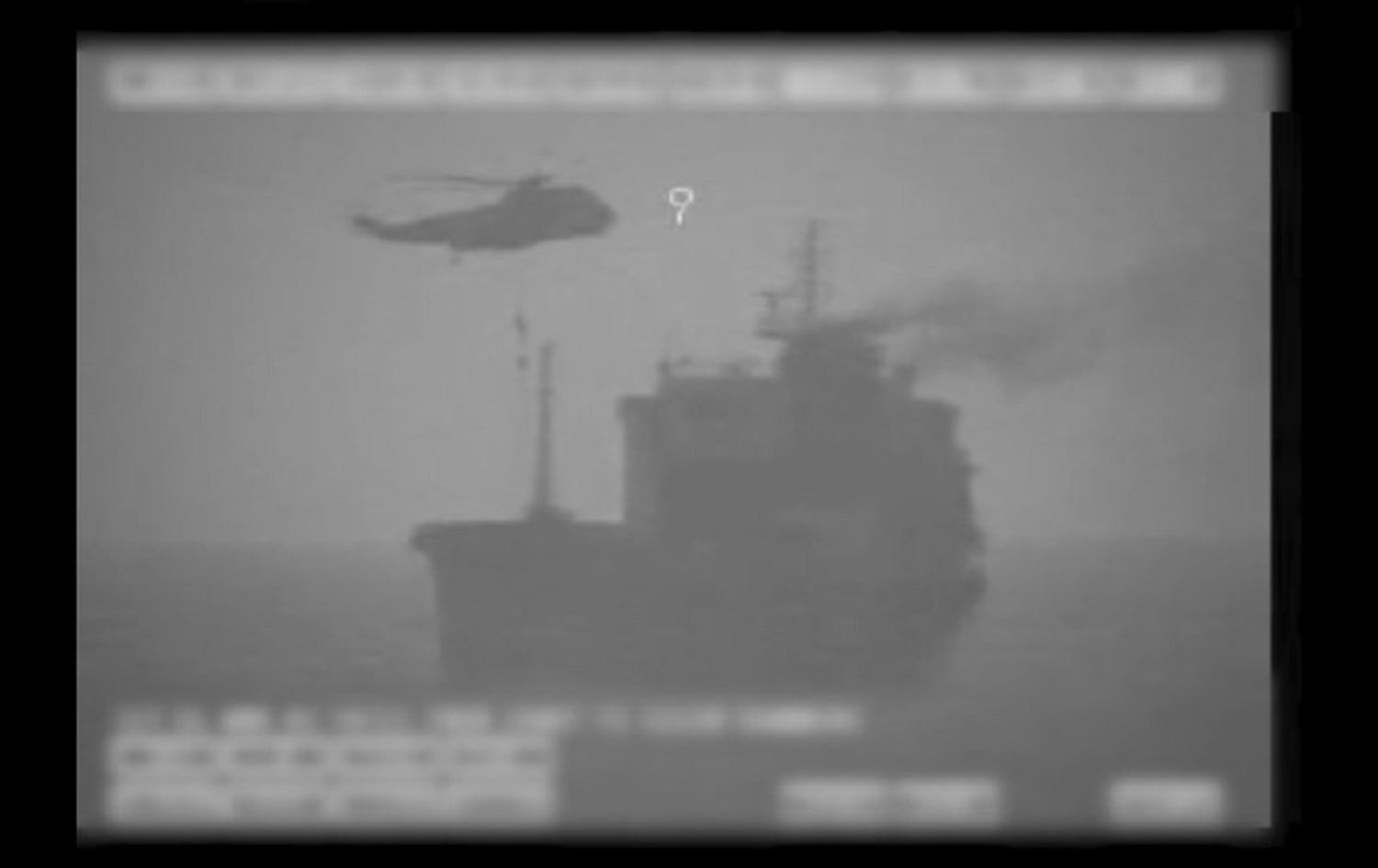
Iranian commandos fast-rope down from a helicopter onto the MV Wila oil tanker in the Gulf of Oman off the coast of the United Arab Emirates on Wednesday, Aug. 12, 2020. Photo: US military's Central Command via AP)
DUBAI, United Arab Emirates (AP) — The Iranian navy boarded and briefly seized a Liberian-flagged oil tanker near the strategic Strait of Hormuz amid heightened tensions between Tehran and the US, a US military official said Thursday.
The US military’s Central Command published a black-and-white video showing what appeared to be special forces fast-roping down from a helicopter onto the MV Wila, whose last position appeared to be off the eastern coast of the United Arab Emirates near the city of Khorfakkan.
The Iranian navy held the vessel for some five hours before releasing it Wednesday, said a US military official who spoke to The Associated Press on condition of anonymity to discuss details not yet made public. The Wila made no distress calls before, during and after the seizure, the official said.
The Iranian helicopter involved appeared to be a Sikorsky SH-3 Sea King, which only Iran’s navy operates. The Iranian navy also handles all operations in the Gulf of Oman on the eastern side of the Strait of Hormuz, through which 20% of all oil traded passes.
The US military officials did not offer any reason for Iran seizing the vessel. Iranian state media and officials did not immediately acknowledge the seizure or offer a reason for it.
Officials in the UAE, a US-allied federation of seven sheikhdoms on the Arabian Peninsula, did not respond to a request for comment.
As tensions between Iran and the US heated up last year over America’s unilateral withdraw from its 2015 nuclear deal, tankers plying the waters of the Mideast became targets, particularly near the strait, the Persian Gulf’s narrow mouth. Suspected limpet mine attacks the US blamed on Iran targeted several tankers. Iran denied being involved, though it did seize several tankers.
In July, a US-sought oil tanker was “hijacked” off the coast of the United Arab Emirates after allegedly smuggling Iranian crude oil. The vessel later ended up back in Iranian waters, suggesting Iran itself seized the vessel.
By Jon Gambrell
The US military’s Central Command published a black-and-white video showing what appeared to be special forces fast-roping down from a helicopter onto the MV Wila, whose last position appeared to be off the eastern coast of the United Arab Emirates near the city of Khorfakkan.
The Iranian navy held the vessel for some five hours before releasing it Wednesday, said a US military official who spoke to The Associated Press on condition of anonymity to discuss details not yet made public. The Wila made no distress calls before, during and after the seizure, the official said.
The Iranian helicopter involved appeared to be a Sikorsky SH-3 Sea King, which only Iran’s navy operates. The Iranian navy also handles all operations in the Gulf of Oman on the eastern side of the Strait of Hormuz, through which 20% of all oil traded passes.
The US military officials did not offer any reason for Iran seizing the vessel. Iranian state media and officials did not immediately acknowledge the seizure or offer a reason for it.
Officials in the UAE, a US-allied federation of seven sheikhdoms on the Arabian Peninsula, did not respond to a request for comment.
As tensions between Iran and the US heated up last year over America’s unilateral withdraw from its 2015 nuclear deal, tankers plying the waters of the Mideast became targets, particularly near the strait, the Persian Gulf’s narrow mouth. Suspected limpet mine attacks the US blamed on Iran targeted several tankers. Iran denied being involved, though it did seize several tankers.
In July, a US-sought oil tanker was “hijacked” off the coast of the United Arab Emirates after allegedly smuggling Iranian crude oil. The vessel later ended up back in Iranian waters, suggesting Iran itself seized the vessel.
By Jon Gambrell


Comments
Rudaw moderates all comments submitted on our website. We welcome comments which are relevant to the article and encourage further discussion about the issues that matter to you. We also welcome constructive criticism about Rudaw.
To be approved for publication, however, your comments must meet our community guidelines.
We will not tolerate the following: profanity, threats, personal attacks, vulgarity, abuse (such as sexism, racism, homophobia or xenophobia), or commercial or personal promotion.
Comments that do not meet our guidelines will be rejected. Comments are not edited – they are either approved or rejected.
Post a comment