


Iran

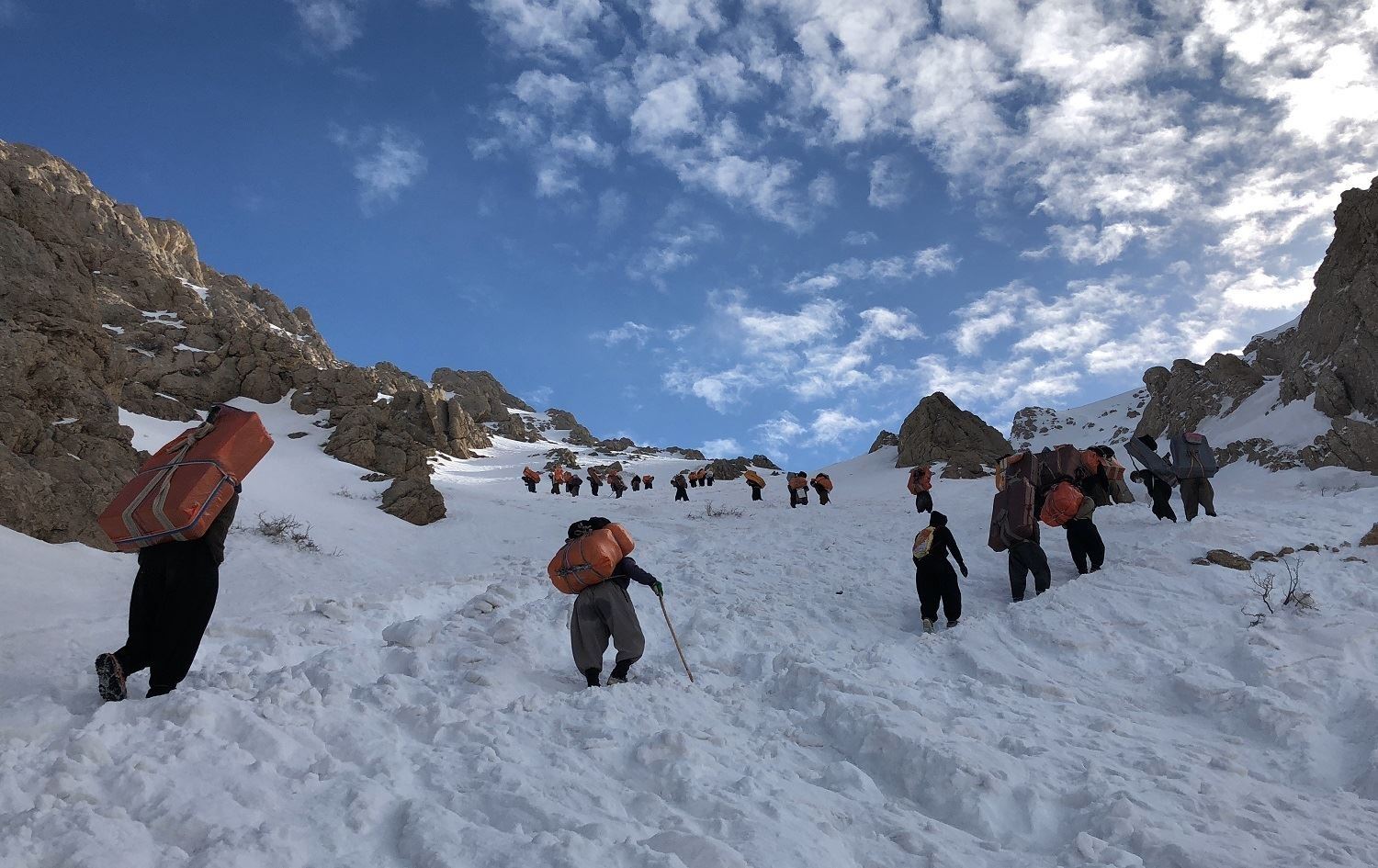
Kolbars carrying goods from the Kurdistan Region to Iran climb in the Tata mountains in February 2019. Photo: Fazel Hawramy/Rudaw
ERBIL, Kurdistan Region — The governor of Iran’s Kurdistan province has said the fight against smuggling is being pursued more seriously at the borders with the Kurdistan Region.
Bahman Moradnia, the governor of the province in western Iran, held the sixth meeting of a planning commission on border smuggling in which he stressed the need to “solve the problems of roads and temporary border markets in the province within the next 10 days,” Iranian state media reported on Tuesday.
The last meeting was held in October.
According to the governor, more than 15,000 livestock have been smuggled into province in the past nine months.
In November, the commander of Iran’s Kurdistan Border Guard, Sardar Alireza Marzbani, told IRNA that 11,000 animals had been smuggled so far that year, before being confiscated by border guards in Baneh and Mariwan.
Iran and the Kurdistan Region share three official border crossings. There also several unofficial border crossings.
According to Moradnia, generating income of around three million tomans (around $140) for each local family would reduce the problem of smuggling.
Kolbars, semi-legal porters who transport untaxed goods across the Kurdistan Region-Iran border, are constantly being targeted by Iranian border guards.
Many are pushed into the profession by poverty and a lack of alternative employment, particularly in Iran's Kurdish provinces. Monitors estimate around 70,000 people, mostly Iranian Kurds, make a living as kolbars.
Locals have been injured in clashes between smugglers and Iranian police, as cross-border livestock smuggling has seen a dramatic increase due to the economic decline that has gripped the country, according to France 24.
Around 52 kolbars were killed in 2020 and 147 were injured, 46 of whom were shot by shootings of Iranian and Turkish border guards, according to the latest data given to Rudaw English from the Kurdistan Human Rights Network (KHRN).
An additional six kolbars died in due to other reasons such as mine explosions, cold, drowning and falling off mountains.
Two Kurdish kolbar brothers were shot by Turkish border guards in Iran’s Western Azerbaijan province in December.
In another incident in May, one Kurdish kolbar was killed and two others injured by Iranian border guards in Khoy, West Azerbaijan province, according to a rights group.


Comments
Rudaw moderates all comments submitted on our website. We welcome comments which are relevant to the article and encourage further discussion about the issues that matter to you. We also welcome constructive criticism about Rudaw.
To be approved for publication, however, your comments must meet our community guidelines.
We will not tolerate the following: profanity, threats, personal attacks, vulgarity, abuse (such as sexism, racism, homophobia or xenophobia), or commercial or personal promotion.
Comments that do not meet our guidelines will be rejected. Comments are not edited – they are either approved or rejected.
Post a comment