


Iran

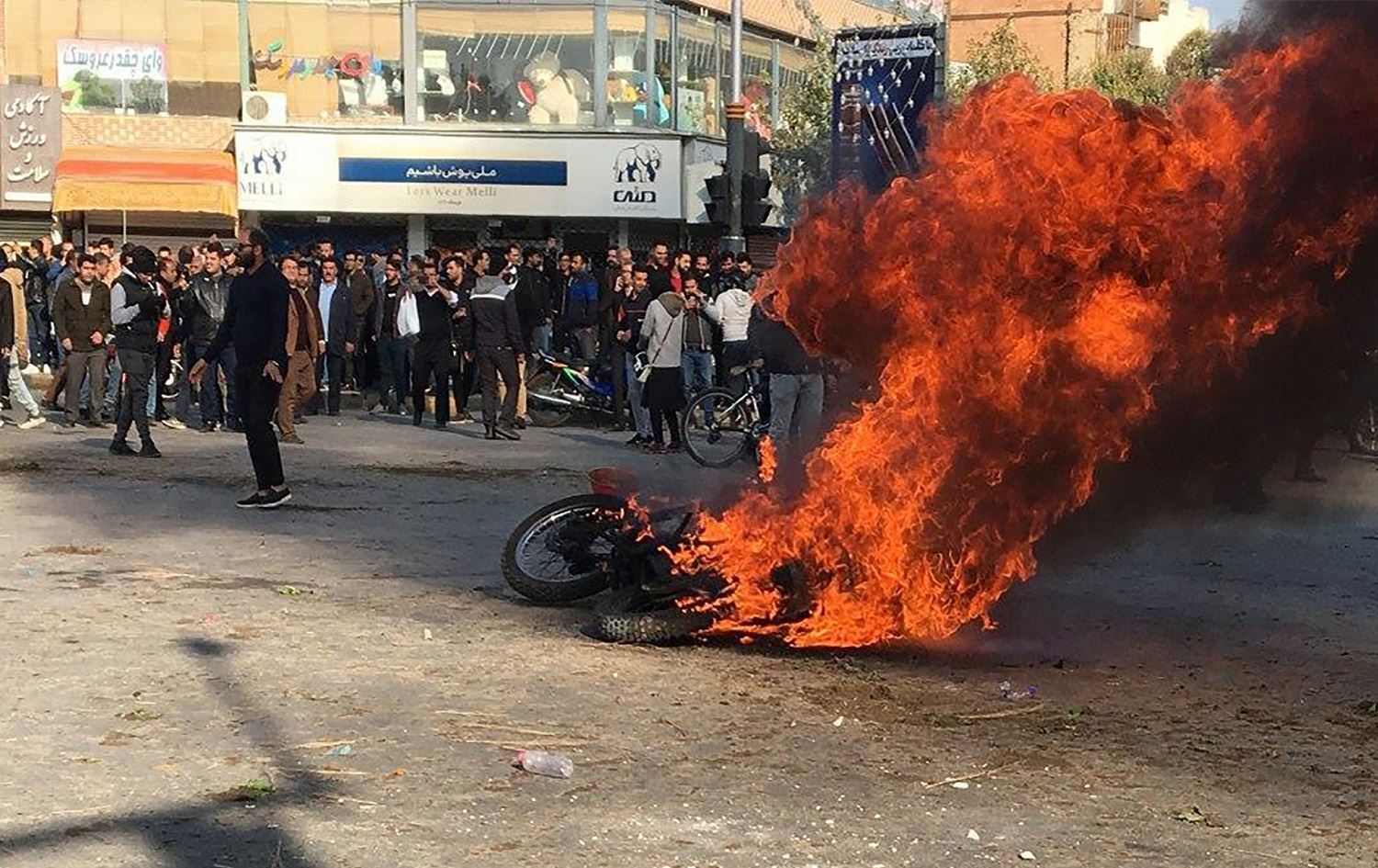
Protestors gather around a burning motorcycle during a fuel price hike protest in Isfahan, central Iran in November 2019. File photo: AFP
ERBIL, Kurdistan Region — The United States is implementing sanctions against Iran’s interior minister Abdolreza Rahmani Fazli, accused of ordering lethal force against protestors when demonstrations against oil price hikes took hold of the country six months ago.
Secretary of State Mike Pompeo announced the sanctions at a press briefing on Wednesday, saying “we have reason to believe that he is the individual that gave orders in November 2019, authorizing Iranian police forces to use lethal force on peaceful protestors inside of Iran.”
“His evil commands killed Iranian citizens,” Pompeo claimed.
Iran's nationwide protests began in November after state proposals to hike fuel prices by 300 percent angered a public already straining under the weight of US economic sanctions. Iranian authorities rapidly cracked down on the largely peaceful protestors with arbitrary arrests and use of lethal force.
Human rights groups estimated a protester death toll in the hundreds for the less than two weeks of protests, but Reuters reported around 1,500 people killed on the direct orders of Iran's supreme leader.
Interior minister Fazli came under criticism for an alleged, brazen admission at a parliamentary committee meeting that November protesters had been directly shot at, according to reformist outlet Emtedad's interview with lawmaker Mahmoud Sadeghi.
When asked by Iranian parliament members why so many people were shot in their heads by security forces, Sadeghi claims the minister retorted, “we shot them in the legs too.”
Fazli is one of the 12 Iranian individuals and entities the US announced in its newest round of sanctions. The move freezes any US-held assets of those blacklisted, and prohibits Americans from engaging with them.
The sanctions also target Islamic Revolutionary Guard Corps (IRGC) Brigadier General Hassan Shahvarpour Najafabadi, Deputy Commander Ayoub Soleimani, and Law Enforcement Force Commander Hossein Ashtari Fard.
With US-Iran tensions high since Washington withdrew from the landmark 2015 nuclear deal in May 2018, the US has targeted both specific senior Iranian officials and the national economy as part of its campaign of “maximum pressure” on Tehran
An Amnesty International report released Wednesday details 304 deaths at the hands of security forces during November's protests, most of which it said were “unlawful.” Amnesty says it believes the number of deaths to be higher.
The organisation also called once more for a United Nations Human Rights Council inquiry into Iranian security forces' use of lethal force against protesters in November.
“The prevailing impunity afforded to the security forces allows the recurrence of lethal force to crush dissent,” said Philip Luther, Amnesty International’s Research and Advocacy Director for the Middle East and North Africa, in a statement released Wednesday.
“In the absence of any meaningful prospect for accountability at the national level, we reiterate our call to members of the UN Human Rights Council to mandate an inquiry into the killings, and identify pathways for truth, justice and reparations,” said Luther.
Amnesty first issued a joint call in December alongside regional and international organisations for the UN Human Rights Council to take action against the state suppression of protests, and appealed for the council to launch an inquiry into the “deadly crackdown” against protesters in Iran.
Secretary of State Mike Pompeo announced the sanctions at a press briefing on Wednesday, saying “we have reason to believe that he is the individual that gave orders in November 2019, authorizing Iranian police forces to use lethal force on peaceful protestors inside of Iran.”
“His evil commands killed Iranian citizens,” Pompeo claimed.
Iran's nationwide protests began in November after state proposals to hike fuel prices by 300 percent angered a public already straining under the weight of US economic sanctions. Iranian authorities rapidly cracked down on the largely peaceful protestors with arbitrary arrests and use of lethal force.
Human rights groups estimated a protester death toll in the hundreds for the less than two weeks of protests, but Reuters reported around 1,500 people killed on the direct orders of Iran's supreme leader.
Interior minister Fazli came under criticism for an alleged, brazen admission at a parliamentary committee meeting that November protesters had been directly shot at, according to reformist outlet Emtedad's interview with lawmaker Mahmoud Sadeghi.
When asked by Iranian parliament members why so many people were shot in their heads by security forces, Sadeghi claims the minister retorted, “we shot them in the legs too.”
Fazli is one of the 12 Iranian individuals and entities the US announced in its newest round of sanctions. The move freezes any US-held assets of those blacklisted, and prohibits Americans from engaging with them.
The sanctions also target Islamic Revolutionary Guard Corps (IRGC) Brigadier General Hassan Shahvarpour Najafabadi, Deputy Commander Ayoub Soleimani, and Law Enforcement Force Commander Hossein Ashtari Fard.
With US-Iran tensions high since Washington withdrew from the landmark 2015 nuclear deal in May 2018, the US has targeted both specific senior Iranian officials and the national economy as part of its campaign of “maximum pressure” on Tehran
An Amnesty International report released Wednesday details 304 deaths at the hands of security forces during November's protests, most of which it said were “unlawful.” Amnesty says it believes the number of deaths to be higher.
The organisation also called once more for a United Nations Human Rights Council inquiry into Iranian security forces' use of lethal force against protesters in November.
“The prevailing impunity afforded to the security forces allows the recurrence of lethal force to crush dissent,” said Philip Luther, Amnesty International’s Research and Advocacy Director for the Middle East and North Africa, in a statement released Wednesday.
“In the absence of any meaningful prospect for accountability at the national level, we reiterate our call to members of the UN Human Rights Council to mandate an inquiry into the killings, and identify pathways for truth, justice and reparations,” said Luther.
Amnesty first issued a joint call in December alongside regional and international organisations for the UN Human Rights Council to take action against the state suppression of protests, and appealed for the council to launch an inquiry into the “deadly crackdown” against protesters in Iran.


Comments
Rudaw moderates all comments submitted on our website. We welcome comments which are relevant to the article and encourage further discussion about the issues that matter to you. We also welcome constructive criticism about Rudaw.
To be approved for publication, however, your comments must meet our community guidelines.
We will not tolerate the following: profanity, threats, personal attacks, vulgarity, abuse (such as sexism, racism, homophobia or xenophobia), or commercial or personal promotion.
Comments that do not meet our guidelines will be rejected. Comments are not edited – they are either approved or rejected.
Post a comment