



Error occured during this request! Please try again later.
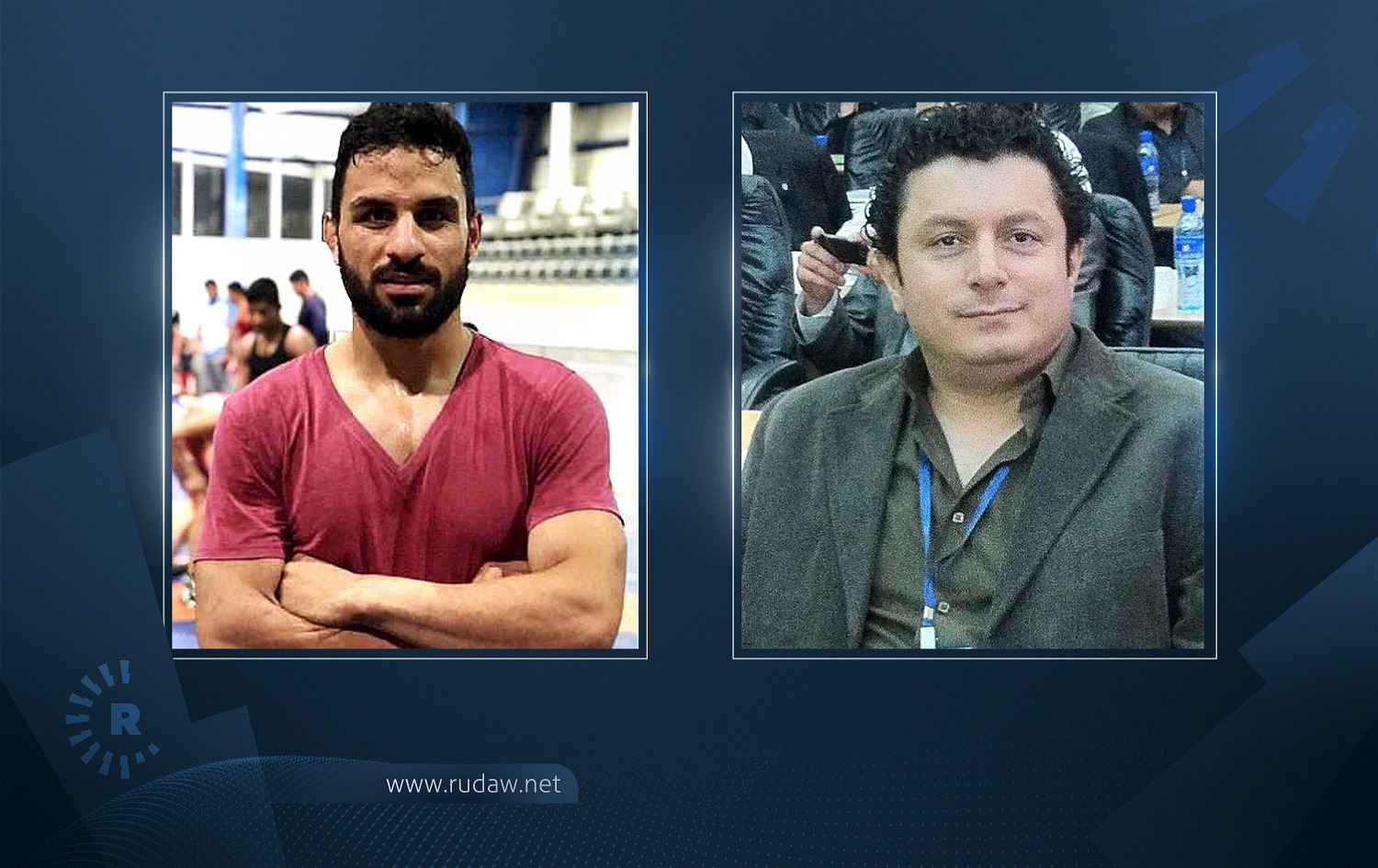
ERBIL, Kurdistan Region - Iranian authorities say they are investigating the suspicious death of a prisoner who claimed he witnessed the barbaric torture of renowned wrestler Navid Afkari, whose execution last year caused an international outcry.
Shahin Naseri died in suspicious circumstances on Tuesday at Greater Tehran Central Penitentiary. According to Oslo-based Iran Human Rights, Naseri was planning to issue a statement on the first anniversary of Afkari’s execution but the security apparatus inside the prison discovered the plan and threw him in solitary confinement.
The statement from the Tehran Prisons’ Directorate stated that Naseri visited the medical facility inside the prison, but died 45 minutes later due to an “emergency” condition, without specifying what precisely ailed the man. “Considering the emergency condition of the patient, he was given cardiopulmonary resuscitation, injected with Epinephrine and IV line for 45 minutes …but died despite the efforts,” the statement read. “A forensic examination is under way and the cause of death will be announced in the future.”
The death of Naseri occurred on the same day that newly elected hardline president Ebrahim Raisi was delivering his speech at the UN General Assembly. “As the elected [president] of the great people of Iran, I am honored on their behalf to deliver to the world a message of rationality, justice, and freedom,” Raisi said via video feed.
Naseri’s association with the executed wrester goes back to the summer of 2018 when another bout of anti-government protests over economic hardship rocked several cities in Iran, including Shiraz where Afkari lived with his family. Afkari and his brothers took part in the protest.
In late September 2018, Naseri, a university graduate, found himself in the detention facility of the police in Shiraz, arrested on a non-political matter. At the same time Afkari and one of his brothers had been detained on the charge of killing a government employee during the protest in early August. The authorities failed to produce any conclusive evidence to tie the brothers to the murder.
“I was being led through the corridor to the interrogation … when I heard sounds of shouting and swearing coming from a room,” Naseri wrote in a statement reporting the incident. The officer accompanying Naseri asked him to stay in the corridor as he checked where the cries were coming from. “I was curious and peeked inside the room and I saw two plain clothes individuals were hitting Mr Navid Afkari severely with a pipe and a baton while he was lying on the floor … they used profanities and shouted at him that he had to admit everything they were telling him.”
The officer accompanying Naseri turned around and saw him staring at the scene and kicked him in the stomach so severely that Naseri said he fell to the floor. He was then blindfolded and taken away, Naseri wrote in the witness statement, obtained by Iran Human Rights.
Despite an international campaign to save Afkari’s life, the judicial authorities headed by Ebrahim Raisi went ahead with the execution in September 2020 at the age of 27 and sentenced two of his brothers to 33 and 15 years in jail. UN human rights experts condemned the execution and described it as a “flagrant disregard for the right to life.”
Afkari’s family later learned that Navid’s two brothers were in a room next to the gallows and heard the last cries of their brother. Before the execution, the authorities forced Afkari to make a TV confession in which he admitted that he killed the government employee. An audio file was released later in which Afkari recanted the confession and claimed that it was obtained under torture. He also pleaded with the judge to hear the testimonies from his witness Shahin Naseri. The judge refused.
Naseri was under enormous pressure from the authorities and was thrown in solitary confinement on numerous times but refused to buckle, according to Mahmood Amiry-Moghaddam, the head of Iran Human Rights.
“Shahin Naseri had written a letter for the anniversary of Navid Afkari and intended to read it out from over the phone but the [prison] security found out and before reading the letter, they took him to solitary confinement,” a well informed source told Iran Human Rights.
Naseri was taken to solitary confinement on September 12, the first anniversary of Afkari’s death. Nine days later he died in suspicious circumstances.
On Wednesday, ten days after the first anniversary of Afkari, Naseri’s family was contacted by the prison authorities to go and collect his body. He was 49.


Comments
Rudaw moderates all comments submitted on our website. We welcome comments which are relevant to the article and encourage further discussion about the issues that matter to you. We also welcome constructive criticism about Rudaw.
To be approved for publication, however, your comments must meet our community guidelines.
We will not tolerate the following: profanity, threats, personal attacks, vulgarity, abuse (such as sexism, racism, homophobia or xenophobia), or commercial or personal promotion.
Comments that do not meet our guidelines will be rejected. Comments are not edited – they are either approved or rejected.
Post a comment