


Error occured during this request! Please try again later.
Iran

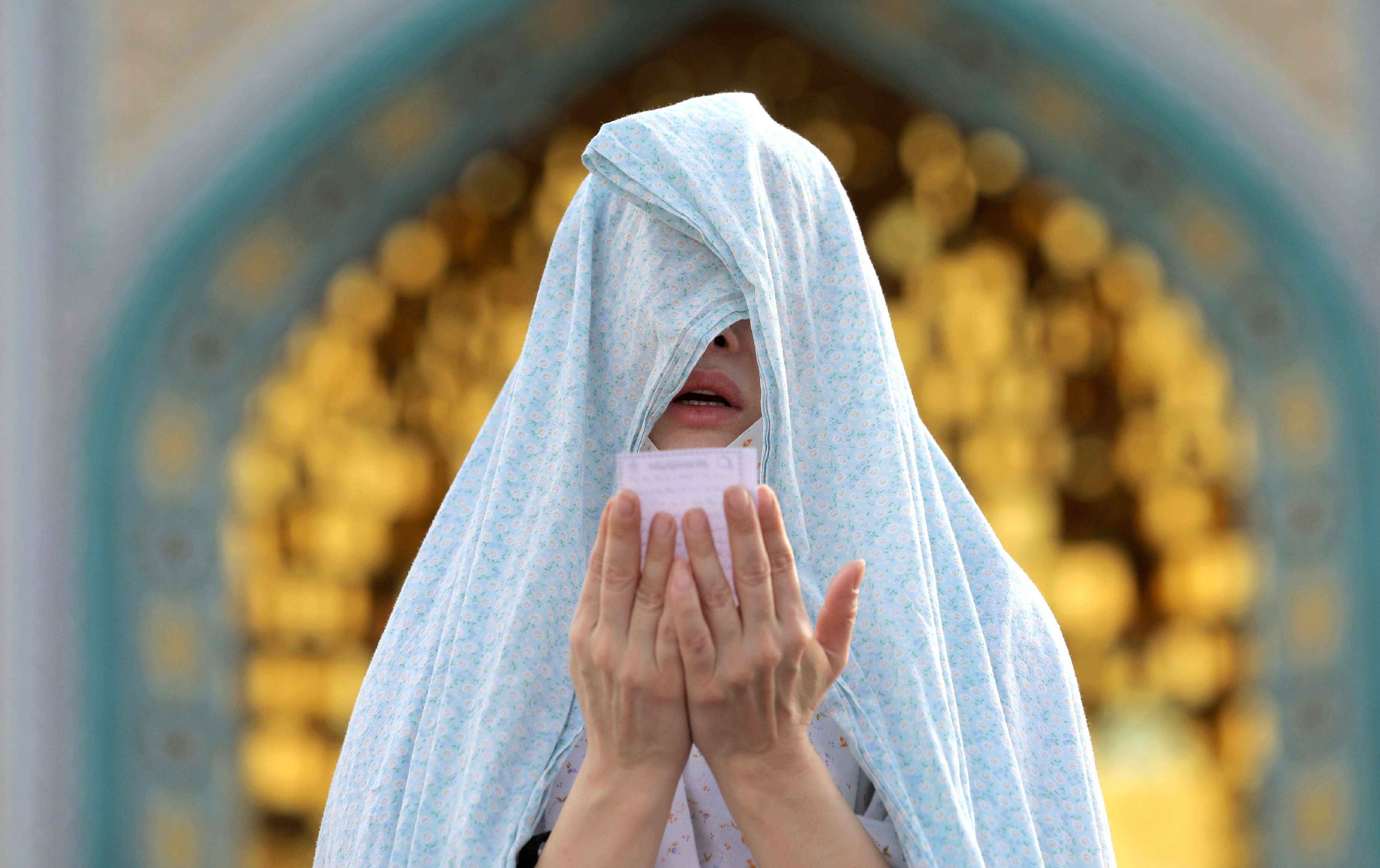
A worshipper offers Eid al-Fitr prayers marking the end of the Islamic fasting month of Ramadan, outside a shrine in Tehran, Iran, Sunday, May 24, 2020. Photo: Ebrahim Noroozi / AP
ERBIL, Kurdistan Region – Documented cases of execution, torture, and violently repression of religious and ethnic minorities continue in Iran, according to a report released this week.
The US State Department published its annual International Religious Freedom report on Wednesday, focusing on the status of religious freedom in every country around the world.
Iran’s population are majority Shiite Muslims, although it has a sizable Sunni population in its eastern provinces of Baluchistan and Turkmenistan, as well as in the Kurdistan province in the west of the country.
The report’s section of Iran focuses on violations committed by the Islamic regime against minorities in the country, including Kurds, Arabs, Yarsanis, Jews, and Christians.
Human rights groups “continued to report the disproportionately large number of executions of Sunni prisoners, particularly Kurds, Baluchis, and Arabs. Human rights groups raised concerns regarding the use of torture, beatings in custody, forced confessions, poor prison conditions, and denials of access to legal counsel,” the report said.
Sunni Muslims in Iran are often restricted from building mosques and places of worship: out of “15,000 Sunni mosques” throughout the country, just nine of them are in the nation’s capital and most populous city, Tehran.
Sunnis are also struggling due to the “underrepresentation” in government positions, even in areas they constitute a majority, such as Kurdistan and Khuzestan provinces, the report says.
“Sunni activists continued to report that throughout the year, and especially during the month of Moharam, the government sent hundreds of Shia missionaries to areas with large Sunni Baluch populations to try to convert the local population,” the State Department report reads.
Iran’s ethnic minority regions are a familiar paradox of inequalities. Ruled by a clerical Shiite government, faith practice by the country’s Baha'i and Sunni Muslim religious minorities is stifled, as are cultural and political activities among the country’s Azeri, Kurdish, Arab, and Baluch ethnic minorities. Chronic government under investment is part and parcel of their difficult existence.
Khuzestan is an Arab province in southwest of Iran, which is home to many of the country’s oil fields, and also its poorest citizens. While, on the other side of the country is Iran’s rural Sistan & Baluchistan region, bordering Pakistan and Afghanistan, where its predominantly ethnically Baluchi population live in rural areas neglected by state services.
Numbering over one million, the Yarsani people or Ahl al-Haq, which translates to “People of Truth” practice an ancient religion known mostly to Kurds in urban and rural areas in and around Kermanshah region in western Iran. The faith also has followers in neighboring Iraq and Turkey.
According to the report, Yarsanis face widespread discrimination in Iran, as they are the target of social prejudices and discrimination by the state and Shiite preachers.
“Yarsani children were socially ostracized in school and in shared community facilities. Yarsani men, recognizable by their particular mustaches, continued to face employment discrimination. According to reports, Shia preachers continued to encourage social discrimination against Yarsanis,” the report reads.
Meanwhile, around 9,000 Jews are estimated to be living in Iran, and are also subjected to “government restrictions and discriminations” as a religious minority, the report added.
US Secretary of State Mike Pompeo has claimed that Iran denies religious minorities access to education in a speech on July 18, 2019 at the Ministerial to Advance Religious Freedom.
“In the Islamic Republic of Iran, authorities ban religious minorities from possessing religious books and they deny them access to education,” Pompeo said. “In May, the Iranian government prohibited religious minorities from working at childcare centers where there are Muslim children, and as we know too well, beatings and imprisonments are common,” the US secretary of state said.
The US reimposed sanctions on Iran in November 2018, after Washington withdrew from the Joint Comprehensive Plan of Action (JCPOA), also known as the 2015 Iran nuclear deal, in May 2018.


Comments
Rudaw moderates all comments submitted on our website. We welcome comments which are relevant to the article and encourage further discussion about the issues that matter to you. We also welcome constructive criticism about Rudaw.
To be approved for publication, however, your comments must meet our community guidelines.
We will not tolerate the following: profanity, threats, personal attacks, vulgarity, abuse (such as sexism, racism, homophobia or xenophobia), or commercial or personal promotion.
Comments that do not meet our guidelines will be rejected. Comments are not edited – they are either approved or rejected.
Post a comment