ERBIL, Kurdistan Region - A high-profile delegation from Iraq’s ruling Shiite Coordination Framework is set to travel to the Kurdistan Region on Monday, a senior bloc official said on Sunday. The visit comes as politicking intensifies to elect Iraq’s next president, amid Kurdish parties’ failure to agree on a unified candidate, and to name the country’s next prime minister, following what appears to be a US veto of the Coordination Framework’s nominee for the post.
Abbas Radi, the Coordination Framework’s secretary-general, said in a statement on Sunday that a “high-level delegation” from the bloc “will travel on Monday to the Kurdistan Region to meet Kurdish leaders” in Erbil, a power base of the Kurdistan Democratic Party (KDP), and in Sulaimani, the stronghold of its rival, the Patriotic Union of Kurdistan (PUK).
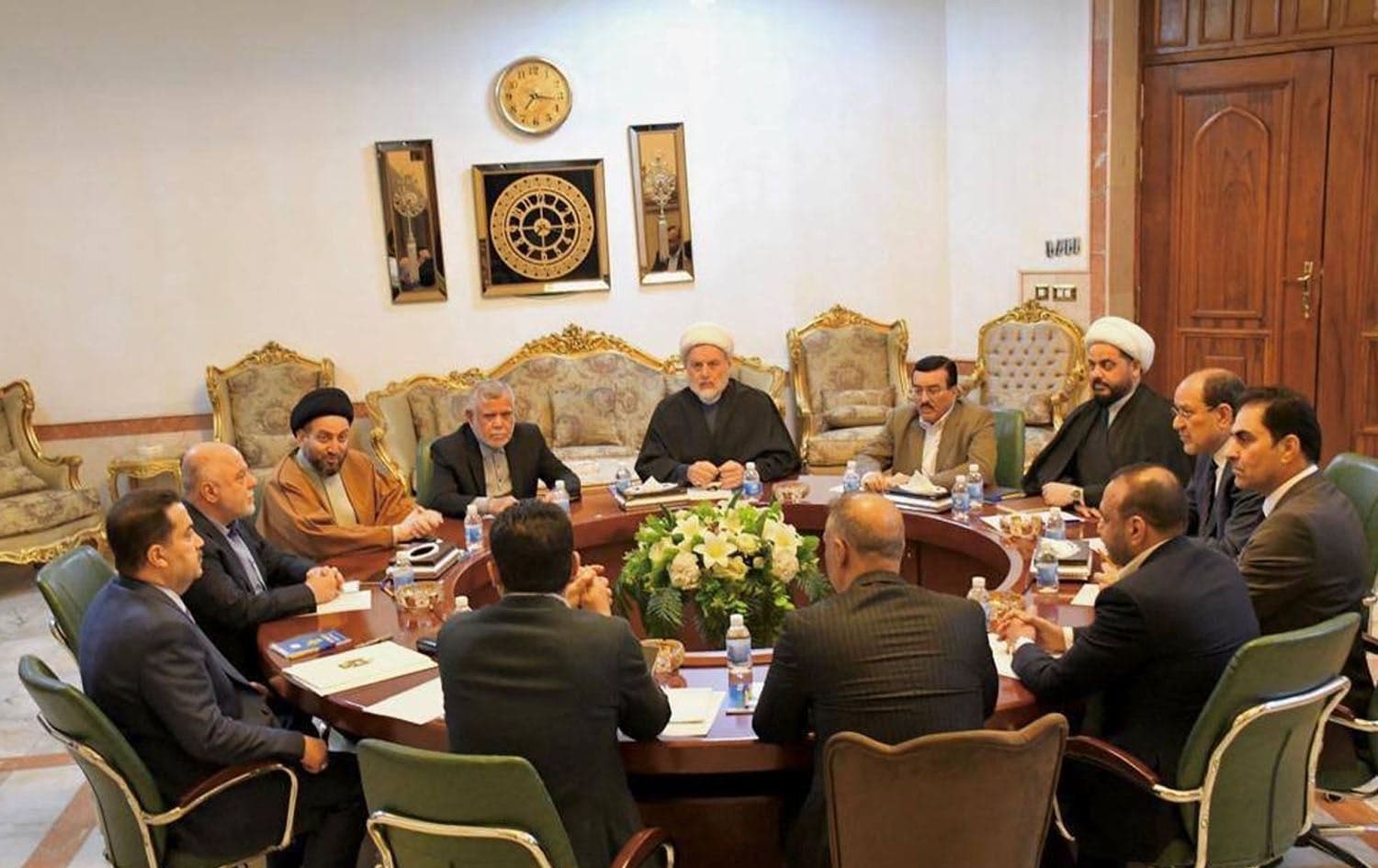
Radi detailed that the delegation will comprise senior Coordination Framework leaders, including Iraqi Prime Minister Mohammed Shia’ al-Sudani, Badr Organization head Hadi al-Ameri, and former Iraqi deputy speaker and al-Asas Coalition leader Mohsen al-Madalawi.
“The visit comes against the backdrop of a decision by the Coordination Framework during its latest meeting, aimed at fostering understanding between our brothers in the Kurdistan Democratic Party and the Patriotic Union of Kurdistan,” Radi said.
He added that the decision seeks to address the stalemate in electing a president by “bringing viewpoints closer together, in line with the Coordination Framework’s approach, which emphasizes the importance of adhering to constitutional timelines.”
Iraq held early legislative elections on November 9, followed by general voting on November 11. The final results were announced in mid-November and ratified by the country’s highest judicial authority, the Federal Supreme Court, in mid-December.
Since 2003, an informal power-sharing system has allocated the parliament’s speakership to Sunni Arabs, the premiership to Shiite parties, and the presidency to the Kurds.
The Iraqi legislature convened on December 29 to elect its speaker and two deputies. Under the constitution, the president must be elected within 30 days of the first parliamentary session. Once sworn in, the president has up to 15 days to task the nominee of the largest parliamentary bloc with forming a government.
The Iraqi parliament was scheduled to convene on Sunday to elect the country’s fifth Kurdish president. However, the session was later postponed, with no new date announced.
Kurdistan Region Prime Minister Masrour Barzani, deputy leader of the KDP, said Sunday that “no agreement has been reached” with the rival PUK on a joint candidate for Iraq’s presidency, though talks between the two parties are ongoing.
In mid-November, the Coordination Framework announced that it had formed parliament’s largest bloc after its parties secured a combined 179 seats in the 329-member legislature in the recent elections.
Accordingly, the coalition of Shiite parties last week nominated former premier Nouri al-Maliki (2006-2014) - who also heads the State of Law coalition, which won 29 seats in the November ballot - for the post of prime minister.
However, Maliki’s nomination was quickly met with a seeming veto from US President Donald Trump, who said on Tuesday that the ex-premier was a “very bad choice” and warned that if elected, the United States would no longer assist Iraq.
“I’m hearing that the Great Country of Iraq might make a very bad choice by reinstalling Nouri al-Maliki as Prime Minister,” Trump said in a post on his Truth Social platform, adding, “Because of his insane policies and ideologies, if elected, the United States of America will no longer help Iraq and, if we are not there to help, Iraq has ZERO chance of Success, Prosperity, or Freedom.”
Despite Trump’s remarks, the Coordination Framework on Saturday reaffirmed its support for Maliki, stressing that “choosing the prime minister is a purely Iraqi constitutional matter, conducted according to political process mechanisms that take national interest into account, away from external dictates.”
Of note, the top Coordination Framework delegation’s visit to Erbil comes against the backdrop of a key meeting on Sunday between Kurdistan Region President Masoud Barzani, leader of the KDP, and the Charge d’Affaires of the US Embassy in Iraq, Joshua Harris.
A statement from President Barzani’s office said the two “exchanged detailed and in-depth views on the political process in Iraq, emphasizing the importance of adhering to the constitution” and agreed “on the necessity for Iraqis themselves to decide the affairs of their country, based on partnership, balance, and consensus.”
“Both parties welcomed the recent dialogues and consultations held in Baghdad, aimed at developing political mechanisms and scenarios that consider the interests of the Iraqi people and strengthen the U.S.-Iraq partnership across various fields,” the statement added.