



Error occured during this request! Please try again later.
Iraq

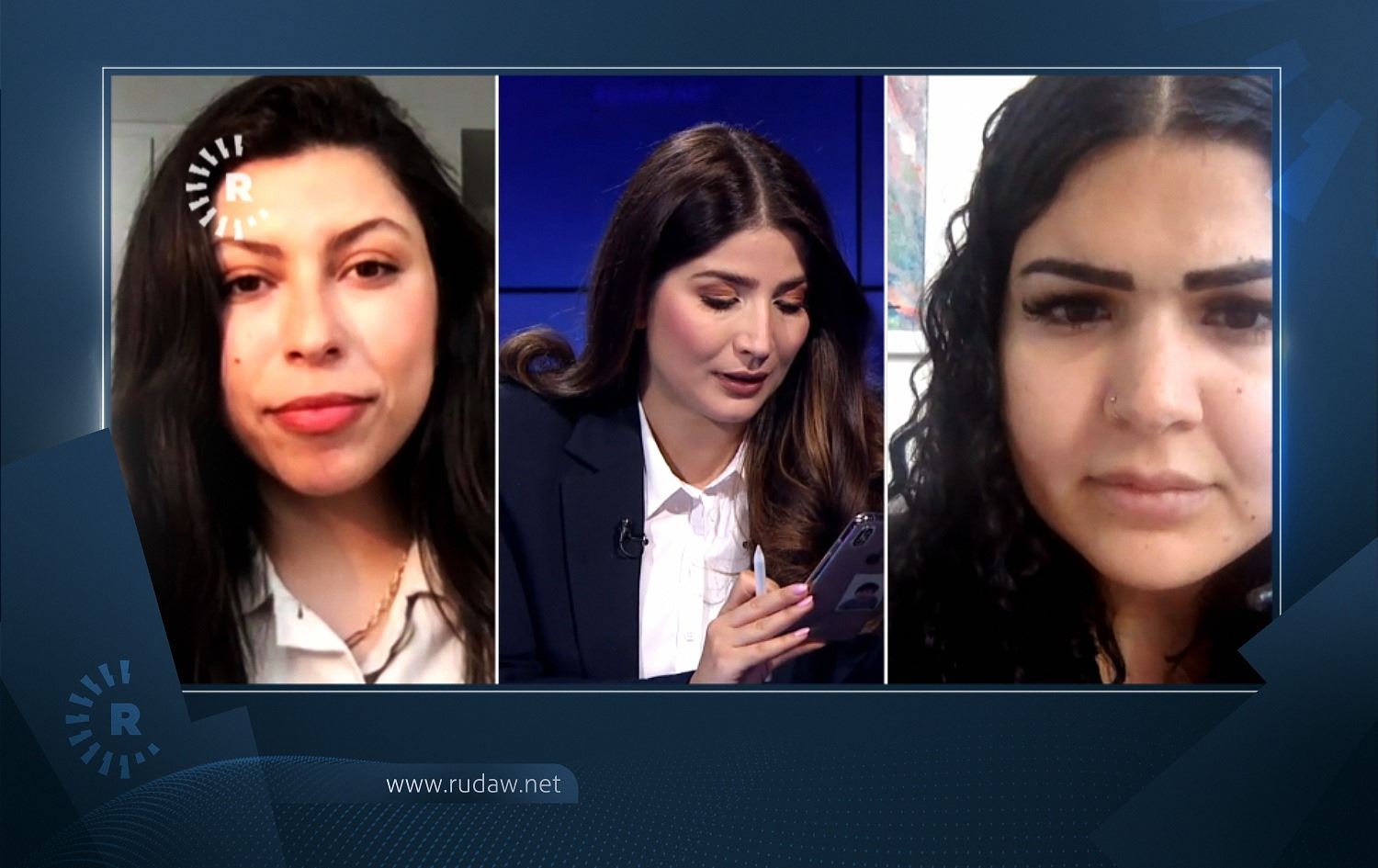
Salma El Shahed (Right), Rudaw's Shahyan Tahseen (center), Nardeen Turjman (left). Photo: Rudaw
ERBIL, Kurdistan Region — Google has launched a service that responds to people’s mental health questions in Arabic, after seeing a spike in users searching for mental health and wellbeing related topics in 2020. Iraq, in particular, has seen startling high queries.
“In Iraq, search interest in wellbeing grew up by 137% in 2020 compared to 2019, and in mental health by 50%,” reads a statement Rudaw has obtained from Arabic Google Assistant. Global searches for “how to improve my mental health” in Arabic grew by 1,100 percent in five years’ time, reaching a peak in August 2020, as coronavirus surged across the world.
“In response to an increasing interest in emotional wellbeing and mental health on Google Assistant and Google Search over the past year, the Arabic version of Google Assistant will now respond to queries related to emotional wellbeing with coping mechanisms drafted by licensed therapists,” adds the statement.
Clinical psychologist Nardeen Turjman says mental health has deteriorated globally since the onset of the pandemic, and is not specific to Iraq and the Middle East.
“The coronavirus in 2020 was the main reason behind people’s deteriorating mental health and increasing questions on the matter,” Turjman, who is based in Dubai, told Rudaw’s Shahyan Tahseen on Monday.
Google’s new service has started working this week, and responds to people’s questions and thoughts, according to Salma El Shahed, the company’s Communications and Public Affairs Manager for the Middle East and North Africa.
“It would not matter if you speak in Iraqi Arabic, or if you live in Iraq or Canada, as long as you speak in Arabic, the Google assistant will respond,” Shahed told Tahseen.
“You could say I am sad, or I feel alone, or I am angry, the service will listen and respond to you,” she added.
Rudaw spoke to Iraqi locals to learn more about their emotional wellbeing. While many cited the pandemic as a big factor in their deteriorating mental health, financial issues, including unemployment, were also mentioned.
“Today in Kurdistan, depression and stress have really affected the community,” one local from Erbil said. “The reasons are the political situation between Erbil and Baghdad, the virus, many people are stressed.”
“There is a lot of unemployment, salaries are paid late, family problems have increased,” another Erbil local said.
“The lockdown and unemployment has caused us depression, the youth have nothing to do,” a local from Baghdad said.
“In Iraq, search interest in wellbeing grew up by 137% in 2020 compared to 2019, and in mental health by 50%,” reads a statement Rudaw has obtained from Arabic Google Assistant. Global searches for “how to improve my mental health” in Arabic grew by 1,100 percent in five years’ time, reaching a peak in August 2020, as coronavirus surged across the world.
“In response to an increasing interest in emotional wellbeing and mental health on Google Assistant and Google Search over the past year, the Arabic version of Google Assistant will now respond to queries related to emotional wellbeing with coping mechanisms drafted by licensed therapists,” adds the statement.
Clinical psychologist Nardeen Turjman says mental health has deteriorated globally since the onset of the pandemic, and is not specific to Iraq and the Middle East.
“The coronavirus in 2020 was the main reason behind people’s deteriorating mental health and increasing questions on the matter,” Turjman, who is based in Dubai, told Rudaw’s Shahyan Tahseen on Monday.
Google’s new service has started working this week, and responds to people’s questions and thoughts, according to Salma El Shahed, the company’s Communications and Public Affairs Manager for the Middle East and North Africa.
“It would not matter if you speak in Iraqi Arabic, or if you live in Iraq or Canada, as long as you speak in Arabic, the Google assistant will respond,” Shahed told Tahseen.
“You could say I am sad, or I feel alone, or I am angry, the service will listen and respond to you,” she added.
Rudaw spoke to Iraqi locals to learn more about their emotional wellbeing. While many cited the pandemic as a big factor in their deteriorating mental health, financial issues, including unemployment, were also mentioned.
“Today in Kurdistan, depression and stress have really affected the community,” one local from Erbil said. “The reasons are the political situation between Erbil and Baghdad, the virus, many people are stressed.”
“There is a lot of unemployment, salaries are paid late, family problems have increased,” another Erbil local said.
“The lockdown and unemployment has caused us depression, the youth have nothing to do,” a local from Baghdad said.


Comments
Rudaw moderates all comments submitted on our website. We welcome comments which are relevant to the article and encourage further discussion about the issues that matter to you. We also welcome constructive criticism about Rudaw.
To be approved for publication, however, your comments must meet our community guidelines.
We will not tolerate the following: profanity, threats, personal attacks, vulgarity, abuse (such as sexism, racism, homophobia or xenophobia), or commercial or personal promotion.
Comments that do not meet our guidelines will be rejected. Comments are not edited – they are either approved or rejected.
Post a comment