


Iraq

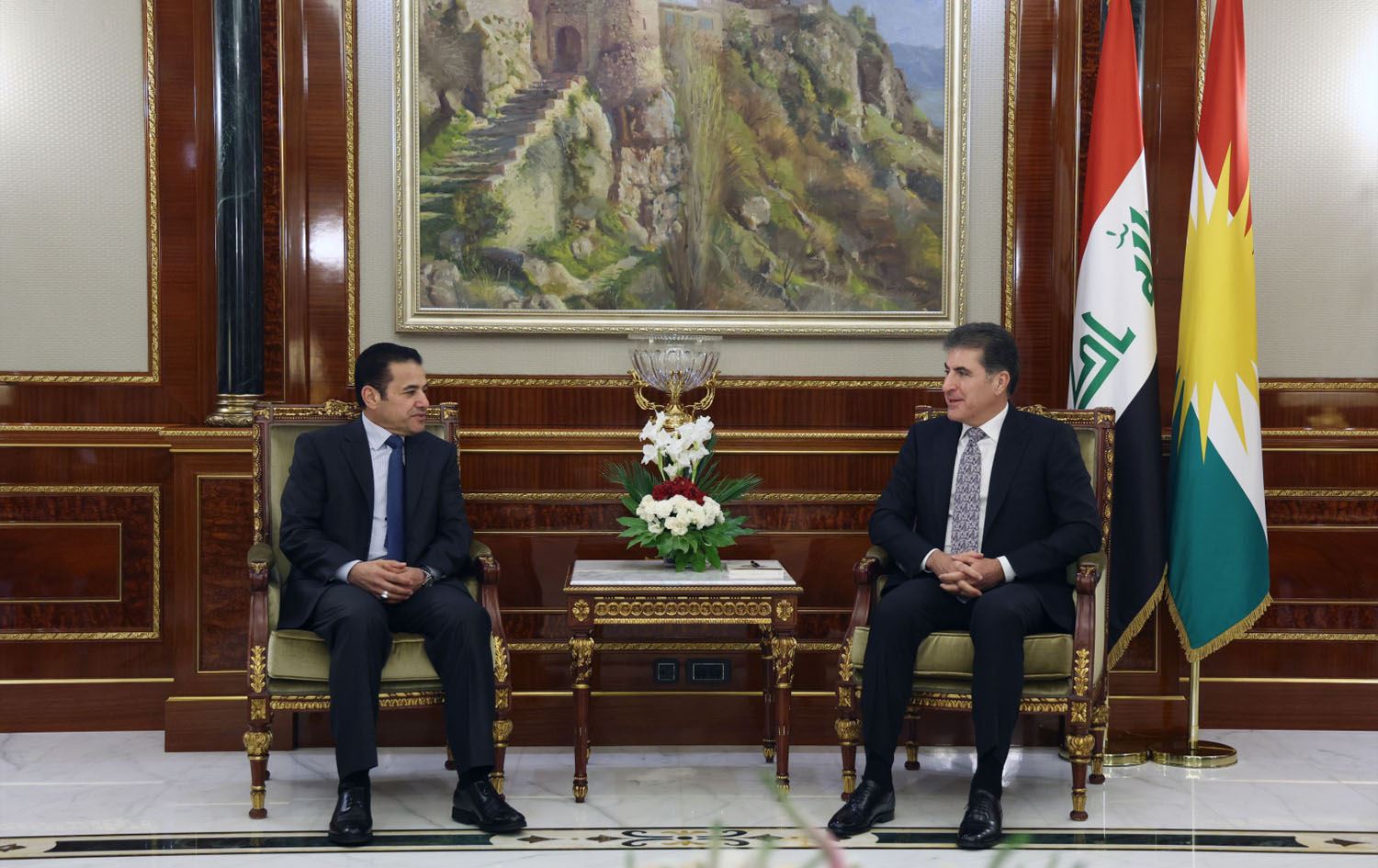
Kurdistan Region President Nechirvan Barzani (right) in a meeting with Iraqi National Security Advisor Qasim al-Araji in Erbil on July 9, 2025. Photo: Kurdistan Region Presidency
ERBIL, Kurdistan Region - Kurdistan Region President Nechirvan Barzani on Wednesday met with Iraqi National Security Advisor Qasim al-Araji in Erbil to discuss key security developments, including the anticipated disarmament of Kurdistan Workers’ Party (PKK) fighters and broader regional developments.
A statement from the Kurdistan Region Presidency said the two officials discussed the “latest developments in Iraq's security situation and emphasized the importance of continuing coordination and cooperation” between Iraqi and Kurdish security forces.
Discussions also included “the latest efforts and steps” in the peace process between the PKK and the Turkish state, the statement added.
The meeting comes just days before the first batch of PKK fighters - estimated at 30 to 40 individuals - is set to disarm in the Kurdistan Region’s eastern Sulaimani province on Friday.
The move marks a major milestone in the months-long peace initiative aimed at ending the four-decade conflict between the PKK and the Turkish state that has claimed more than 40,000 lives - mainly PKK fighters.
The ceremony also comes as the PKK responded to a February appeal from their imprisoned leader Abdullah Ocalan to abandon armed struggle in favor of a political solution. In a pivotal video message, recorded on June 19 and released Wednesday, Ocalan reaffirmed the end of the military campaign.
Importantly, a key question now centers on the future of disarmed PKK fighters - how they will be integrated or relocated, and under what legal or political framework.
In a separate statement issued Wednesday, Araji’s office confirmed that discussions with President Barzani also focused on “coordinating positions” on the PKK's dissolution, as well as implementing the Iraq-Iran border security agreement.
Signed in March 2023 between Iraq and Iran, the agreement primarily targets Iranian Kurdish opposition groups based in the Kurdistan Region.
Under the deal, these groups - including the Kurdistan Democratic Party of Iran (KDPI), Komala, Free Life Party of Kurdistan (PJAK), and the Kurdistan Freedom Party (PAK) - were required to disarm and relocate from border areas by a September 19, 2023 deadline.
Iran has accused these groups of links to the anti-government protests that erupted across the country in 2022 and warned of renewed military action if the agreement's terms were not upheld.
Importantly, Tehran swiftly welcomed the PKK’s May decision to disarm, with the Iranian foreign ministry describing it as “an important step toward renouncing violence and strengthening security,” adding that it would contribute to “enhanced stability and peace in Turkey and the region.” Iran’s reaction is closely tied to concerns over perceived connections between the PKK and PJAK, which is widely believed to be its Iranian offshoot.
In addition to his meeting with President Barzani, the Iraqi national security advisor on Wednesday also met with Kurdistan Region Interior Minister Rebar Ahmed.
In a Facebook post following the meeting, Araji noted that he had been dispatched by Iraqi Prime Minister Mohammed Shia’ al-Sudani to hold “a series of political and security meetings with the leaders in the Kurdistan Region.”
The Araji-Ahmed meeting also follows rising tensions between Erbil and Baghdad over drone activity in the Region.
On Saturday, the Kurdistan Region’s interior ministry accused the federal government of failing to address repeated drone incursions. Several explosive-laden drones have either crashed or been intercepted in the Region in recent weeks, following the June 24 ceasefire brokered by the United States between Iran and Israel, which ended their 12-day confrontation.
The Region’s interior ministry on Friday specifically accused the Popular Mobilization Forces (PMF) of involvement in the drone incidents.
Baghdad promptly rejected the allegations the next day, calling the accusations against the PMF - a sovereign security force - “unacceptable.”


Comments
Rudaw moderates all comments submitted on our website. We welcome comments which are relevant to the article and encourage further discussion about the issues that matter to you. We also welcome constructive criticism about Rudaw.
To be approved for publication, however, your comments must meet our community guidelines.
We will not tolerate the following: profanity, threats, personal attacks, vulgarity, abuse (such as sexism, racism, homophobia or xenophobia), or commercial or personal promotion.
Comments that do not meet our guidelines will be rejected. Comments are not edited – they are either approved or rejected.
Post a comment