

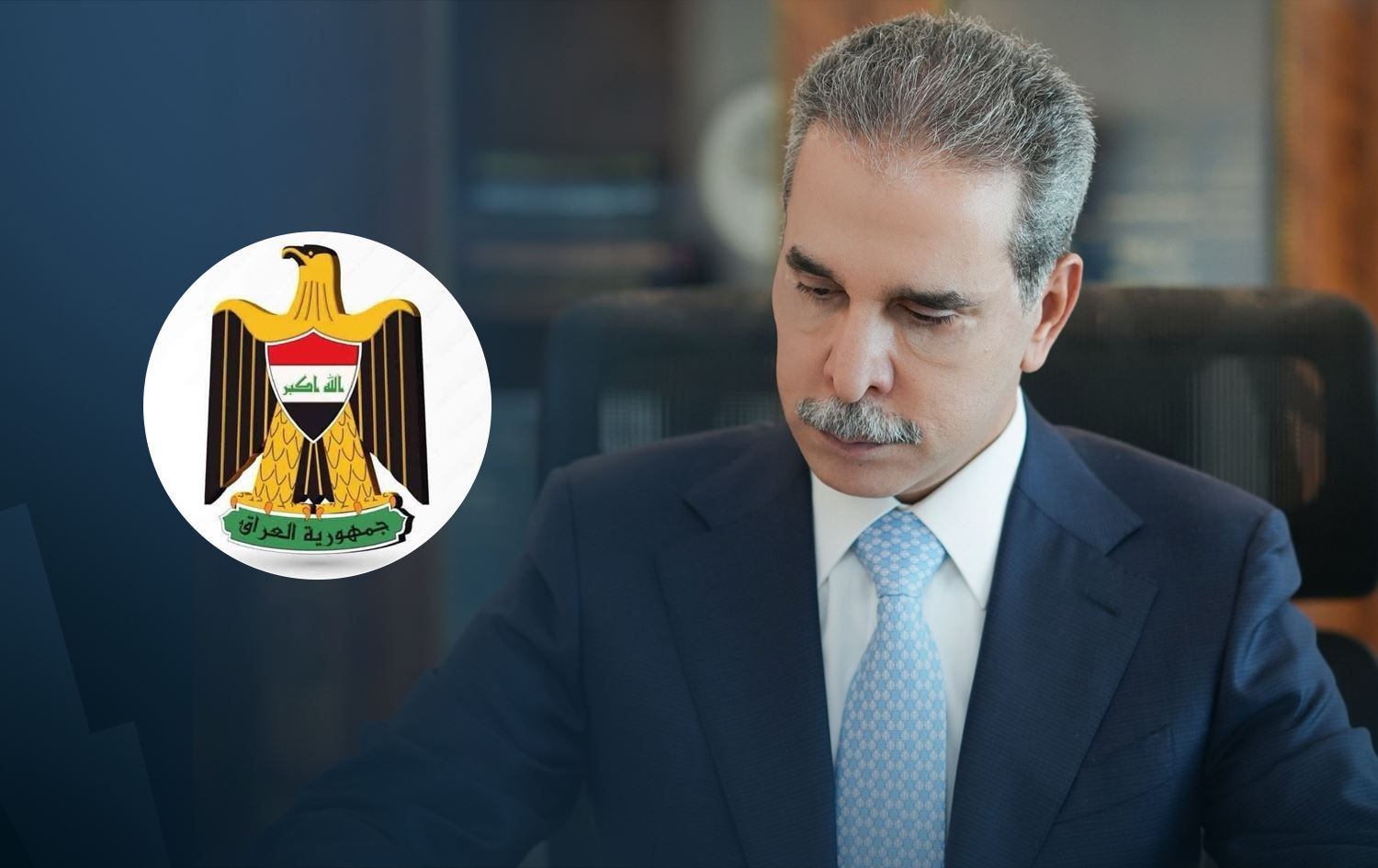
ERBIL, Kurdistan Region - Iraq’s Supreme Judicial Council President Faiq Zidan said on Saturday that the next federal government could be formed earlier than the constitutional timeline if political parties act swiftly after the upcoming parliamentary elections.
Zidan explained that the Iraqi Constitution allows flexibility in the post-election process, noting that while certain articles specify maximum timeframes for each stage, they do not require waiting until those limits expire.
“The total period needed for the birth of the new government extends to approximately four months from the date of announcing the results,” Zidan said in a statement late Saturday. “However, this period can be reduced to much less if the first day of each constitutional stage is utilized and waiting until the end of maximum periods is avoided.”
He added that the Constitution outlines a clear sequence: the new parliament convenes under the chairmanship of its oldest member to elect the speaker and two deputies (Article 55), then proceeds to elect the president within 30 days (Article 72). The president, in turn, tasks the largest parliamentary bloc with forming a government within 15 days, and the nominee has 30 days to secure parliamentary approval for the cabinet (Article 76).
Zidan said that if parliament convenes early and promptly elects its leadership, the president, and the prime minister, “the new government could see light in early January 2026 instead of March of the same year.”
Formation of new cabinets in Iraq and Kurdistan Region often takes over a year. The Region held its parliamentary elections in October last year, but the political parties have yet to reach a final agreement to form a new government.
Zidan also criticized recurring delays in forming governments, noting that “the selection of the parliament speaker, president, and prime minister often exceeds the specified constitutional periods.” He attributed this to the “absence of penalty or legal effect resulting from this violation, as the Constitution did not include a text addressing its consequences,” which has allowed the issue to repeat in multiple election cycles.
The Supreme Judicial Council head also noted that, under Article 56 of the Constitution, parliamentary elections should be held 45 days before the end of the current session. Since the current parliament began on January 9, 2022, and runs for four years, the constitutional date for elections should have been November 24, 2025. Therefore, the Council said, holding elections on November 11 “represents a clear violation, as it is not based on any constitutional or legal text.”
Despite the timing dispute, Iraqis are moving ahead with the electoral process. On Sunday, security forces and displaced persons began casting their ballots in early voting, two days before the general vote.
Polling stations opened at 7 am and will close at 6 pm, with more than 1.3 million security personnel and 26,000 internally displaced persons (IDPs) eligible to vote at 4,501 stations nationwide.
Campaigning officially ended on Saturday morning as the country entered a period of electoral silence. According to the Independent High Electoral Commission (IHEC), over 21.4 million voters with biometric cards are eligible to cast their ballots.
A total of 31 alliances, 38 political parties, 23 independent candidates, and 56 quota candidates are competing for 329 parliamentary seats, including nine reserved for minorities. More than 7,700 candidates are registered to run.
Across Iraq, over 39,000 polling stations will open within 8,703 centers for the general vote on Tuesday, with another 97 stations set up for displaced voters in camps. In the Kurdistan Region, 1,516 schools have been converted into polling centers, including 204 for early voting.
This will be Iraq’s sixth legislative election since the 2003 fall of the Baath regime.


Comments
Rudaw moderates all comments submitted on our website. We welcome comments which are relevant to the article and encourage further discussion about the issues that matter to you. We also welcome constructive criticism about Rudaw.
To be approved for publication, however, your comments must meet our community guidelines.
We will not tolerate the following: profanity, threats, personal attacks, vulgarity, abuse (such as sexism, racism, homophobia or xenophobia), or commercial or personal promotion.
Comments that do not meet our guidelines will be rejected. Comments are not edited – they are either approved or rejected.
Post a comment